What should you check?
Start with the child’s age and whether the drink is an occasional breakfast ingredient or a regular main milk alternative. Then compare the carton’s nutrition panel, ingredients and age information.
| Priority |
What to check |
When it matters |
| Age and role |
Check the child’s age and any age statement on the carton. The NHS says unsweetened, calcium-fortified alternatives can be given from age 1; they must not replace breast milk or first infant formula before then. |
I’m choosing something to add to breakfast after my child’s first birthday, not a main milk drink for a baby under 1. |
| Sugars and fortification |
Read the sugars figure, ingredients and added-nutrient list. The British Society for Allergy and Clinical Immunology recommends unsweetened, fortified drinks for children aged 1 or over, including calcium, iodine, riboflavin and vitamins B12 and D. |
A vegan label alone won’t tell me whether the drink is unsweetened or which nutrients have been added. |
| Energy and protein |
Compare kcal and protein on the same per-100ml basis, especially for regular use. UK government guidance notes that nutrient content varies considerably between plant drinks; the British Society for Allergy and Clinical Immunology identifies tree-nut drinks as less preferred for young children on nutritional grounds. |
If this is our usual milk alternative, I need to consider what it contributes beyond a splash on cereal. |
| Allergies and food rules |
Check the almond allergen declaration and the individual nursery or school policy. In England, the Department for Education says schools must publish an allergy safety policy addressing contact with known allergens. |
Breakfast packed for a setting needs to fit both my child’s allergy requirements and that setting’s rules. |
Relevant brand examples
These named drinks illustrate why the exact variant and carton label matter more than a brand name alone.
Alpro
Alpro UK lists separate Roasted Almond No Sugars and Almond Original drinks.
- Alpro UK lists 0 g sugars and 120 mg calcium per 100 ml for Roasted Almond No Sugars.
- The same drink lists 14 kcal and 0.5 g protein per 100 ml; Almond Original lists 2.4 g sugars per 100 ml. Check the precise variant before comparing cartons.
M&S
M&S lists an Unsweetened Almond Drink with added calcium, iodine and vitamins D and B12.
- Its named added nutrients provide useful points to check against a breakfast-drink shortlist.
- Check the current carton for its full nutrition and allergen information before choosing it for a child.
Plenish
Plenish describes its organic Almond M*lk as made with water, organic almonds and salt.
- The stated recipe may suit a preference for a short ingredient list.
- UK government guidance says organic-labelled plant drinks cannot be fortified, so this is not a route to added calcium, iodine or vitamins in the drink.
Rude Health
Rude Health lists a standard Almond Drink and a Chilled Almond Drink with Calcium.
- For both named drinks, Rude Health states suitability as part of a balanced diet for adults and children from age 5 onward. Do not treat their almond or calcium description as a toddler age statement.
Almond drinks on Joybuy
These Alpro almond drinks are options to assess for breakfast. For a child aged 1 or over, compare the exact carton’s sugars, fortification, energy and protein with the role the drink will have in their diet.
 No image available
Alpro Almond No Sugars Long Life Drink, 8 × 1L
This No Sugars long-life variant is offered as an 8 × 1L pack for uses such as breakfast cereal. If it will be used regularly, check the current carton’s calcium, iodine, energy and protein figures rather than assuming it has the same nutritional contribution as another milk alternative. It contains almond; check the child’s allergies and any nursery or school rules.
View on Joybuy
 No image available
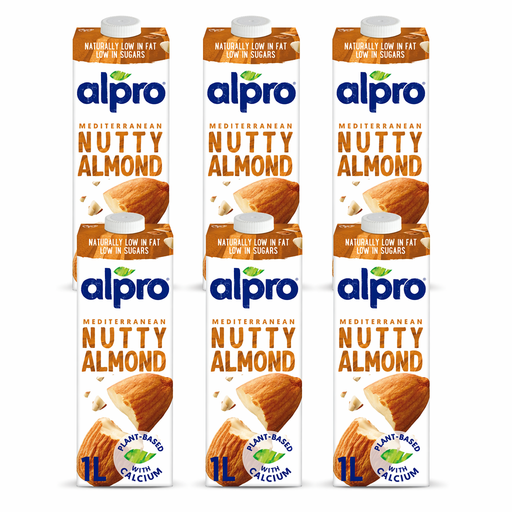
Alpro Almond Drink, 6 × 1L
This 6 × 1L almond drink is described for cereal and cooking. Sugar appears in its ingredient list, so check the carton’s sugars figure rather than treating it as an unsweetened variant; also compare its added nutrients, energy and protein if it will be used regularly. It contains almond, and the product description advises consulting a healthcare professional before introducing it into a child’s diet.
View on Joybuy
Questions about toddler breakfasts
Can a toddler have almond drink on cereal?
Yes, from age 1, the NHS says an unsweetened, calcium-fortified almond drink can be included as part of a balanced diet. Before age 1, it must not replace breast milk or first infant formula as the main milk drink.
What matters on the label besides a vegan claim?
Check that the drink is unsweetened, then read its fortification and nutrition information. The British Society for Allergy and Clinical Immunology recommends added calcium, iodine, riboflavin and vitamins B12 and D for plant drinks offered to children aged 1 or over; energy and protein matter particularly when the drink is used regularly.
Does organic mean an almond drink is fortified?
No. UK government guidance says plant drinks labelled organic cannot be fortified. Choose between an organic ingredient preference and an added-nutrient requirement by reading the particular carton, rather than treating the two claims as equivalent.
What if almond drink will be the regular main milk alternative?
Compare fortified plant drinks by their energy, protein and added nutrients, not just their flavour or vegan status. The British Society for Allergy and Clinical Immunology identifies tree-nut drinks as less preferred for young children because of their low nutritional content. If dairy exclusion comes with restricted eating, growth concerns or an allergy-related dietary change, seek an individual assessment from a dietitian or relevant healthcare professional.
Can I send almond-drink porridge to nursery or school?
Check the individual setting’s allergy policy before packing it; there is no reason to assume every setting has the same food rules. For schools in England, the Department for Education says an allergy safety policy must set out arrangements to reduce contact with pupils’ known allergens.


