
24/7 Customer Support

Free returns

Same-day & Next-day Delivery

Quality Guaranteed

Unlock Your Welcome Offers: FREE Delivery | Up to 80% OFF | Free 30-day JoyPlus trial
Download the APP
An aloe vera drink can be a refreshing alternative to fizzy drinks, but the bottles on the shelf are not all alike. Some contain noticeable aloe pieces, while others have only a small amount of juice. Flavourings, sweeteners and serving sizes can also make two similar-looking products very different choices.
Before buying aloe vera juice or an aloe vera drink with real pieces, check three details: the aloe content, the sugar level and the quantity you are likely to use. This helps prevent paying more for packaging or marketing language that does not match your preferences.
The front label may show aloe leaves or describe a drink as natural, but the actual proportion of aloe vera juice or pulp can vary considerably. For example, some products list 22% organic aloe vera juice and 8% aloe vera gel, while others list 15%, 25% or 30% aloe vera.
Look at the ingredients list rather than relying on the product name. “Aloe vera juice with pulp” may have a smoother texture, whereas an aloe vera drink with real pieces is more likely to contain visible or chewable gel.
A sugar-free aloe vera drink may contain sweeteners such as sucralose or acesulfame K. This can reduce the sugar and calorie content, but it does not mean the drink has no sweet taste or no sweetening ingredients.
For comparison, one Grace Say Aloe Natural listing provides approximately 0.1g of sugar per 100ml, while OKF Original 500ml provides 8.2g per 100ml. Always compare the nutrition panel per 100ml, not only the figures for the whole bottle.
An aloe vera drink 500ml bottle is convenient for a packed lunch, commute or chilled single serving. An aloe vera drink 1.5L bottle may suit a family fridge, but it needs to be refrigerated after opening and consumed within the period stated on the label.
A multipack can be practical for regular consumption or an office, but only if the flavour and sweetness suit everyone. Otherwise, unopened bottles may remain unused while taking up valuable cupboard space.
If you specifically want aloe vera drink with real pieces, check whether the label names aloe vera gel or pulp and gives a percentage. Products in this selection include:
Shake the bottle gently before opening if the label recommends it. Aloe pieces can settle during storage, so shaking helps distribute the texture more evenly.
For a flavoured aloe vera drink, compare both “of which sugars” and the ingredients list. Mango aloe vera drink, grape aloe vera drink and strawberry aloe vera drink can contain different amounts of sugar even when their bottle sizes are identical.
Examples from the supplied product information include:
“Organic” also describes sourcing or certification, not necessarily a low-sugar recipe. The OKF Grape 500ml listing refers to USDA and EU organic certification, but its nutrition panel still lists 9g of sugar per 100ml.
Aloe vera itself should be checked in the allergen advice where applicable. Some listings state no known allergens, while others advise checking bold ingredients or mention possible traces of cereals, soya, nuts, dairy or sulphites.
Storage instructions differ by product. Depending on the bottle, opened drinks may need to be refrigerated and consumed within 24 hours, 48 hours, two days, three days or up to seven to ten days. Follow the packaging you receive, as formulations and labelling can change.
If you are pregnant, breastfeeding, buying for a child or managing a digestive condition, read the label carefully and ask a qualified healthcare professional if you are unsure whether a product is suitable. Aloe drinks should be treated as beverages, not as replacements for a varied diet.

Why This Fits Their Persona: A single 500ml bottle lets first-time buyers try a Korean-style aloe drink with grape flavour without committing to a large bottle or multipack.
The listing specifies 30% aloe vera and gives a clear 19kcal and 4.7g sugar per 100ml nutrition profile.
500ml format; real aloe pieces; natural grape flavouring; no artificial colours or flavours listed.
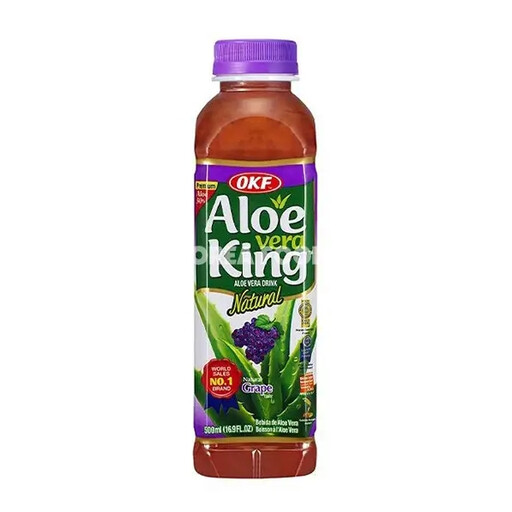
Why This Fits Their Persona: Suitable for shoppers prioritising organic certification information and a distinct grape flavour with a chewy aloe texture.
The listing identifies organic aloe vera juice, aloe vera gel and a 9g sugar level per 100ml, making comparison easier.
South Korean origin; grape flavour; real gel pieces; ready to drink chilled.

Why This Fits Their Persona: A 20-bottle case suits offices, hospitality settings, households and shoppers who already know they enjoy this style of drink.
The case format avoids repeatedly paying for individual bottles, while the stated 500ml size helps with portion planning.
20 individual bottles; 22% organic aloe vera juice and 8% gel; grape-style flavour; convenient chilled serving.
We have compiled a complete, real-time list of products that fully satisfy these strict selection criteria and UK safety regulations.
Unopened bottles are generally stored according to the label, often in a cool, dry place away from direct sunlight. Once opened, most aloe vera drinks should be refrigerated and consumed within the stated period, which can range from 24 hours to several days.
A 1.5L bottle may offer more volume for family use, while a multipack can be convenient for regular consumption. However, the practical value depends on whether the drink will be finished before its post-opening storage limit. For occasional use, several 500ml bottles may help reduce waste.
Chill the bottle before serving and shake gently if the label instructs you to do so. This redistributes settled aloe gel. Avoid vigorous shaking immediately before opening, as some drinks may foam or build pressure.