
24/7 Customer Support

Free returns

Same-day & Next-day Delivery

Quality Guaranteed

Unlock Your Welcome Offers: FREE Delivery | Up to 80% OFF | Free 30-day JoyPlus trial
Download the APP
Aloe vera drinks appeal to shoppers looking for a refreshing alternative to fizzy drinks, as well as fans of Korean, Asian and Caribbean beverages. However, the category varies considerably. Some bottles contain visible aloe vera gel, while others use only a small amount of pulp. Sugar levels can also differ from almost zero to around 10g per 100ml.
As Joybuy’s Product Recommendation Officer, I focus on practical label information rather than exaggerated wellness language. Before buying aloe vera drinks, check these common pitfalls.
A large bottle is not automatically a concentrated aloe vera beverage. A 1.5L bottle may contain less aloe gel per 100ml than a 500ml aloe vera drink with pulp. Look for the percentage of aloe vera juice, aloe vera gel or aloe vera pulp in the ingredients list.
For example, some drinks list 22% aloe vera juice and 8% gel, while other products specify 15%, 25% or 30% aloe content. These figures describe the formulation, not a medical or nutritional benefit.
A sugar-free aloe vera drink may contain sweeteners such as sucralose or acesulfame K. This can reduce the sugar and calorie content, but it creates a different taste profile from an unsweetened drink.
Always check both the ingredients list and the nutrition table. For comparison, the supplied product information shows:
Aloe vera drink with pulp may contain soft, chewable pieces that settle at the bottom. This is why many labels advise shaking gently before opening. If you prefer a smooth beverage, check the description carefully before selecting a drink with gel or pulp.
Once opened, most products require refrigeration and should be consumed within two to four days, although instructions vary. Check the individual bottle rather than relying on a general assumption.
UK food labels generally list ingredients by weight, beginning with the largest proportion. Compare the position and percentage of aloe ingredients, not simply phrases such as “natural”, “premium” or “high potency”.
For shoppers seeking organic aloe vera juice, Simplee Original lists 99.4% organic aloe vera and organic lemon juice concentrate. By contrast, flavoured products commonly include water, sugar or sweeteners, flavourings, stabilisers and acidity regulators alongside aloe ingredients.
Use the nutrition panel per 100ml to compare products fairly. This is particularly important when choosing between a 500ml bottle and a larger aloe vera juice 1.5L format.
A drink containing 10g of sugar per 100ml would provide approximately 50g in a 500ml bottle if consumed in full. A sugar-free option may avoid that sugar content but can include approved sweeteners. Consider whether you prefer a naturally sweetened, lightly sweetened or sweetener-based drink.
Individual 500ml bottles suit lunch bags, commuting and trying a new flavour. An aloe vera drink multipack, such as 12 or 20 bottles, may be more convenient for households, events or small retailers, but storage space and use-by guidance after opening still matter.
For regular home use, a six-bottle 1L pack can offer fewer containers to recycle than multiple single-serve bottles. Check the total volume, not just the number of bottles, when comparing value.

Why This Fits Their Persona: A straightforward 500ml bottle for shoppers who want to try a lightly flavoured aloe vera beverage without committing to a larger pack.
The label states 30% aloe vera pieces and provides nutrition information of 19 kcal and 4.7g sugar per 100ml, making the formulation easier to assess.
500ml format; grape flavour; contains aloe vera pieces and vitamin C; no artificial colours listed.
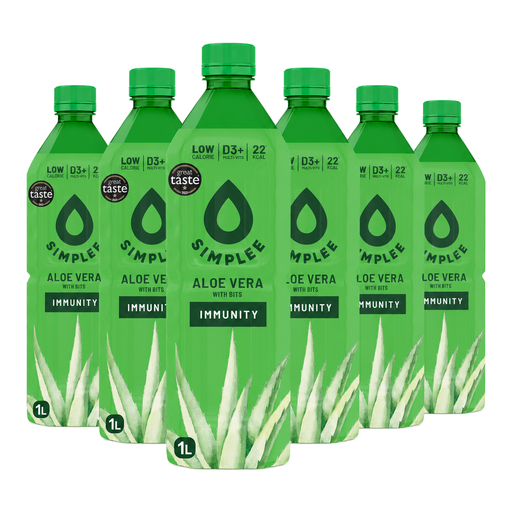
Why This Fits Their Persona: Designed for shoppers prioritising a high stated aloe content, an organic formulation and a large household supply.
The product description specifies 99.4% organic aloe vera and gives a low stated sugar value of 0.8g per 100ml.
Six 1L bottles; organic aloe vera and lemon juice concentrate; suitable for vegans according to the supplied product information.

Why This Fits Their Persona: A practical choice for offices, retailers, events or households that regularly serve chilled individual bottles.
The listing states 22% organic aloe vera juice and 8% gel, with nutrition shown per 100ml and per 500ml bottle.
Pack of 20; ready to drink; grape flavour; 500ml serving size with aloe gel texture.
We have compiled a complete, real-time list of products that fully satisfy these strict selection criteria and UK safety regulations.
Not always. “Aloe vera drink” is a broad description that can include water, aloe gel, fruit flavouring, sugar or sweeteners. Aloe vera juice may refer to a product with a higher proportion of aloe juice, but the ingredients and percentages should be checked on the label.
If the bottle contains aloe gel or pulp, gentle shaking can redistribute pieces that have settled. Follow the manufacturer’s instructions and avoid vigorous shaking immediately before opening, as carbonated products or filled bottles may foam or spill.
Storage periods vary. Several products in this range advise refrigeration and consumption within 24 hours to four days after opening. Always follow the label on the specific bottle, and do not consume a drink if the seal is damaged or its appearance, smell or taste has changed.