
24/7 Customer Support

Free returns

Same-day & Next-day Delivery

Quality Guaranteed

Unlock Your Welcome Offers: FREE Delivery | Up to 80% OFF | Free 30-day JoyPlus trial
Download the APP
As a Joybuy Product Recommendation Officer, my role is to help you navigate the crowded market of children's toys. When it comes to alphabet learning toys, the shelves are filled with options that promise to kick-start your child's literacy journey. However, not all are created equal. Many parents find themselves with toys that are either quickly outgrown, not as educational as claimed or simply don't hold a child's interest.
This guide cuts through the marketing clutter. We will look at the common purchasing pitfalls to avoid and the essential features to look for, ensuring you choose a toy that is both fun and genuinely beneficial for your child's development.
Before you buy, be aware of these frequent issues that can lead to disappointment and wasted money.
To make a confident choice, focus on these three non-negotiable parameters. Analysing these will help you find a toy that supports genuine learning.
A child's developmental stage is the single most important factor.
Always prioritise safety and durability. Look for toys made from non-toxic, child-safe materials like BPA-free ABS plastic or wood with non-toxic paint. Edges should be smooth and rounded. If you are considering magnetic letters or tiles, check that the magnets are fully enclosed and secured within the plastic casing to prevent them from becoming a choking hazard. Toys sold in the UK must adhere to strict safety standards, but a visual check for robust construction is always a sensible step.
The most effective learning happens through play. Consider what kind of play your child enjoys. Do they love building? A set of alphabet blocks or magnetic tiles might be perfect. Are they a budding problem-solver? An alphabet puzzle could be the answer. Do they respond well to sounds and music? An interactive electronic tablet designed for learning could be a great fit. The goal is to find a toy that integrates learning into an activity they already find enjoyable.
Based on these practical criteria, here are a few recommendations matched to different family needs and children's interests.
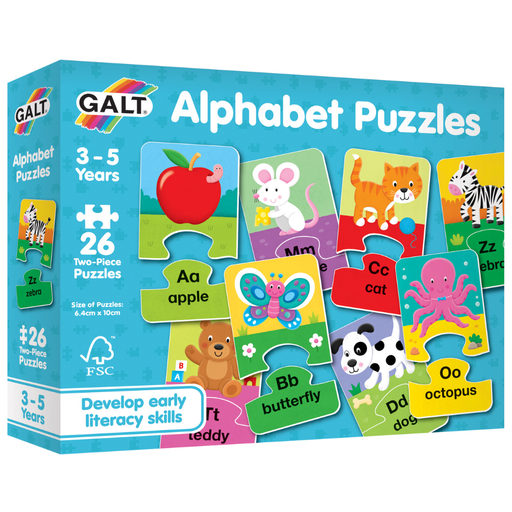
Why This Fits Their Persona: This is an excellent, low-cost entry into alphabet learning. It focuses on the core skills of letter recognition and matching without the need for batteries or complex instructions, making it a straightforward and effective tool for parents introducing the ABCs.
It sidesteps the "all flash, no substance" trap by being a completely hands-on, screen-free activity. The self-correcting design, where only the right pieces fit, builds confidence without overwhelming a child.
Develops matching skills and letter recognition simultaneously. The large, chunky pieces are ideal for small hands, aiding fine motor skill development.
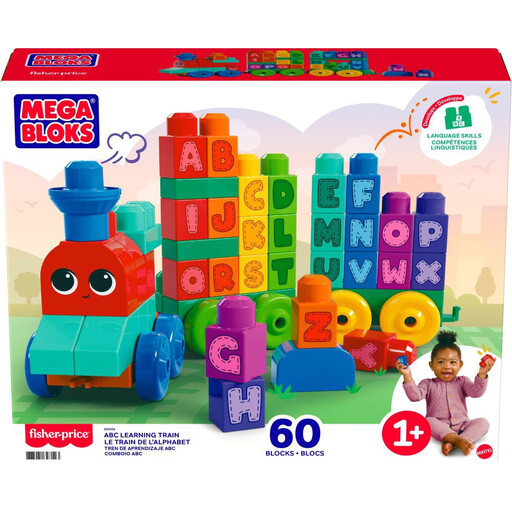
Why This Fits Their Persona: Ideal for families wanting a toy that grows with their child. It combines two classic play patterns—building blocks and trains—with alphabet learning, offering value from the toddler years right through to preschool.
This toy directly counters the "developmental mismatch" pitfall. Its wide recommended age range (1-5 years) is justified by its versatility—younger children can stack, while older ones can build the train and spell words.
Combines creative construction play with literacy learning. The large, easy-to-grip blocks are designed for little hands, promoting early childhood development.
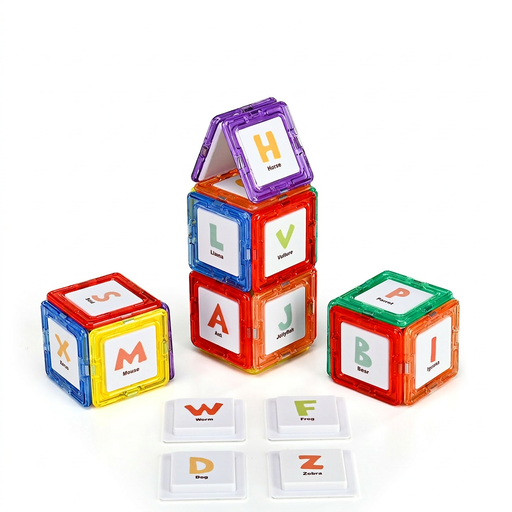
Why This Fits Their Persona: Perfect for children who love to build and create. This set merges the popular activity of magnetic tile construction with literacy, allowing for open-ended, imaginative play that also reinforces letter recognition and spelling.
It addresses the "material safety" concern head-on. The description highlights strong, fully enclosed magnets and durable, shatter-resistant ABS plastic with smooth edges, giving parents confidence in its construction.
Combines STEM learning (3D building, magnetism) with literacy. The open-ended nature encourages creativity far more than a prescriptive electronic toy.
We have compiled a complete, real-time list of products that fully satisfy these strict selection criteria and UK safety regulations.
You can introduce basic alphabet toys, such as large blocks or simple puzzles with letter shapes, from around 12-18 months. The goal at this stage is familiarity and tactile exploration. More structured learning with phonics and letter-sound association is typically most effective for children aged 3 and up.
Safety is a valid concern. When choosing magnetic toys, ensure they are from a reputable brand and designed for young children. The magnets should be completely sealed within the plastic or wood. Never give a child a toy with loose or exposed small, strong magnets. Always check the product's age recommendation and warnings and supervise play with younger children.
Learning letters involves recognising the 26 letters of the alphabet by their shape and name (e.g., "This is the letter A"). Learning phonics is about understanding the sound that each letter (or group of letters) makes (e.g., "The letter A makes an 'a' sound, as in apple"). Phonics is a crucial step for learning to read, so as your child gets older (around 3-4 years), look for phonics toys that help them make this connection.