
24/7 Customer Support

Free returns

Same-day & Next-day Delivery

Quality Guaranteed

Unlock Your Welcome Offers: FREE Delivery | Up to 80% OFF | Free 30-day JoyPlus trial
Download the APP
Buying aluminium foil and foil trays can seem straightforward until a roll tears around a roast, a tray bends while being carried or a supposedly convenient container does not fit your oven. The right choice depends less on attractive packaging and more on thickness, dimensions, capacity and intended use.
Whether you are preparing a family meal, organising a BBQ, baking for a school event or running a takeaway service, these checks can help you avoid unnecessary waste and choose products that match the job.
Household kitchen foil, catering foil and heavy-duty aluminium foil can differ considerably in thickness. A thin roll may be suitable for wrapping sandwiches or covering leftovers, but it can tear when used with sharp bones, large roasting joints or heavily filled dishes.
Look for the micron measurement where it is provided. For example, an 11-micron roll offers a balance of flexibility and strength for general kitchen tasks, while an 18-micron catering foil is more suitable for large trays, high-volume preparation and heavier foods.
A tray labelled “60oz” may sound generous, but its actual footprint and depth affect how it fits in your oven, fridge, delivery bag or storage cupboard. Check the measurements in millimetres as well as the stated capacity.
A shallow foil platter is suitable for presentation, sandwiches and buffet food. A deeper disposable foil tray is more practical for casseroles, pasta bakes and saucy dishes. If food is being transported, a lid or secondary support underneath may be essential.
Many aluminium products are recyclable, but acceptance varies between UK councils and recycling facilities. Foil usually needs to be clean and free from excessive food residue. Check local guidance before placing foil or recyclable foil containers in household recycling.
Also, do not assume that a foil tray is suitable for every appliance. Aluminium foil and foil trays should generally be kept away from microwave ovens, naked flames and exposed heating elements, unless the product and appliance instructions specifically permit otherwise.
For everyday wrapping, covering and storage, a standard kitchen foil roll may be sufficient. If you regularly cook large joints, line roasting trays or prepare food for events, compare both micron thickness and width.
A longer roll can reduce the cost per metre for frequent users, but occasional cooks may prefer a smaller roll that is easier to store.
Before purchasing disposable foil trays or aluminium baking trays, measure the available oven shelf and storage space. A tray’s external dimensions may be more important than its internal capacity.
For individual portions, compact trays with lids are practical for meal preparation, food delivery and packed lunches. For baking, match the diameter and depth of foil pie dishes to your recipe. For serving, choose a platter with enough surface area for arranging food without stacking it too deeply.
Foil is lightweight, but a filled tray can become difficult to carry. For transport, look for rigid sides, a suitable depth and a secure lid, or place the tray on a solid baking sheet or board.
Lidded foil trays are particularly useful for batch cooking and takeaway-style portions. Trays without lids can still work well for oven cooking and serving, provided they are supported when moved.
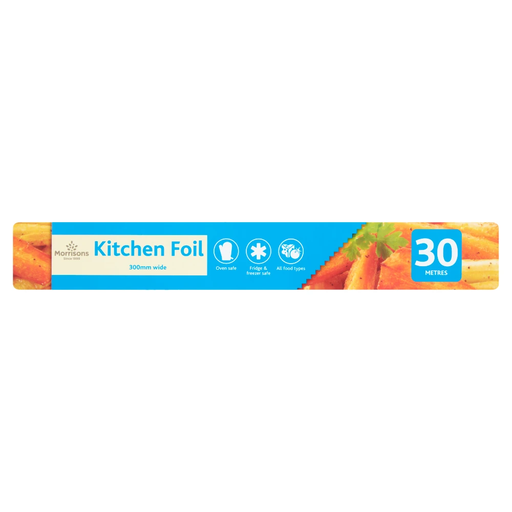
Why This Fits Their Persona: A practical household roll for UK cooks who need foil for wrapping, covering, cooking and fridge or freezer storage.
The 30-metre length is clearly stated, helping shoppers compare quantity rather than relying on packaging appearance.
Suitable for oven, fridge and freezer use; made from 100% aluminium according to the product description.
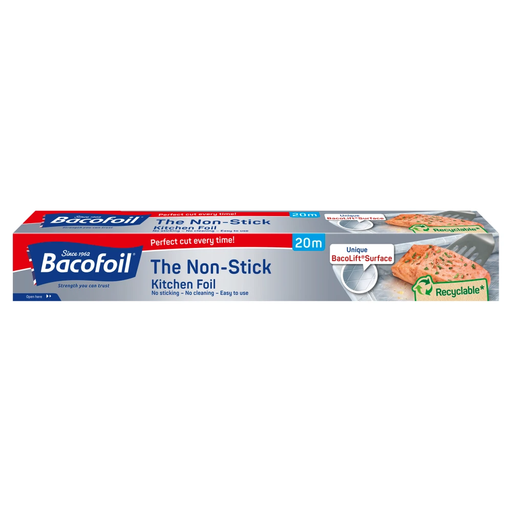
Why This Fits Their Persona: Useful for bakers and regular home cooks who prioritise controlled cutting and easier release from suitable foods.
The product specifies a 30cm width, 20m length and non-stick surface, making the important specifications easy to check.
Includes an Easy-Cut System; described as tear-resistant and suitable for cooking, wrapping and freezing.
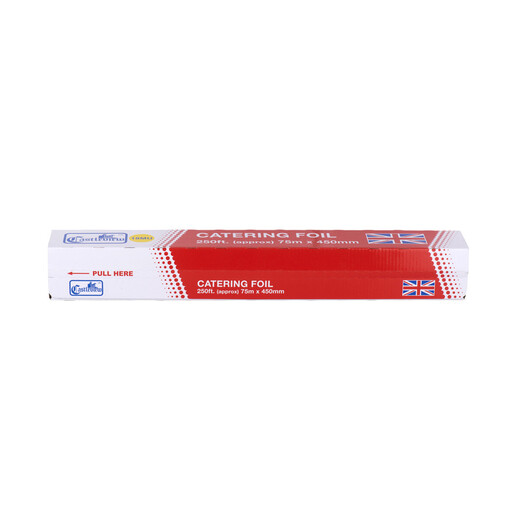
Why This Fits Their Persona: Designed for caterers, event organisers, commercial kitchens and households that use large quantities of foil.
Its 18-micron thickness and 450mm width address the common problems of tearing and insufficient coverage.
75-metre roll; suitable for wrapping, roasting, lining and covering large dishes.
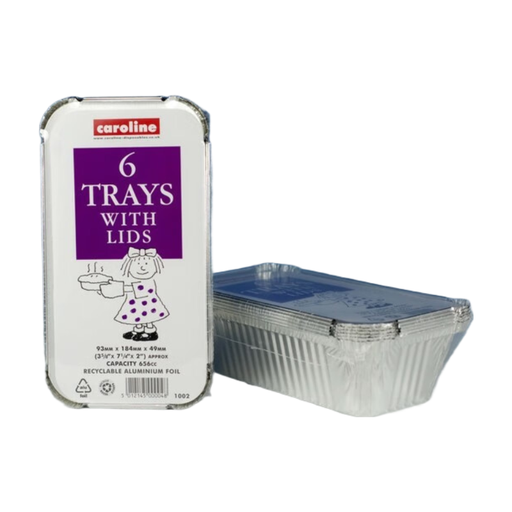
Why This Fits Their Persona: A compact option for batch cooking, packed lunches, food transport, leftovers and takeaway-style portions.
The six-pack includes matching lids, avoiding the inconvenience of buying covers separately.
23oz capacity; dimensions of 93 x 184 x 49mm; listed as ovenable and recyclable.
We have compiled a complete, real-time list of products that fully satisfy these strict selection criteria and UK safety regulations.
Kitchen foil can be suitable for oven use when the product instructions permit it. Keep it away from exposed heating elements, oven flames and areas where it could touch the element. Foil should not be used as a replacement for an oven shelf or placed directly on the oven floor unless the appliance manufacturer allows this.
Some aluminium trays can be washed and reused if they remain structurally sound, but many are intended for convenient single-use preparation and serving. Avoid reusing trays that are bent, torn, heavily scratched or difficult to clean. Recycling usually depends on the tray being sufficiently clean and on local council facilities.
For catering, compare thickness, width, roll length and dispensing design. An 18-micron, 450mm-wide roll may be more appropriate for large trays and frequent preparation than a standard household roll. For portioned meals and delivery, foil trays with lids can simplify cooking, storage and transport.