
24/7 Customer Support

Free returns

Same-day & Next-day Delivery

Quality Guaranteed

Unlock Your Welcome Offers: FREE Delivery | Up to 80% OFF | Free 30-day JoyPlus trial
Download the APP
Aluminium foil is a familiar kitchen essential, but choosing the right product is not always straightforward. A short roll may appear economical until it tears around a roast, while a wide catering roll can be inconvenient in a small kitchen. Foil sold for cooking may also be unsuitable for sealing, insulation or household repairs.
Before buying kitchen foil, tin foil or a specialist aluminium product, check the material, thickness, dimensions and intended use. These details are more useful than packaging claims about “professional” or “premium” performance.
Standard household foil, heavy-duty catering foil and non-stick kitchen foil are designed for different tasks. Thin foil may be suitable for covering leftovers, but it can split when wrapping large joints of meat or lining a roasting tray. Conversely, a wide catering roll can create unnecessary waste if you only need small sheets for packed lunches.
A 30-metre roll may offer more total length than a 10-metre roll, but width also matters. A 450mm-wide roll covers large trays more efficiently, while 300mm foil is easier to handle for everyday cooking. Compare both length and width, not just the number of metres printed on the box.
Non-stick foil can make roasting and baking easier, but it does not remove the need to follow the product instructions. Aluminium foil should not be used in microwave ovens, and it must not touch naked flames or exposed electric heating elements unless the appliance guidance specifically permits it. Check which side should face the food and whether the foil is suitable for freezing, grilling or high-heat use.
Foil thickness is commonly shown in microns (μm). A higher micron figure generally indicates a thicker sheet, although construction and handling also affect performance.
Thickness is particularly important when wrapping food with bones, sharp edges or heavy sauces. Stronger foil is less likely to split during transport or cooking.
For most UK household kitchens, a 300mm-wide roll is easy to store and cut. Wider foil can be more suitable for gastronorm-style trays, large roasting tins and food-service preparation.
Consider where the roll will be kept. A long commercial roll may provide a lower cost per metre for frequent users, but its box can require more cupboard or worktop space. A shorter roll can be more practical for occasional bakers, students or smaller households.
For cooking and food storage, select a product clearly described as food-grade aluminium foil or kitchen foil. Use it according to the label, particularly with acidic or salty foods, where prolonged contact may not be suitable.
Also check whether the product is:
Foil trays with lids can be useful for batch cooking and transport, but check the warnings before reheating. Many aluminium trays are not suitable for microwave use.
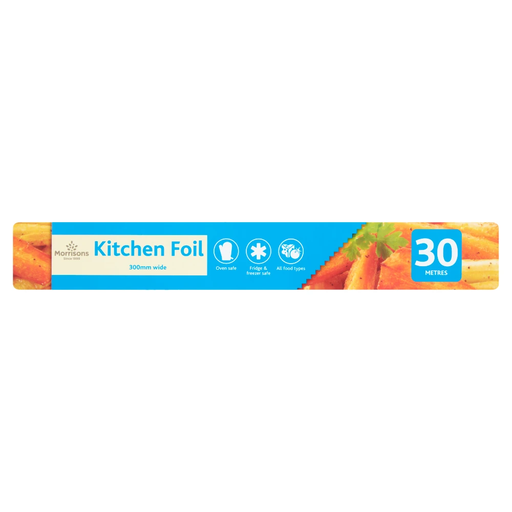
Why This Fits Their Persona: A practical option for households that need a general-purpose roll for wrapping, storing and everyday oven use.
The 30-metre length provides a useful household supply without moving straight to a bulky catering roll. Its packaging also gives opening instructions to help avoid cutting fingers.
30-metre roll; described for oven, fridge and freezer use.
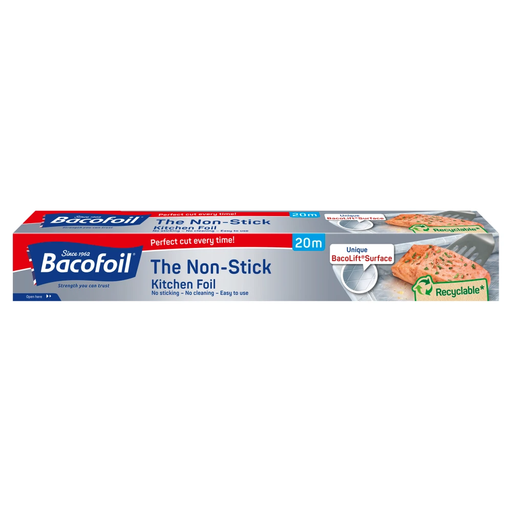
Why This Fits Their Persona: Suitable for cooks who value easier food release and a dispensing box for regular baking and roasting.
The product specifies a non-stick side and includes an Easy-Cut System, addressing common problems with food sticking and uneven tearing.
30cm x 20m roll; tear-resistant and heat-resistant according to the product description.
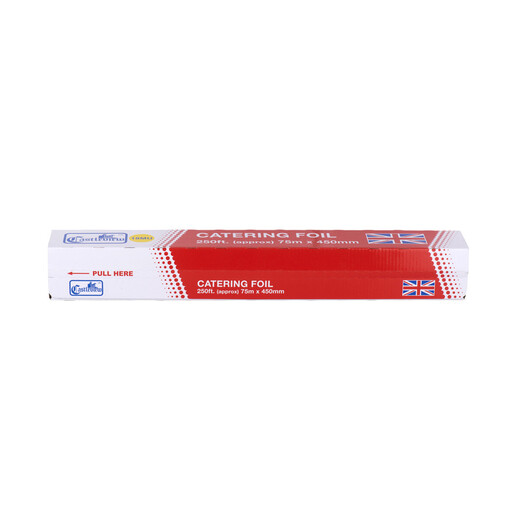
Why This Fits Their Persona: Designed for catering operations, batch cooks and households regularly handling large trays or substantial food portions.
Its stated 18-micron thickness and 450mm width make the specification clear, rather than relying only on vague heavy-duty wording.
18-micron aluminium; 450mm x 75m format for large coverage and frequent use.
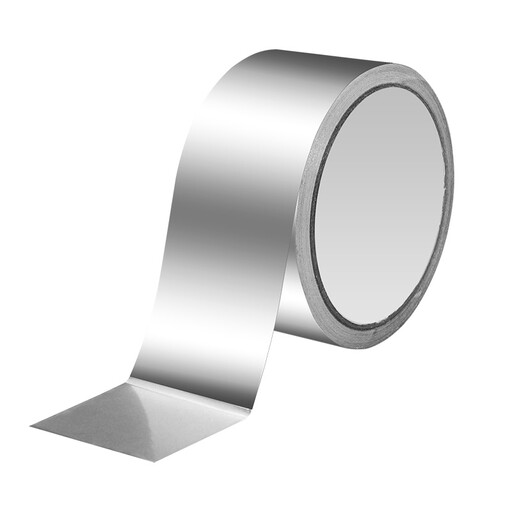
Why This Fits Their Persona: Intended for sealing gaps, joints and household surfaces rather than wrapping food or lining baking trays.
The self-adhesive format makes its purpose clear, helping prevent buyers from using ordinary cooking foil where a bonded seal is required.
3m roll; described as oil-resistant, mildew-resistant and heat-resistant for household sealing.
We have compiled a complete, real-time list of products that fully satisfy these strict selection criteria and UK safety regulations.
Generally, no. Follow the foil and appliance instructions, and keep foil away from microwave use unless the manufacturer specifically states otherwise. Metal can cause arcing or damage in a microwave.
Clean foil may be accepted by some local councils, but rules vary. Scrape off food residue, gather small pieces into a larger ball where permitted, and check your council’s recycling guidance. Foil trays may follow different rules from foil rolls.
Choose foil clearly described for grilling or barbecue use, and keep it away from direct naked flames unless the instructions allow it. For frequent outdoor cooking, consider a thicker cooking foil or a barbecue accessory set that includes an aluminium foil roll, while using heat-resistant gloves and supervising the grill.