
24/7 Customer Support

Free returns

Same-day & Next-day Delivery

Quality Guaranteed

Unlock Your Welcome Offers: FREE Delivery | Up to 80% OFF | Free 30-day JoyPlus trial
Download the APP
Whether you run a takeaway, organise events, bake for a community sale or prepare weekday meals, the right aluminium foil catering supplies can simplify cooking, storage, transport and serving. The wrong products, however, can create avoidable waste, spills and extra costs.
Before buying catering foil or disposable foil trays, look beyond pack size and attractive claims. Three common traps are:
Thickness is measured in microns. A standard 11-micron cooking foil roll is flexible and suitable for covering dishes, wrapping portions, lining trays and everyday food storage. For heavier jobs, 18-micron heavy duty aluminium foil offers greater resistance to tearing and punctures.
Width matters just as much. A 300mm roll suits smaller baking trays, sandwiches and individual portions. A 450mm catering foil roll gives more coverage for roasting pans, large platters and gastronorm-style containers. A 75m length can be practical for frequent use, but compare the width and micron rating rather than judging value by length alone.
For food contact, select foil described as food-grade aluminium foil and follow the product’s use instructions. Avoid prolonged contact with highly acidic or salty foods unless the product is suitable for that application or a suitable barrier is used.
The stated capacity helps match containers to portion sizes:
Check external dimensions as well as capacity. A tray measuring 239 x 239mm may fit a fridge shelf or delivery bag differently from a rectangular 262 x 322mm container. For safe handling, place flexible or large trays on a baking sheet or rigid board before filling and transporting.
“Ovenable” refers to the foil tray, not automatically to its lid. Remove lids before placing trays in the oven unless the packaging specifically states otherwise. Use oven gloves, avoid direct contact with heating elements and never place foil on an open flame.
Foil trays can be convenient for cooking and reheating, but they should be supported when moved while hot. Microwave use should only be considered when the product and appliance instructions specifically permit it. Aluminium foil is recyclable in many UK areas, but local facilities differ and food residue can affect acceptance.
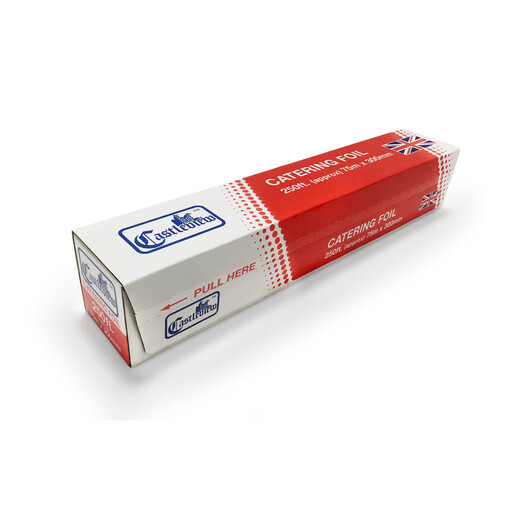
Why This Fits Their Persona: A practical cooking foil roll for households, small food businesses and occasional hosts who need a substantial length for everyday preparation without moving immediately to heavier foil.
The stated 11-micron thickness and 300mm width make its intended everyday use clearer than relying on vague “strong” wording.
75m length; suitable for wrapping, covering, lining and food storage.
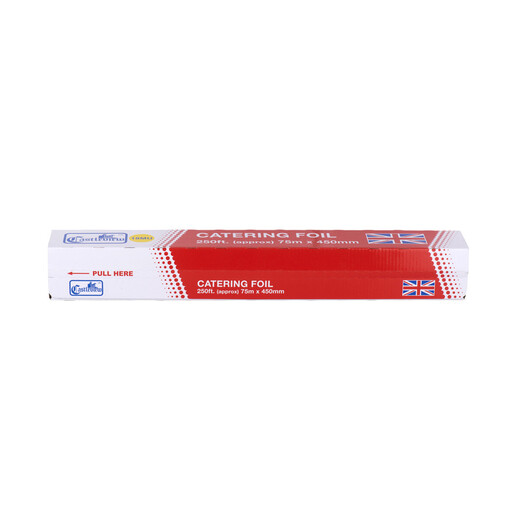
Why This Fits Their Persona: Suitable for caterers, restaurants and home cooks who regularly handle large roasting dishes, heavy portions or food that needs secure wrapping for transport.
Its specified 18-micron construction addresses the common mismatch between large-format coverage and insufficient tear resistance.
18-micron aluminium; 450mm width and 75m length for high-volume tasks.
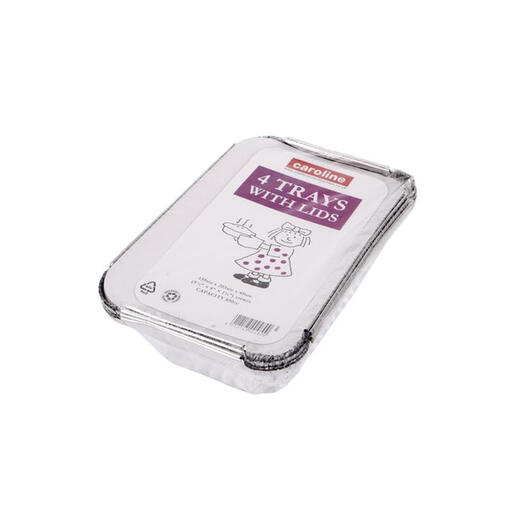
Why This Fits Their Persona: A practical option for takeaway businesses, meal-prep users and caterers who need to cook, portion, cover and transport food in the same container.
The listed 30oz capacity, 45mm depth and matching lids make portioning and transport easier to plan.
Ovenable foil trays; four trays supplied with fitted lids for storage or transit.
We have compiled a complete, real-time list of products that fully satisfy these strict selection criteria and UK safety regulations.
Foil is commonly used for covering dishes, wrapping food and lining suitable cookware, but always follow the product and appliance instructions. Keep it away from exposed heating elements and open flames. For foil trays, place the container on a baking sheet for added stability and use oven gloves when removing it.
It depends on width, length and usage. A 75m cooking foil roll may suit regular domestic cooking or light commercial use, while a shorter 10m or 20m roll can be more appropriate for occasional baking and barbecues. Heavy-duty foil may reduce tearing during demanding tasks, although careful portioning still helps control waste.
Many councils accept clean aluminium foil and trays, but collection rules vary. Remove food residue where practical, allow the material to cool and check your local authority’s guidance. Do not place foil containing substantial food waste in recycling collections unless your council specifically permits it.
From the Joybuy Product Recommendation Officer, the practical rule is simple: match micron thickness, dimensions, capacity and intended use before comparing price. That approach helps home cooks and food-service buyers select catering foil that fits the job rather than paying for features they will not use.