
24/7 Customer Support

Free returns

Same-day & Next-day Delivery

Quality Guaranteed

Unlock Your Welcome Offers: FREE Delivery | Up to 80% OFF | Free 30-day JoyPlus trial
Download the APP
From wrapping sandwiches to roasting the Sunday joint, aluminium foil is a staple in almost every UK kitchen. Yet, not all foil is created equal. Choosing the wrong type can lead to torn sheets, stuck-on food and unnecessary waste. As your Joybuy Product Recommendation Officer, my role is to help you navigate the options and find the right product for your needs, without the marketing fluff.
Before you add another roll to your basket, let's look at the common pitfalls that lead to frustration and wasted money.
By understanding a few key factors, you can easily avoid these issues and select a product that performs exactly as you need it to.
To make an informed choice, focus on these two practical specifications. They determine the foil's performance far more than any flashy packaging.
The single most important indicator of foil strength is its thickness, measured in microns (μm). A higher micron number means a thicker, stronger and more tear-resistant foil.
Beyond a simple roll, aluminium foil comes in various specialised formats designed to make life easier. Always ensure any product you choose is clearly labelled as food grade aluminium foil if it will be in contact with what you eat.
Based on these practical considerations, here are a few options from our catalogue, matched to different household needs.
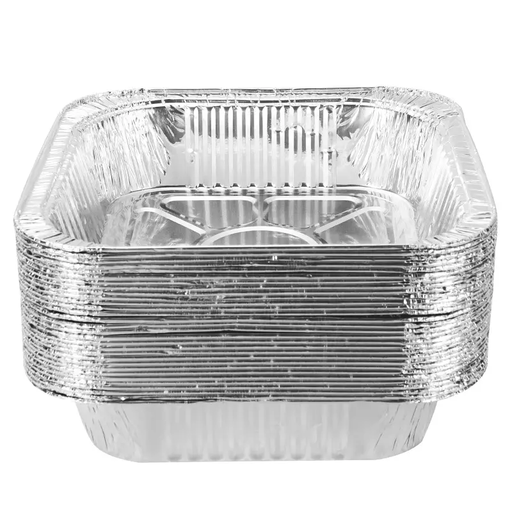
Why This Fits Their Persona: Ideal for anyone who loves batch baking, preparing meals for the week or taking dishes to parties. This pack of 30 disposable foil trays simplifies the entire process from oven to table and eliminates washing up.
This directly solves the "Shape-Shifting Struggle" by providing perfectly formed, sturdy pans, saving you time and wasted foil.
Made from durable, food-grade aluminium for even heat conduction. The convenient disposable nature is a significant time-saver.
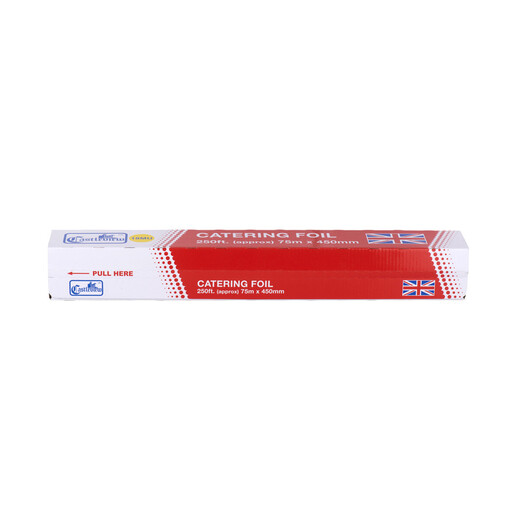
Why This Fits Their Persona: For professional caterers, food service businesses or serious home cooks who get through a lot of foil. This bulk roll offers strength and value for high-volume tasks.
Its 18-micron thickness is the perfect antidote to the "False Economy" trap, providing genuine tear resistance that cheaper foils lack.
The extra-wide 450mm format covers large catering trays with a single sheet, and the 75m length ensures it lasts.
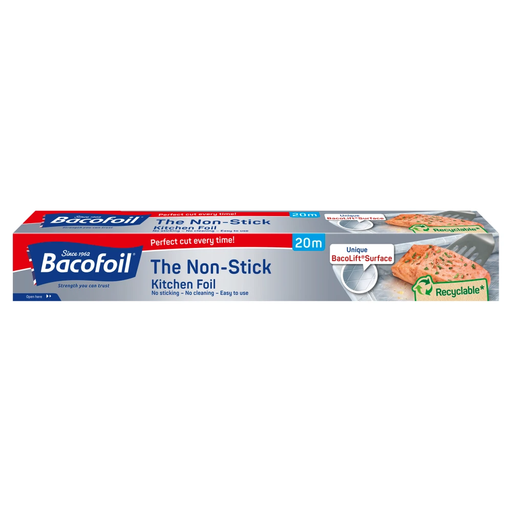
Why This Fits Their Persona: Perfect for those who want to cook with less oil or butter. This foil is designed to prevent food from sticking, making it ideal for baking, grilling and roasting delicate items like fish or halloumi.
It debunks the "One-Size-Fits-All" myth by offering a specialised surface for a specific cooking need, preventing food from sticking where standard foil would fail.
The BacoLift non-stick surface ensures hassle-free cooking and cleanup. The Easy-Cut system provides a clean, straight tear every time.
We have compiled a complete, real-time list of products that fully satisfy these strict selection criteria and UK safety regulations.
Yes, in most cases. However, it must be clean and completely free of grease and food residue. Most local councils advise scrunching it into a ball (at least the size of a tennis ball) before placing it in your recycling bin. This helps it get sorted correctly. Always check the specific rules for your local area.
The main difference is thickness and strength. Standard foil is thinner (around 10-12 microns) and best for simple tasks like wrapping sandwiches. Heavy duty kitchen foil is thicker (13-18 microns), making it more resistant to tears and punctures. It's a better choice for lining roasting tins, cooking on the barbecue or wrapping large items for the freezer.
While you can use standard foil in a pinch, it's not ideal. The high heat and sharp grates of a barbecue can easily cause thin foil to tear, leading to leaks and flare-ups. It is much better to use a dedicated barbecue foil or a heavy duty kitchen foil (at least 15 microns) for greater durability and peace of mind.