
24/7 Customer Support

Free returns

Same-day & Next-day Delivery

Quality Guaranteed

Unlock Your Welcome Offers: FREE Delivery | Up to 80% OFF | Free 30-day JoyPlus trial
Download the APP
Buying aluminium foil seems straightforward until a thin sheet tears around a roasting joint, a narrow roll fails to cover a large tray, or a “microwave-safe” assumption creates a safety problem. UK households, bakers, barbecue users and catering teams all have different requirements, so choosing by price or roll length alone can lead to wasted money.
This guide explains the practical specifications to check before buying kitchen foil, cooking foil, heavy-duty aluminium foil and related disposable products.
A long roll is not automatically economical. Width and thickness affect how much food you can cover and how easily the foil handles demanding tasks. A narrow, lightweight roll may require several overlapping sheets for a large roasting tin, increasing waste and reducing its usefulness.
For regular batch cooking or catering, compare the full dimensions, such as 300mm × 75m or 450mm × 75m, rather than looking at metres alone.
Aluminium foil should not be used in a microwave unless the appliance and product instructions specifically permit it. Several kitchen foils listed here state that they are not suitable for microwave ovens. Foil must also be kept away from naked flames and exposed electric heating elements.
Always follow the product label and appliance guidance. In particular, do not use ordinary cooking foil as a substitute for a microwave cover or baking liner without checking the instructions.
Aluminium foil can react with highly acidic or salty foods, including tomatoes, citrus, vinegar-based sauces and some marinades, especially during extended storage. Use a suitable barrier, container or food-storage solution where appropriate.
Foil edges and dispenser cutters can be sharp. Handle rolls carefully, keep them away from children and allow foil to cool before removing it from hot food.
Thickness is measured in microns. Standard household foil is generally easier to fold and shape, while thicker foil offers greater resistance to tearing and punctures.
Heavy-duty aluminium foil is useful when wrapping food with bones or sharp edges, but it may cost more and take up more storage space. Choose thickness according to your actual workload rather than assuming thicker is always necessary.
A 300mm-wide roll suits most domestic trays, sandwiches and individual portions. A 450mm roll provides more coverage for large roasting tins, platters and catering containers.
For frequent meal preparation, food service or events, a 75m catering foil roll can reduce replacement frequency. For occasional baking, a shorter kitchen foil roll may be easier to store and handle.
Look for clear material information such as food-grade aluminium where the product is intended for direct food contact. Non-stick kitchen foil has a treated surface designed to help food release more easily; check which side should face the food and whether the product is suitable for your intended temperature.
Recycling depends on local UK collection arrangements. Clean aluminium foil may be accepted in some council schemes, while foil contaminated with food may need to be discarded. Scrunching clean foil into a larger ball can make it easier for some recycling systems to identify, but always check local guidance.
The following recommendations are organised by usage profile, helping you compare a standard kitchen foil, non-stick option, catering roll and disposable baking product.
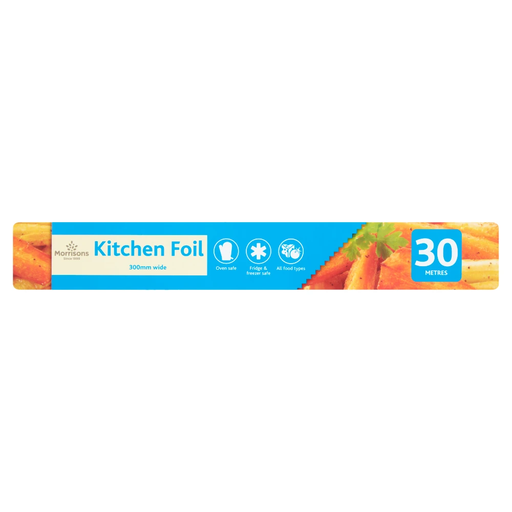
Why This Fits Their Persona: A practical choice for smaller UK kitchens and everyday tasks such as wrapping leftovers, covering dishes and preparing standard oven meals.
The stated 30-metre length is clear, while oven, fridge and freezer suitability is specified. The microwave and naked-flame warnings help prevent unsuitable use.
100% aluminium material; suitable for storing, wrapping and cooking a range of foods.
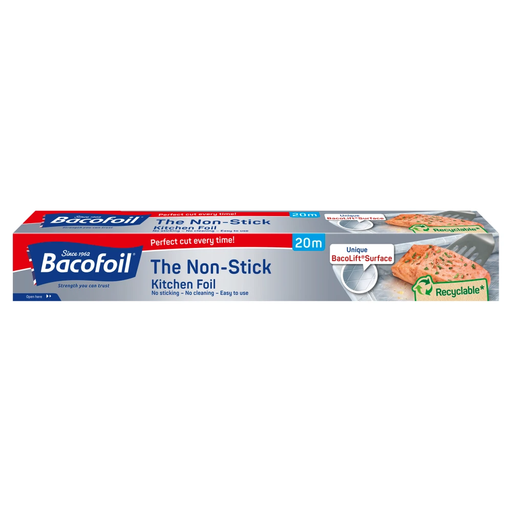
Why This Fits Their Persona: Designed for home cooks who value controlled cutting and easier food release when roasting, baking, wrapping or freezing.
The non-stick side is identified for food contact, reducing uncertainty. The packaging includes an Easy-Cut System, but the blade still requires careful handling.
30cm × 20m roll; tear-resistant and recyclable according to the supplied product information.
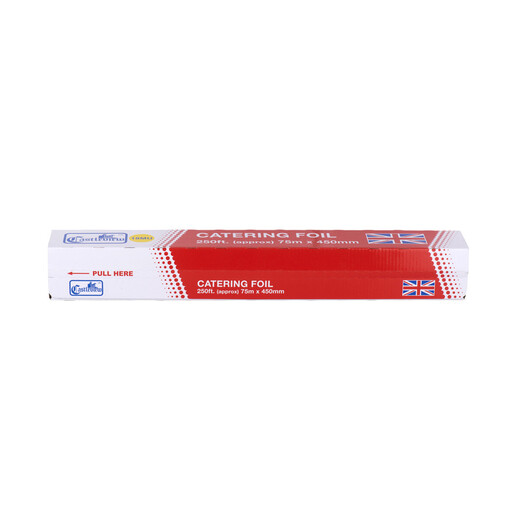
Why This Fits Their Persona: A strong match for caterers, professional kitchens, large households and anyone regularly wrapping substantial portions or covering wide trays.
Its stated 18-micron thickness and 450mm width address the common problems of tearing and insufficient coverage. Acidic-food and heat warnings still apply.
75m roll; extra-wide format for large trays, platters and food transport.
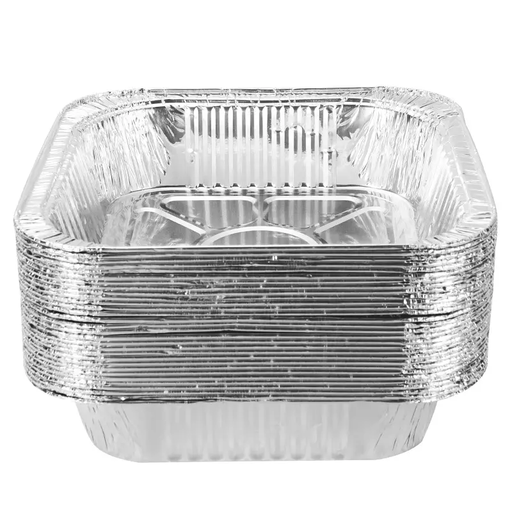
Why This Fits Their Persona: Useful for bake sales, parties, batch cooking and gifting brownies, lasagne, casseroles or cornbread without needing to collect dishes afterwards.
The pack quantity and 7-inch square format are stated clearly, avoiding uncertainty about serving capacity. Check oven compatibility and handling instructions before use.
30 food-grade aluminium pans; disposable format supports serving and simpler clean-up.
We have compiled a complete, real-time list of products that fully satisfy these strict selection criteria and UK safety regulations.
Ordinary aluminium foil is generally not suitable for microwave use unless the product and microwave manufacturer specifically state otherwise. Foil can cause arcing, particularly if it touches the oven wall or is crumpled. Use a microwave-safe cover instead.
For everyday wrapping and covering, around 11 microns may be adequate. Choose approximately 15 microns for mixed cooking, baking and BBQ use, and 18-micron catering foil for large trays, heavy foods or frequent commercial preparation. Also consider width and roll length.
Some UK local authorities accept clean aluminium foil, while others do not collect it at the kerbside. Remove food residue where possible and check your council’s current recycling instructions. Disposable foil trays and plates may follow different local rules, so confirm before placing them in a recycling bin.