
24/7 Customer Support

Free returns

Same-day & Next-day Delivery

Quality Guaranteed

Unlock Your Welcome Offers: FREE Delivery | Up to 80% OFF | Free 30-day JoyPlus trial
Download the APP
Whether you are preparing a Sunday roast, baking pies for a fundraiser or supplying a takeaway service, aluminium foil trays can simplify cooking, serving, storage and transport. However, not every tray suits every task. A small pie dish will not replace a deep roasting tray, while a lightweight platter may become difficult to carry when filled.
The most useful way to compare products is to look beyond pack size and marketing language. Check the dimensions, depth, intended heat use, lid design and recycling information before buying.
A stated capacity does not always show how a tray will perform in practice. Two trays with similar ounce ratings can have different shapes and depths. A shallow tray may suit pastries or buffet presentation, whereas a deeper container is more suitable for casseroles, sauces and layered bakes.
Always check the length, width and depth in millimetres. For example, a 400 x 340mm roasting tray provides considerably more surface area than a 227 x 227mm square tray, even if both are described as suitable for family meals.
Lids are useful for fridge storage, freezer organisation and transporting food to a venue, but they are not included with every disposable foil tray. Platters and open baking trays are usually designed for serving, while trays with fitted lids are more suitable for prepared meals and takeaway portions.
If a lid is important, confirm that the product description specifically states “with lid” or lists matching covers among the included components.
Aluminium is widely recyclable, but acceptance depends on local facilities and collection rules. Foil trays normally need to be emptied and may need cleaning before recycling. Heavily food-soiled items may be rejected.
“Reusable” also needs a practical interpretation. Some sturdier platters can be washed and used again where appropriate, but thin foil can crease, lose rigidity or retain food residue. Follow the product instructions and your local council’s guidance rather than assuming every tray can be recycled or reused indefinitely.
For everyday wrapping and covering, food-grade catering foil in a suitable thickness may be enough. The Castleview 18 micron roll, for example, is wider and thicker than the 11 micron cooking foil option, making it more appropriate for covering large dishes, wrapping heavier foods and regular catering use.
For trays, look at the rim and base structure as well as the material description. A rigid edge helps when carrying filled food, but liquid dishes should still be placed on a baking sheet or solid board for extra support.
“Ovenable” means the tray is listed for oven cooking or reheating, but it does not mean it can be used on an open flame, hob or direct heating element. Keep foil away from exposed electrical elements and follow the temperature guidance on the packaging.
Several products in this range are listed as ovenable and freezer-safe, including selected roasting and portion trays. By contrast, the Morrisons Foil Trays & Lids are specifically marked not for microwave use. Aluminium foil should generally not be placed in a microwave unless the appliance and product instructions explicitly permit it.
Match the tray to the food and the number of portions:
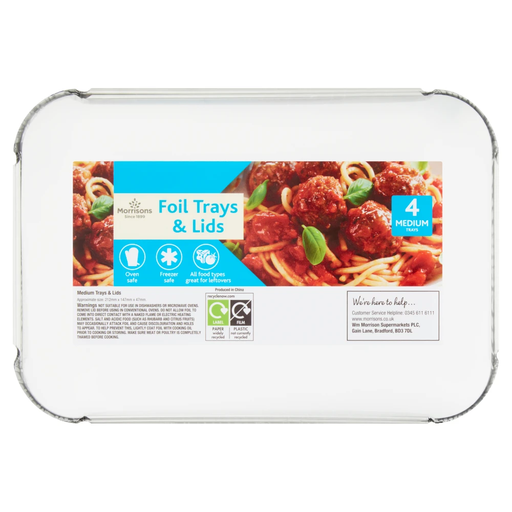
Why This Fits Their Persona: A practical four-pack for home cooks who want medium aluminium foil trays with matching lids for leftovers, fridge storage and freezer organisation.
The matching lids are listed with the trays, so you do not need to buy covers separately. The product warnings also clearly state that it is not for microwave use.
Four medium trays with matching lids; listed for oven, fridge and freezer use.
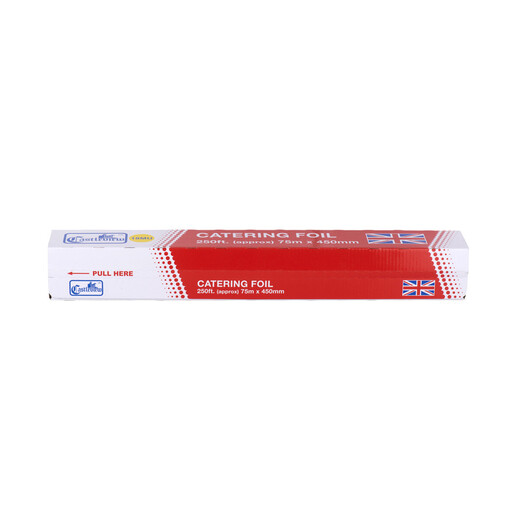
Why This Fits Their Persona: Suitable for busy home kitchens, caterers and restaurants that need a broad roll for frequent wrapping, lining and covering.
The stated 18 micron thickness and 450mm width provide clear information instead of relying only on vague “heavy duty” wording.
450mm-wide, 75m roll; listed for wrapping, roasting, lining and storage.
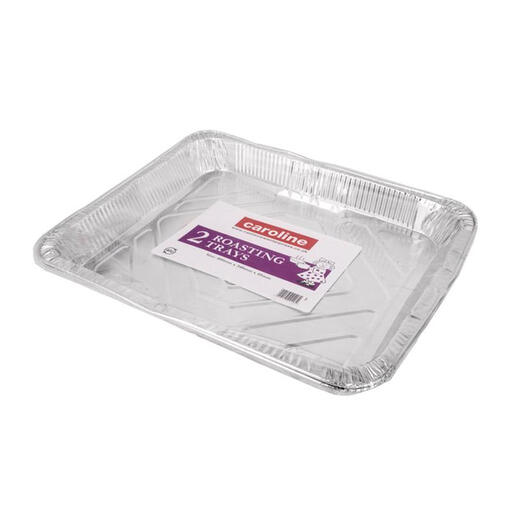
Why This Fits Their Persona: Designed for larger family meals, batch cooking, Sunday roasts and event preparation where surface area and depth matter.
The full 400 x 340 x 45mm measurements make it easier to assess capacity than choosing from an unclear “large” label.
45mm depth; listed as oven-safe and freezer-safe, with two trays per pack.
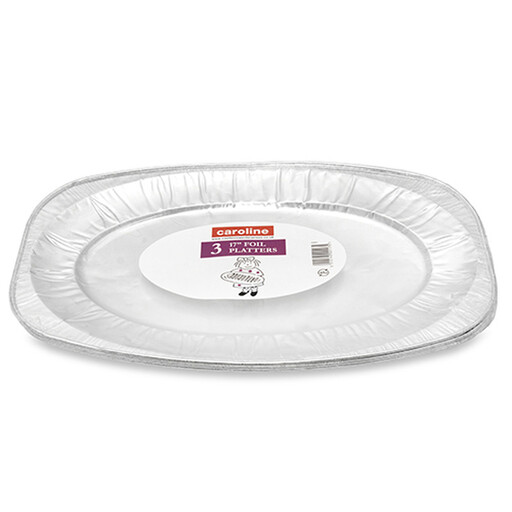
Why This Fits Their Persona: A three-pack of broad party serving trays for buffets, office lunches, community events and family celebrations.
The 430 x 286mm footprint and 30mm depth are stated clearly, helping organisers plan buffet space and food quantities.
Three platters per pack; listed as reusable and recyclable, subject to local handling guidance.
Place ovenable foil trays on a baking sheet before filling or moving them. This reduces bending and makes liquid dishes safer to carry. Do not use foil trays on open flames or direct heat sources. Avoid prolonged contact between aluminium and highly acidic foods unless the product guidance confirms suitability.
For recycling, remove leftover food and check your local council’s rules. Flattening clean foil may help collection, but mixed materials such as attached plastic lids may need separate disposal.
We have compiled a complete, real-time list of products that fully satisfy these strict selection criteria and UK safety regulations.
Many products are listed as ovenable, but check the specific packaging and temperature instructions first. Place the tray on a solid baking sheet, keep it away from heating elements and never use it over an open flame.
Some aluminium foil trays are listed as freezer-safe, including selected roasting and portion trays. Allow hot food to cool appropriately, use a suitable lid or covering and leave room for expansion where necessary.
They may be recyclable if they are accepted by your local council and are sufficiently clean. Remove food residue where required, separate non-aluminium lids and check local collection guidance before disposal.