What matters when choosing
For ambient music in a small living room, decide whether the speaker will stay put, travel between rooms or share duties with a TV or computer. Those uses point to different formats.
Compact Wi-Fi speaker
Choose when: You want a fixed speaker for compatible network streaming, app control or possible multi-room use.
Allow for: Mains power and initial network and app setup; one enclosure does not create the physical separation of two speakers.
Portable Bluetooth speaker
Choose when: Direct playback from a phone and moving the speaker between rooms take priority.
Allow for: Recharging and the exact model’s limits on where it can be used.
Compact active stereo pair
Choose when: You can space two speakers apart and want separate left/right channels or connections for a TV or computer.
Allow for: Two speaker positions and their power and cable arrangements.
| Concern |
What to check |
Who this matters to |
| Everyday playback |
Check your usual music source and whether starting playback requires Bluetooth pairing, a home network or an app. Confirm any adaptor needed for a wired source. |
If I want gentle music on without fuss, the route from my usual source to the speaker matters most. Around 44% of consumers put straightforward everyday playback first. |
| Stereo and connections |
Plan positions for both speakers if considering a pair, and check the exact inputs needed for your TV, computer or other source. |
When the same system must handle music and a TV or computer, I need those connections and room for separated speakers. Roughly 33% of consumers prioritise stereo or source flexibility. |
| Space and movement |
Measure the intended spot, decide whether battery operation is necessary, and check where volume or tone can be adjusted. |
With limited space, I may need to move the speaker or adjust quiet playback without rearranging the room. About 23% of consumers put physical fit, portability or direct control first. |
Joybuy product choices
These choices include tabletop speakers and TV-style soundbars that can play music in a small living room. Match each one to your sources and available space; the soundbars are especially relevant if the speaker will also sit near a TV.
 No image available
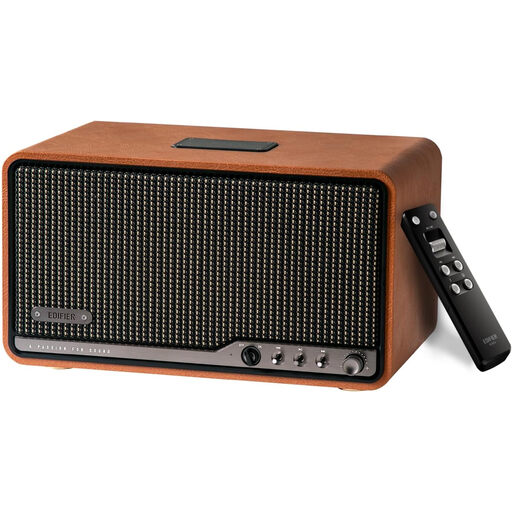
Edifier S300 Wireless Multi-Room Tabletop Speaker, Brown
Consider this tabletop model if you want a speaker for a fixed spot and plan to play music from a phone or network source. Check its exact connection options and power arrangement against your setup before ordering.
View on Joybuy
 No image available
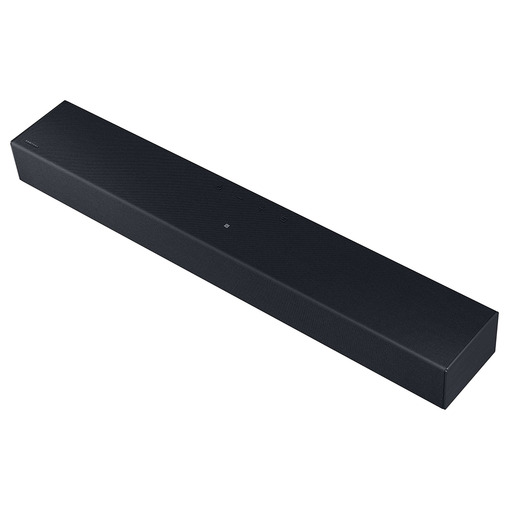
Samsung HW-C400/XU 2.0-channel Soundbar, Black
Consider this one-box soundbar if music playback will share a space with your TV. It is a 2.0-channel model; check that its connections and width suit your TV area and music source.
View on Joybuy
 No image available
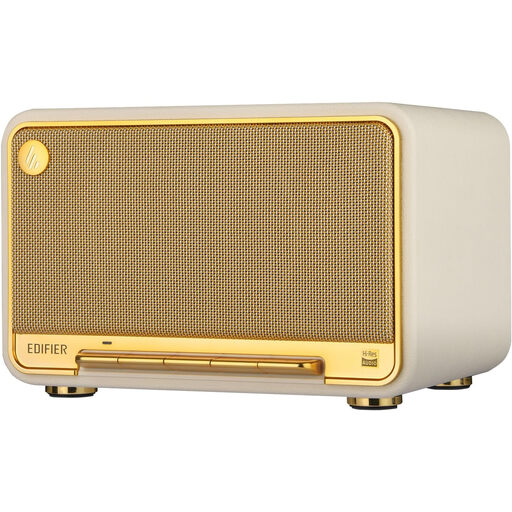
Edifier D32 Tabletop Wireless Speaker, 60W (RMS)
Consider the D32 if you want a tabletop speaker with several stated playback and input options. Its product title lists Bluetooth 5.3, AirPlay 2, USB-C, AUX, app control and 11h playtime; check its footprint and whether its quiet-volume controls suit you.
View on Joybuy
 No image available
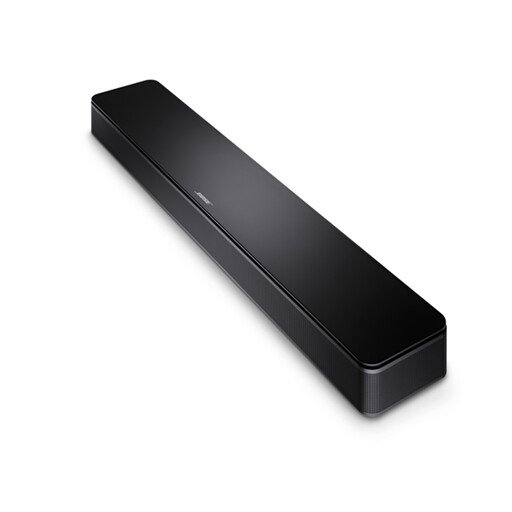
Bose TV Speaker
Consider this TV-oriented speaker if you also want to play music from a phone. Confirm that its connections work with both sources and that it fits the intended TV or shelf position.
View on Joybuy
Common questions
Wi-Fi or Bluetooth for ambient music in a small living room?
Choose Wi-Fi if the speaker will stay at home and you want compatible network playback, app control or multi-room potential. Choose Bluetooth if direct phone playback or moving the speaker matters more; check the setup and connections of the exact model.
Do I need two speakers for background music?
No: a single compact speaker avoids planning two positions. Consider an active pair if you value physically separated left/right channels or need its particular TV or computer inputs; KEF lists HDMI ARC, USB-C and optical inputs for LSX II LT.
Can a portable Bluetooth speaker go in a bathroom?
Only use a speaker there if the exact model is intended for that environment. Bose says SoundLink Home is not designed for liquid exposure or wet environments, so portability should not be taken as a water-resistance rating.
What should I check for a mains-powered speaker bought for Great Britain?
Check the exact product’s electrical-safety and conformity information for the market where it will be used. The Office for Product Safety and Standards says the Electrical Equipment (Safety) Regulations 2016 set requirements before electrical equipment is placed on the Great Britain market; do not assume that Great Britain guidance applies unchanged in Northern Ireland.
What should I do with an old speaker?
Check your local authority’s electrical-waste collection options or any take-back arrangement offered by the retailer rather than assuming the speaker belongs in ordinary household waste. The UK’s waste electrical and electronic equipment framework, described by the Office for Product Safety and Standards and the Department for Environment, Food & Rural Affairs, aims to support recovery, reuse and recycling.


