Choosing the right processor is the most critical decision when building or upgrading a PC. It's the brain of your system, dictating performance in everything from gaming and content creation to everyday web browsing. With so many models available, navigating the world of AMD Ryzen processors can feel overwhelming. Are you a gamer chasing the highest frame rates, a creative professional who needs multi-core power, or are you building a reliable machine for daily tasks?
This guide is designed to cut through the technical jargon and clutter. We will walk you through the key considerations for selecting a CPU in 2026 and highlight some of our top recommendations from the current AMD lineup to help you make an informed choice for your next build.
How to Choose the Right AMD Ryzen Processor
Before diving into specific models, understanding a few core concepts will help you align a processor's specifications with your actual needs.
1. Cores, Threads and Clock Speed: Finding Your Balance
The performance of a CPU is often discussed in terms of cores, threads and clock speed.
- Cores and Threads: Think of cores as individual processors within the main CPU. More cores allow the chip to handle more tasks simultaneously, which is crucial for demanding applications like video editing, 3D rendering and running multiple programs at once. Threads are virtual components that help manage the tasks sent to the cores.
- Clock Speed (GHz): This measures how many cycles a CPU can execute per second. A higher clock speed generally means faster performance in tasks that rely on a single core, such as many video games and general desktop applications.
For a pure gaming PC, a processor with 6 to 8 cores and high clock speeds is often the sweet spot. For a workstation built for content creation, prioritising a higher core count (12, 16, or more) will significantly reduce rendering and export times.
2. Understanding the AM5 Platform
Most new AMD Ryzen processors, including the Ryzen 9000 series, are built for the AMD AM5 CPU socket. This is a significant platform shift that brings modern features but also has specific requirements. When planning a CPU for PC building on this platform, you must factor in:
- DDR5 Memory: The AM5 platform exclusively uses the newer, faster DDR5 RAM. This offers higher bandwidth and improved performance but means you cannot reuse older DDR4 memory sticks.
- PCIe 5.0 Support: AM5 motherboards provide support for PCIe 5.0, doubling the potential data transfer speed for next-generation graphics cards and NVMe SSDs, making your build more future-proof.
3. Decoding the Model Names: X vs. X3D
AMD uses suffixes to denote special features. For example, a model ending in 'X' typically offers higher clock speeds and performance straight out of the box. The 'X3D' suffix, seen on models like the Ryzen 7 7800X3D, indicates the inclusion of AMD's 3D V-Cache technology. This large, stacked cache dramatically boosts performance in games, making these chips a popular choice for a dedicated gaming processor.
Our Top Product Recommendations
Here are a few standout options from the current AMD Ryzen lineup, each suited to a different type of user and budget.
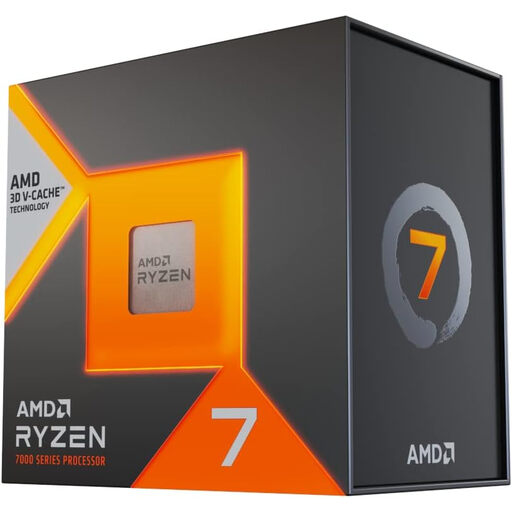
AMD Ryzen 7 7800X3D
View Product Details
- Why It Stands Out: The Ryzen 7 7800X3D is purpose-built for one thing: outstanding gaming performance. Its defining feature is the massive 96MB of L3 cache thanks to AMD's 3D V-Cache technology. This allows the processor to feed the GPU with data incredibly quickly, resulting in higher and smoother frame rates across a wide range of titles.
- Pros:
- Exceptional gaming performance that competes with higher-end chips.
- Highly power-efficient, generating less heat and consuming less energy.
- Built on the modern AM5 platform with support for DDR5 and PCIe 5.0.
- Strong value for a gaming-focused build.
- Who is it for: This is the processor for the dedicated gamer. If your primary goal is to achieve the highest possible FPS in esports and AAA titles and you're pairing it with a powerful graphics card, the 7800X3D is a formidable choice.
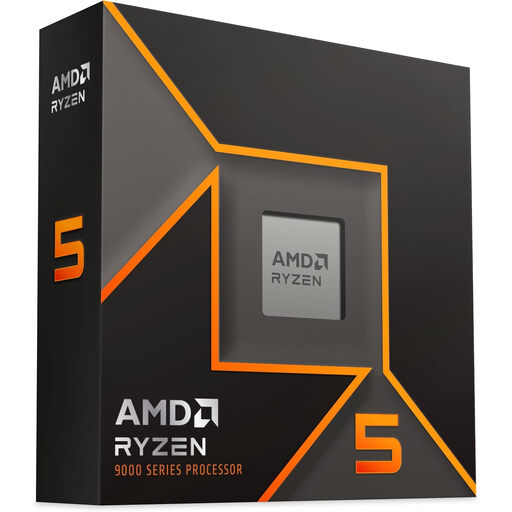
AMD Ryzen 5 9600
View Product Details
- Why It Stands Out: As part of the new Ryzen 9000 series, the Ryzen 5 9600 represents a fantastic balance of modern performance, efficiency and value. Built on the latest Zen 5 architecture, it offers a significant uplift in instructions-per-cycle (IPC), making it feel snappy and responsive in both games and productivity tasks.
- Pros:
- Excellent single-threaded and multi-threaded performance for its class.
- A great entry point into the future-proof AM5 platform.
- Power-efficient design allows for flexible and affordable cooling solutions.
- Handles 1080p and 1440p gaming, multitasking and general productivity with ease.
- Who is it for: The Ryzen 5 9600 is ideal for mainstream PC builders. It's a superb choice for a mid-range gaming rig, a home office PC, or a student system that needs to be reliable, fast and ready for future upgrades.
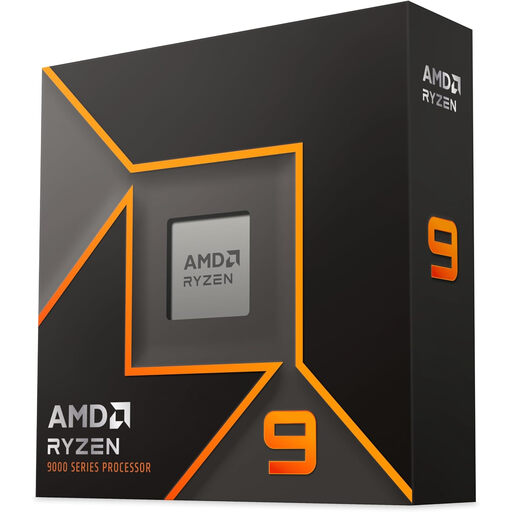
AMD Ryzen 9 9950X
View Product Details
- Why It Stands Out: The Ryzen 9 9950X is the flagship of the Ryzen 9000 series and a powerhouse for productivity. With 16 cores and 32 threads, it is engineered to demolish heavily threaded workloads. The Zen 5 architecture provides a substantial performance increase, allowing it to handle 4K video encoding, complex 3D rendering and extreme multitasking without breaking a sweat.
- Pros:
- Flagship multi-core performance for professional creative applications.
- High boost clocks also deliver top-tier gaming performance.
- Features a massive 80MB total cache for rapid data access.
- Full support for PCIe 5.0 and DDR5 on the AM5 platform.
- Who is it for: This processor is for the power user, the professional content creator and the enthusiast who demands uncompromising performance. If your work involves CPU-intensive tasks and time is money, the 9950X is a worthy investment.
Looking for Other Options?
If the processors above don't quite match your specific needs or budget, there are many other excellent choices available. From entry-level chips for basic builds to other specialised models, you can find the perfect fit for your next PC.
To see more, explore our complete range of processors.
Frequently Asked Questions (FAQ)
Q1: Is an AMD Ryzen processor good for gaming?
Yes, AMD Ryzen processors are an excellent choice for gaming. Models with high clock speeds and, in particular, those with 3D V-Cache like the Ryzen 7 7800X3D, are specifically engineered to deliver high frame rates and smooth gameplay. The entire range, from Ryzen 5 to Ryzen 9, offers strong gaming capabilities at different price points.
Q2: What is the main difference between a Ryzen 7 and a Ryzen 9?
The primary difference lies in the core count and target audience. Ryzen 7 processors (e.g., 8 cores) are typically aimed at high-performance users and serious gamers who need a great all-around chip. Ryzen 9 processors (e.g., 12 or 16 cores) are targeted at enthusiasts and professionals who run extremely demanding, multi-threaded applications for tasks like video production or 3D modelling, where more cores provide a significant performance benefit.
Q3: Do I need a new motherboard for a Ryzen 9000 series CPU?
Yes. The Ryzen 9000 series processors use the AMD AM5 socket. This means you will need a compatible AM5 motherboard (with a chipset like X670 or B650). These motherboards also require DDR5 memory, so you cannot use components from an older AM4-based system (like DDR4 RAM).


