
24/7 Customer Support

Free returns

Same-day & Next-day Delivery

Quality Guaranteed

Unlock Your Welcome Offers: FREE Delivery | Up to 80% OFF | Free 30-day JoyPlus trial
Download the APP
An American fridge freezer can transform food storage for a busy household, but its large size and feature list make choosing the right model more complicated than comparing litre capacity alone. A 90cm-wide appliance may look suitable online yet fail to fit through a doorway, open properly beside a wall or leave enough ventilation space.
Marketing can also make everyday features sound more significant than they are. Before choosing a side-by-side fridge freezer, check the usable capacity, installation measurements, energy label, dispenser system and warranty terms. These details usually have more impact on long-term satisfaction than a glossy finish or a connected app.
A 600L fridge freezer does not provide 600L of flexible food storage. Space is divided between the fridge and freezer, while ice makers, door bins, shelves and internal cooling systems reduce usable room.
Check the separate fridge and freezer capacities. A household that buys fresh produce regularly may prefer a larger refrigerator section, while bulk shoppers may need more freezer space for frozen food and batch cooking.
A water and ice dispenser can require either a mains water connection or an internal refillable tank. A non-plumbed water dispenser fridge freezer is easier to position because it does not need a nearby water pipe, but its tank needs regular filling and cleaning.
A plumbed model can provide a continuous water supply, but installation may require suitable plumbing, an accessible isolation point and replacement filters. Confirm which system is included before ordering.
The UK energy label runs from A to G. The letter is useful for comparison, but actual electricity use also depends on capacity, room temperature, door-opening frequency, installation and temperature settings.
For example, a larger Class C model may not use less electricity overall than a smaller Class E model simply because its letter rating is higher. Compare the label’s annual energy consumption figure where available, rather than relying on the rating alone.
Most American-style fridge freezers are approximately 84–92cm wide and around 64–74cm deep. Measure:
Some models require approximately 50mm clearance, but always follow the individual installation guide. A 90cm appliance can be difficult to use if a wall prevents the door from opening far enough to remove drawers or shelves.
A 500L fridge freezer is often suitable for larger households, while 600L-plus models may appeal to families who buy in bulk or entertain frequently. However, layout matters as much as total volume.
Side-by-side designs provide convenient access to fridge and freezer compartments from top to bottom. Their narrower vertical sections may be less suitable for very wide trays or large frozen boxes than a French-door design. Look for adjustable glass shelves, crisper drawers, door balconies and freezer drawers that suit the food you actually store.
Total No Frost fridge freezer models circulate cooled air to reduce frost build-up and remove routine manual defrosting. Multi-airflow systems are designed to distribute air through the compartments, while fast-freeze functions are useful after a large shop.
An inverter compressor fridge freezer adjusts its cooling output instead of repeatedly switching fully on and off. Product specifications may also state noise levels in dB(A). Models rated around 36–41dB may be worth considering for open-plan kitchens, but placement and room acoustics still affect what you hear.
A dispenser is useful if your household regularly drinks chilled water or uses ice. Check whether it supplies crushed ice, cubed ice or water only, and whether the ice maker occupies internal freezer space.
A smart fridge freezer with Wi-Fi may offer remote temperature controls, door alerts or energy-monitoring functions. These are conveniences rather than necessities, so avoid paying for connectivity if your priority is straightforward storage.
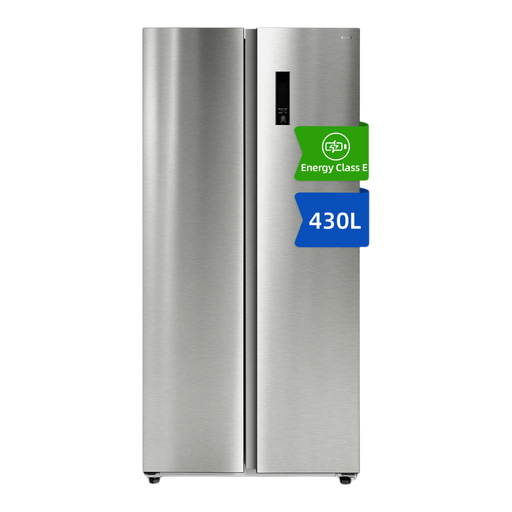
Why This Fits Their Persona: Its 84cm width is more manageable for kitchens where a 91cm appliance would be difficult to accommodate, while 430L provides a substantial step up from a conventional freestanding fridge freezer.
The listing provides separate 261L fridge and 169L freezer capacities, plus dimensions of 839 × 637 × 1763mm, making space planning clearer.
Frost-free cooling, dual inverter technology, six adjustable glass shelves and a stated 41dB noise level.
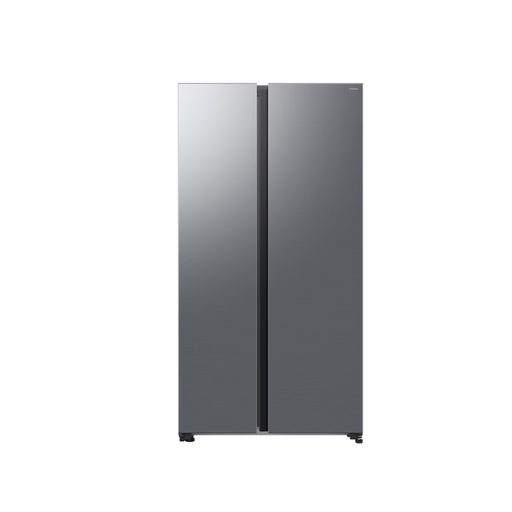
Why This Fits Their Persona: This 91.2cm model is aimed at homeowners who have sufficient space and want high capacity with app-based monitoring and a darker silver finish.
The specification lists 652L total capacity, C energy class, Total No Frost and a manual built-in ice maker rather than leaving the dispenser type unclear.
416L fridge and 236L freezer sections, Wi-Fi through SmartThings, SpaceMax design and Power Cool/Power Freeze functions.
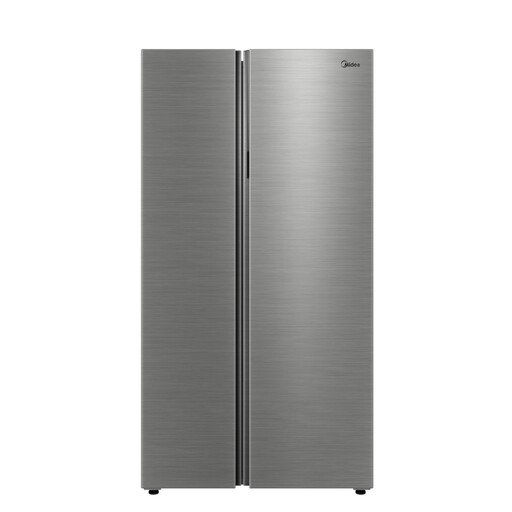
Why This Fits Their Persona: The 700L capacity suits households that batch cook, buy large weekly shops or need substantial freezer space for frozen food.
Its stated 91cm width, 177.5cm height and 73.5cm depth help buyers check whether the extra storage is practical for their kitchen.
433L fridge, 267L freezer, Total No Frost, automatic ice maker, built-in water pitcher and INFINITE Shelf and Door Bin systems.
Before buying a freestanding fridge freezer, confirm the following:
We have compiled a complete, real-time list of products that fully satisfy these strict selection criteria and UK safety regulations.
Running cost depends on the appliance’s annual energy consumption, energy rating, capacity, room temperature and usage. Compare the energy label figures between models and avoid placing the appliance next to a radiator or cooker. Keeping the doors closed and allowing hot food to cool before refrigeration can also reduce unnecessary cooling demand.
Lifespan varies according to construction, usage, maintenance and installation conditions. Regularly clean door seals, keep ventilation areas clear and follow the care instructions. Check the warranty carefully, particularly where compressor coverage is separate from the main parts-and-labour period.
No. Some models use an internal refillable tank, while others connect to the mains water supply. A non-plumbed model offers more positioning flexibility, whereas a plumbed appliance may be more convenient for frequent water and ice use. Always verify the connection type in the product specification before purchase.