
24/7 Customer Support

Free returns

Same-day & Next-day Delivery

Quality Guaranteed

Unlock Your Welcome Offers: FREE Delivery | Up to 80% OFF | Free 30-day JoyPlus trial
Download the APP
An American fridge freezer can transform food storage for a busy household, but its impressive appearance does not automatically make it suitable for your kitchen. Large external dimensions, high running costs and inconvenient dispenser installation can all turn an exciting purchase into an expensive mistake.
Before comparing models, look beyond capacity claims and promotional features. The useful questions are: will it fit through your doors, does the layout suit your shopping habits and can you use the water or ice function without costly installation?
A headline figure such as 500 litres or more refers to the appliance’s total net volume, but the split between fridge and freezer sections matters just as much. A family that buys fresh produce may need more fridge space, while batch cooks and bulk-buy shoppers may prioritise freezer capacity.
Door shelves, drawers, ice makers and internal tanks also reduce practical storage. Compare the separate fridge and freezer capacities rather than relying only on the total figure.
An ice and water dispenser fridge freezer may require a mains water connection. This can involve pipework, access behind the appliance and professional installation. A non-plumbed fridge freezer uses a refillable internal tank, offering more flexibility but requiring regular filling and cleaning.
Always confirm the water supply type in the specification. Product titles and retailer descriptions can occasionally use “water dispenser” without making the installation requirement sufficiently clear.
UK appliances use the current A-to-G energy label system. A D-rated energy-efficient fridge freezer may use less electricity than an otherwise similar E-rated model, but annual consumption in kWh remains the more useful comparison. A larger appliance can still consume more electricity overall than a smaller one, even with a more favourable rating.
Also check noise emissions, especially if your kitchen opens into a living or dining area. A difference between approximately 33 dB and 41 dB may be noticeable in a quiet home.
Many side-by-side models are approximately 90–91 cm wide, around 177–180 cm high and more than 70 cm deep. French door models can be narrower, with some designs measuring approximately 75–80 cm wide and 60 cm deep.
Measure:
A fridge freezer that fits the allocated recess may still be impossible to bring into the property.
A side-by-side fridge freezer provides vertical access to both compartments, but each shelf may be relatively narrow. This can be useful for organised ingredients, drinks and frozen food, although wide trays may not fit easily.
A French door fridge freezer places a wider fridge section above freezer drawers. This is practical for platters, large containers and fresh-food storage, while the drawers keep frozen food separated. However, it may be taller and offers less freezer capacity in some configurations.
For a large household, compare the fridge-to-freezer split and the number of adjustable shelves, crispers and freezer drawers—not just the external style.
A frost-free American fridge freezer circulates cold air to reduce frost accumulation and remove routine manual defrosting. Multi-airflow systems distribute cooled air through vents, while separate cooling circuits may help limit odour transfer between compartments.
An inverter compressor fridge freezer adjusts cooling output rather than repeatedly switching between full power and off. This can support quieter operation and more consistent temperature control, but the energy label and annual kWh figure should still guide running-cost comparisons.
Smart connectivity is useful when it provides functions you will actually use, such as remote temperature adjustment, open-door alerts or energy monitoring. Wi-Fi alone should not be treated as a reason to pay more.
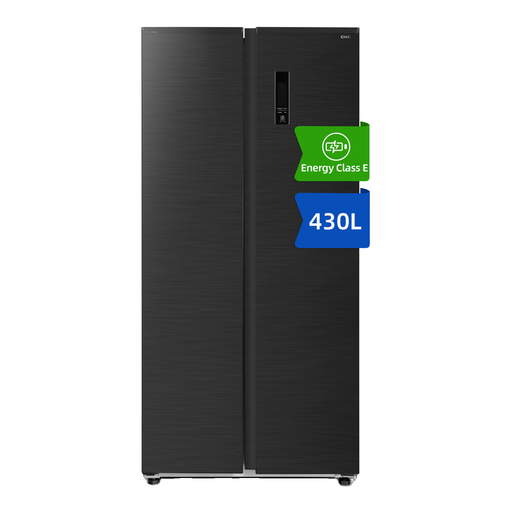
Why This Fits Their Persona: Its 84 cm width and 430-litre capacity offer family storage without the footprint of many 90 cm models. It suits households upgrading from a standard fridge freezer while keeping the layout relatively compact.
The specification clearly states 261L fridge and 169L freezer capacity, plus No Frost operation and a non-dispenser door design, avoiding uncertainty about plumbing.
Dual inverter technology, Multi Airflow cooling, Total No Frost and an E energy rating.
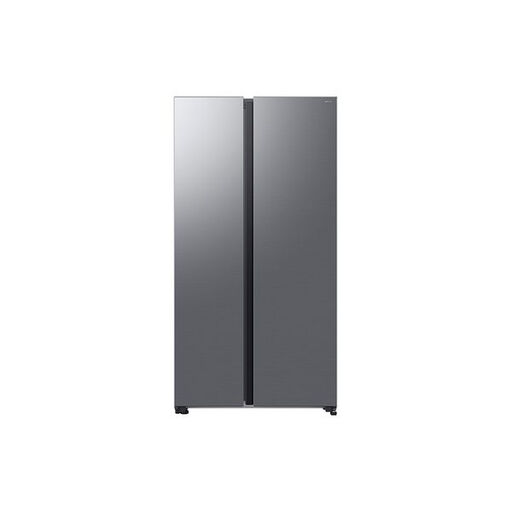
Why This Fits Their Persona: This 652-litre model is designed for households wanting substantial storage, smart monitoring and a comparatively low stated noise level of 33 dB.
The model uses a non-plumbed internal twist ice maker, so buyers are not committed to water-line installation. Its C energy class is clearly identified.
Twin Cooling Plus, Total No Frost, Wi-Fi connectivity and AI Energy Mode functions.
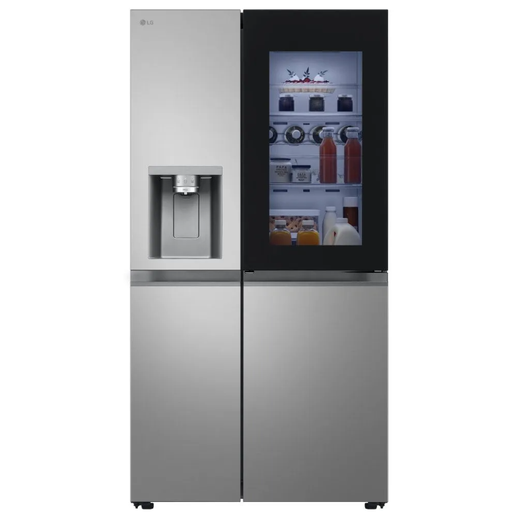
Why This Fits Their Persona: Its 635-litre capacity, external water and ice dispenser and Door-in-Door access suit large grocery shops, frequent cooking and entertaining.
The dispenser is non-plumbed and uses an internal 4-litre tank, making installation more flexible than a mains-connected alternative.
Total No Frost, Wi-Fi control, 36 dB stated noise level and 416L fridge capacity.
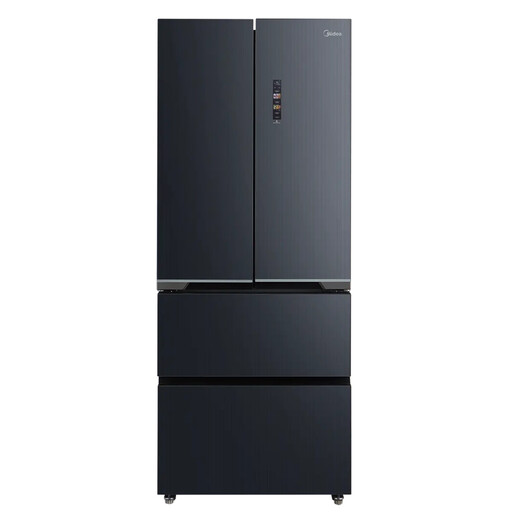
Why This Fits Their Persona: At 753 mm wide and 600 mm deep, this French door model may suit UK kitchens where a conventional 90 cm American fridge freezer would be difficult to accommodate.
Its stated dimensions make the space requirement easier to assess, while the French door layout provides wide fridge storage without a 90 cm cabinet width.
435-litre capacity, Total No Frost, 35 dB stated noise level and 285 kWh/year listed consumption.
We have compiled a complete, real-time list of products that fully satisfy these strict selection criteria and UK safety regulations.
Running cost depends on the annual kWh figure, energy rating, capacity and household electricity tariff. Compare the energy label with similarly sized models rather than comparing ratings alone. Keeping the appliance level, allowing ventilation and avoiding unnecessary door opening can also support efficient operation.
Only models with a mains-connected dispenser require plumbing. A non-plumbed fridge freezer uses an internal tank, but the tank must be refilled and cleaned according to the manufacturer’s instructions. Check this detail before ordering.
Lifespan varies with usage, installation, maintenance and servicing. Total No Frost reduces manual defrosting, but shelves, seals, filters and dispensers still need care. Keep ventilation areas clear, clean removable parts and follow the manufacturer’s installation and warranty conditions.