
24/7 Customer Support

Free returns

Same-day & Next-day Delivery

Quality Guaranteed

Unlock Your Welcome Offers: FREE Delivery | Up to 80% OFF | Free 30-day JoyPlus trial
Download the APP
An American fridge freezer can provide the storage space, cooling controls and convenience that a busy UK household needs. However, a large capacity does not automatically mean a practical purchase. Oversized doors may clash with cabinets, an attractive dispenser may require costly plumbing and a low-sounding energy claim may not reflect the appliance’s actual annual consumption.
This guide explains the main buying traps, the specifications worth checking and which models may suit different household needs.
A side-by-side fridge freezer may fit a 90cm gap but still be unsuitable once door clearance, ventilation and delivery access are considered. Check:
For tighter kitchens, a French door fridge freezer or extra-wide freestanding model may offer useful capacity without projecting as far into the room. For example, the Midea MDRF600BIE70 measures 600mm deep and 753mm wide, while providing 435 litres of storage.
A non-plumbed ice and water dispenser uses an internal tank, so it can be positioned without a mains water connection. The trade-off is that the tank needs regular refilling and cleaning.
A plumbed fridge freezer connects to the mains water supply and can provide a more continuous supply, but installation should be completed correctly by a qualified professional. Check whether filters, replacement cartridges or additional plumbing costs apply before ordering.
Also confirm whether the dispenser provides chilled water only, cubed ice, crushed ice or a combination of these functions. These details vary between models.
Features such as Multi Airflow, Metal Cooling, humidity zones and separate cooling circuits are technical design features, not a guarantee that food will remain fresh for a specific period. Their practical value depends on correct temperature settings, loading, door-opening habits and food storage.
Total No Frost is easier to assess: it circulates cold air to help prevent frost and ice accumulation in the fridge and freezer compartments, reducing the need for manual defrosting.
A large fridge freezer should be assessed by its split between fresh and frozen storage, not just total litres. A 500 litre fridge freezer may suit a large household, but a family buying mostly fresh food may need more fridge space than freezer space.
Consider shelf adjustability, crisper drawer size, door-bin depth and freezer drawer access. A capacity figure is less useful if the interior layout cannot accommodate the food you regularly buy.
UK appliances use the A to G energy label system. A higher rating can indicate greater efficiency, but the label’s stated kWh per year is also important when comparing models of different sizes.
A larger appliance may use more electricity overall even if its energy class appears favourable. Compare annual consumption alongside capacity and remember that actual running costs depend on your tariff, room temperature, settings and usage.
Noise is measured in dB(A). Small differences can be noticeable in an open-plan kitchen, although the stated figure is measured under specified conditions. Models in this selection range from approximately 33dB to 41dB.
Useful features include:
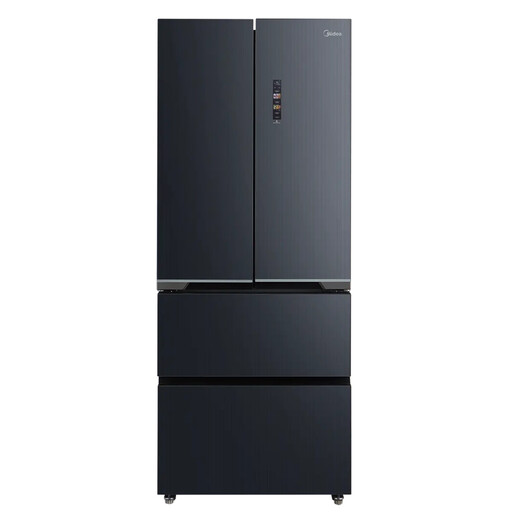
Why This Fits Their Persona: Its 600mm depth and 753mm width make it a practical choice for households wanting American-style storage without a conventional 90cm-wide cabinet.
The compact depth helps reduce projection into the kitchen, while Total No Frost avoids routine manual defrosting.
435-litre capacity, French door layout, 35dB stated noise level and 285kWh annual consumption.
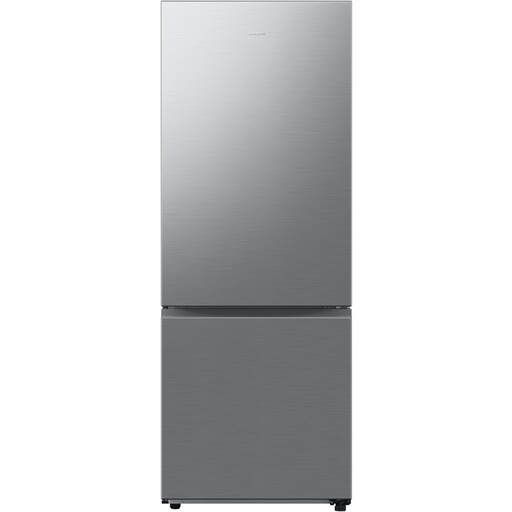
Why This Fits Their Persona: Suitable for larger households seeking substantial storage, a silver finish, app connectivity and a relatively narrow 75.9cm width.
The listed dimensions help with planning, while Total No Frost removes the need for routine freezer defrosting.
538-litre capacity, A energy class, 34dB stated noise level, Wi-Fi and reversible door.
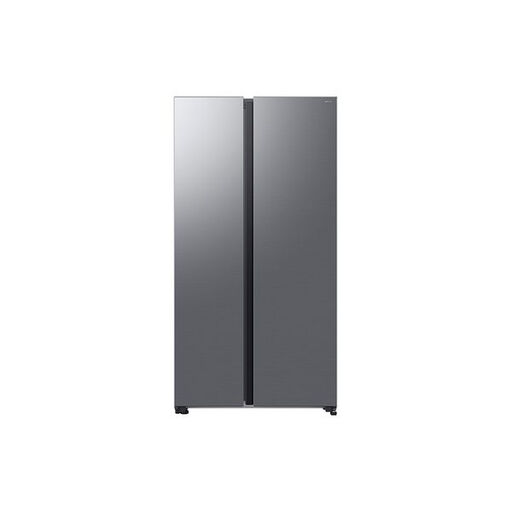
Why This Fits Their Persona: Designed for large households that regularly buy in bulk and want a 652-litre side-by-side layout with smart controls.
Its non-plumbed ice maker avoids a fixed water connection, but buyers should allow space for manual ice-making and storage.
652-litre capacity, C energy class, 33dB stated noise level, Total No Frost and Wi-Fi.

Why This Fits Their Persona: A suitable option for shoppers prioritising a black finish, non-plumbed dispensing and connected kitchen features.
The internal 4-litre tank avoids fixed plumbing; remember that it requires regular refilling and cleaning.
635-litre capacity, matte black finish, Total No Frost, Wi-Fi and chilled water, cubed ice and crushed ice functions.
We have compiled a complete, real-time list of products that fully satisfy these strict selection criteria and UK safety regulations.
Before buying, confirm that the appliance can be installed on a level, stable floor with the manufacturer’s stated ventilation clearance. Use a dedicated, properly earthed socket and avoid extension leads or multi-socket adapters where the manual prohibits them.
For models with water or ice functions, check whether the supply is mains-connected or tank-fed. After delivery, follow the manual’s standing time before switching on, allow the appliance to cool before loading food and clean any water tank, dispenser area or filter as instructed.
Running cost depends on the appliance’s annual kWh figure, energy rating, size, room temperature and usage. Compare the energy label rather than relying only on phrases such as “energy-efficient fridge freezer”. A smaller appliance with a strong rating may use less electricity overall than a much larger model.
Usually, no fixed water connection is required because the dispenser uses an internal tank. You still need a suitable electrical socket, adequate ventilation and enough access to remove and refill the tank. Follow the product instructions for cleaning and filter replacement.
Lifespan varies according to build, usage, installation, cleaning and servicing. Keep ventilation areas clear, avoid overloading shelves, clean door seals and follow the manufacturer’s maintenance guidance. Check the warranty terms carefully, particularly where compressor cover and registration requirements differ.