
24/7 全天候客户支持

免费退货

当日/次日达

品质保障

开启新人专享福利: 全场免邮 | 低至 2 折 | 免费试用 30 天 JoyPlus 会员
下载 Joybuy
If you train regularly, an amino acid drink can be convenient around busy gym sessions, long commutes and packed weekly routines. However, choosing an Applied Nutrition Amino Fuel EAA Recovery Powder is not simply a matter of selecting the most attractive flavour or largest tub.
Marketing can make similar products appear interchangeable, while serving sizes, amino acid quantities and usage instructions may differ. This guide explains what to check before buying an EAA supplement powder, and matches several Amino Fuel options to different UK fitness routines.
A 390g tub may appear better value than a 91g pouch, but the useful comparison is the serving size and declared amino acid profile. Some products provide a 13g serving containing 11g of amino acids, while larger formats may state a 10g serving with approximately 8g of amino acids.
Compare:
This prevents a larger container from disguising a lower effective serving count.
Branched-chain amino acids—leucine, isoleucine and valine—are only part of the essential amino acid group. A broader formula may also list lysine, threonine, histidine, phenylalanine, methionine and tryptophan.
For shoppers seeking an amino acid recovery supplement, check whether the label lists all nine EAAs rather than only highlighting the three BCAAs. Also check whether glutamine is listed separately, as it is not one of the nine essential amino acids.
A zero-sugar amino acid drink may suit people who prefer to avoid sugar around training, but sugar content is only one part of the decision. Sweeteners, flavourings, colourings, salt and serving calories still appear on the label.
Check the actual nutrition panel and ingredient list. For example, several Amino Fuel formats list sucralose and provide approximately 3–4 calories per serving, but formulation details can vary by flavour and pack size.
For a clear comparison, look for a fully itemised amino acid table. The 91g Amino Fuel formats state 11g of amino acids per 13g serving, including 9g of EAAs, 6g of BCAAs in a 2:1:1 ratio and 2,500mg of L-glutamine.
The larger EAA + BCAA + Glutamine formats list approximately:
Because the labels use different serving sizes, compare like for like rather than relying on the front-of-pack wording.
A practical intra-workout amino supplement should fit your bottle and training schedule. The 91g formats advise mixing one 13g serving with 300–400ml of water. Several 390g versions advise one scoop with 250–350ml of cold water, with a maximum of two scoops per day.
Use a shaker, add water first, then powder, and shake immediately. If you are sensitive to strong flavours, using more water can make the drink lighter. Always follow the instructions on the pack you receive, as directions may change between formulations.
Read the complete label before purchase, especially if you have allergies or take medicines. Ingredients listed across the range include amino acids, citric acid, flavourings, sucralose, silicon dioxide and colourings that vary by flavour.
These products are dietary supplements, not substitutes for a varied diet. The supplied product information states that they are not suitable for under-18s, pregnant or breastfeeding individuals. Anyone with a medical condition, known allergy or prescription medication should seek advice from a healthcare professional before use.
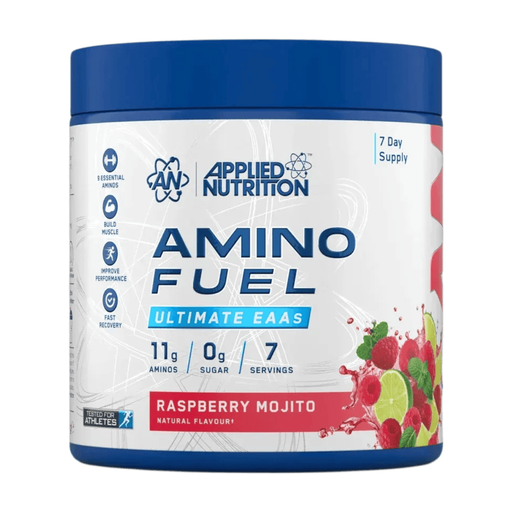
Why It Suits This Shopper: The smaller 91g format lets new users try an EAA supplement powder without committing to a large tub, making it practical for occasional gym sessions or flavour-led shopping.
The label specifies 11g of amino acids per 13g serving, including 9g of EAAs, 6g of BCAAs and 2,500mg of L-glutamine.
Compact 91g pack; stated 2:1:1 BCAA ratio; Raspberry Mojito flavour.
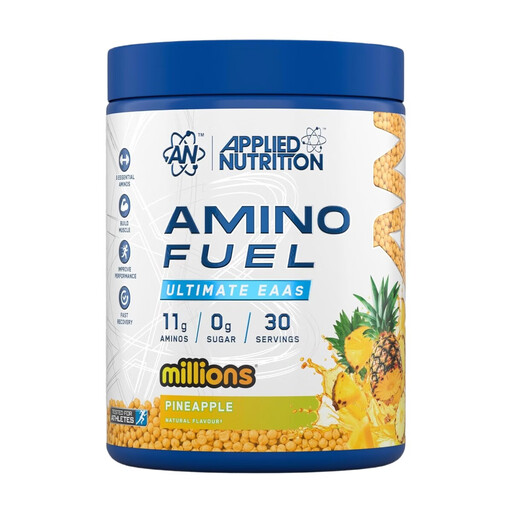
Why It Suits This Shopper: Regular gym-goers who want one multi-amino formula for training days and rest days may prefer the larger pack and tropical pineapple flavour.
It provides a listed EAA, BCAA and glutamine combination rather than focusing on BCAAs alone, with a stated zero-sugar nutrition profile.
390g format; pineapple flavour; designed for mixing during or after exercise.
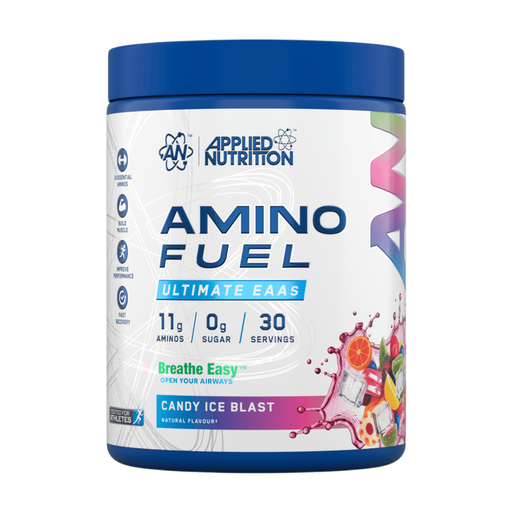
Why It Suits This Shopper: High-frequency trainers can choose a large-format amino acid recovery supplement for repeated pre-, intra- or post-workout use.
The listed directions specify one scoop of approximately 10g and provide a clear mixing method rather than relying only on performance language.
390g pack; includes EAAs, BCAAs and glutamine; Candy Ice Blast flavour.
We have compiled a complete, real-time list of products that fully satisfy these strict selection criteria and UK safety regulations.
Follow the serving instructions on the specific product label. Depending on the format, mix one serving with approximately 250–400ml of cold water and consume before, during or after exercise. Do not exceed the stated daily amount.
Shelf life depends on the best-before date, serving size and frequency of use. Store the container tightly closed in a cool, dry place away from sunlight and humidity. Use the product according to the label and do not consume it if its appearance, smell or texture has changed.
No. It is a dietary supplement providing amino acids and should be used alongside a varied, balanced diet. Check your total intake if you already use protein powders, BCAA products or another glutamine supplement to avoid unnecessary overlap.