What to prioritise
Start with the animation software and the number of screens you need, then count the components that will require power at the desk.
All-in-one desktop
Choose it when: One built-in screen is enough and reducing separate desk components matters most.
Trade-off: A simpler setup does not establish that its graphics suit demanding 3D work.
Compact desktop
Choose it when: You can power a separate monitor but want a smaller computer chassis.
Trade-off: The monitor still needs space and power, while display support and configuration depend on the model.
Workstation tower
Choose it when: Your planned 3D workload or future hardware changes take priority over a minimal desk setup.
Trade-off: Allow for a separate display and check the tower’s exact graphics and memory configuration.
| Concern |
What to check |
Who this matters to |
| Powered components |
Count the computer, primary screen and any powered drawing equipment or accessories you will use. Check whether one built-in screen is sufficient. |
When one screen covers my work, I would rather not power a separate primary monitor; around 31% of consumers put fewer powered components first. |
| 3D graphics and rendering |
Compare the exact Windows configuration with the Blender Foundation’s recommended 32GB RAM and 8GB GPU VRAM, then check renderer and driver support. |
If I work on demanding 3D scenes, graphics capability matters more to me than a tidier desk; roughly 38% of consumers prioritise 3D work and rendering. |
| Software and memory |
Check your application version, operating system, plug-ins and recommended memory. Autodesk recommends 16GB RAM or more for Maya 2026. |
With a particular animation application or plug-in in mind, I need a desktop that fits that workflow; around 23% of consumers put software compatibility and memory first. |
| Displays and expansion |
Check the exact model’s display outputs, ports and upgrade options before planning extra screens or storage. |
As my projects grow, I may need another display or more peripherals despite the extra connections; roughly 8% of consumers prioritise future flexibility. |
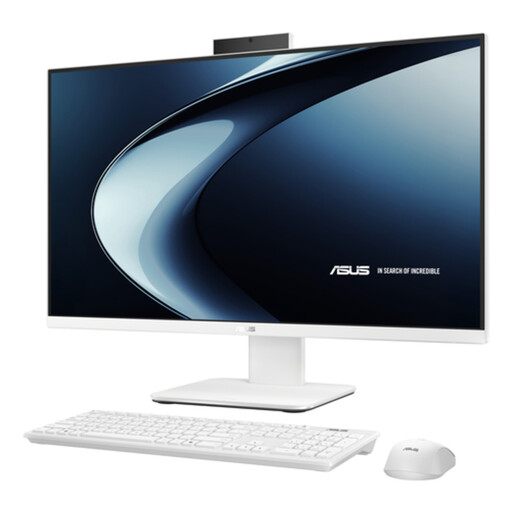
Joybuy all-in-one option
This all-in-one is an option to examine if a built-in primary screen is central to your limited-socket setup. Check its configuration against your animation applications before deciding.
 No image available
ASUS V400 AiO V470VAK-WPE032W, 27-inch Full HD, 16GB, White
For a one-screen animation desk, its built-in display avoids a separately powered primary monitor.
Intel Core i7-13620H, 16GB DDR5 RAM, 512GB SSD and Windows 11 Home.
For Blender on Windows, the Blender Foundation recommends 32GB RAM. Check your intended software and projects before choosing this 16GB configuration.
View on Joybuy
Common questions
What specifications should I check for Blender animation?
For Blender on Windows, compare the desktop with the Blender Foundation’s recommended 8-core CPU, 32GB RAM and GPU with 8GB VRAM. Check the requirements for your Blender version, renderer and graphics drivers; meeting a recommendation is not a guarantee for every project.
Will an all-in-one solve a shortage of plug sockets?
An all-in-one can remove the need to power a separate primary monitor, but it will not necessarily power your whole animation setup from one socket. Count any pen display, additional monitor, speakers, drives and dock you intend to use.
Can I use an extension lead for a desktop and animation equipment?
Check the particular extension lead and connected equipment rather than judging safety by the number of available outlets. The Health and Safety Executive advises checking that electrically powered work equipment suits its supply and that the plug fuse is correctly rated; do not use damaged plugs, cables or sockets.
Do I need a Windows workstation to use Maya?
Not necessarily: Autodesk’s Maya 2026 requirements list supported Windows, macOS and Linux systems. Before choosing a desktop, check your precise Maya version, renderer, plug-ins and Autodesk’s graphics-hardware guidance.


