
24/7 Customer Support

Free returns

Same-day & Next-day Delivery

Quality Guaranteed

Unlock Your Welcome Offers: FREE Delivery | Up to 80% OFF | Free 30-day JoyPlus trial
Download the APP
Choosing between Anker chargers and power banks can seem straightforward until you compare wattage, ports, charging standards and device compatibility. A small charger may suit a phone but struggle with a tablet, while a high-capacity power bank can be unnecessarily heavy for a daily commute.
This guide cuts through common marketing traps and explains which specifications matter for home, travel, work and in-car charging.
A charger advertised as 100W may not deliver 100W to every connected device at the same time. For example, the Anker Prime 100W GaN charger provides up to 100W when one USB-C port is used, but its total output falls to 89W across three ports.
Always check:
Magnetic power banks and wireless charging stations require suitable alignment. A magnetic power bank may not hold securely through a standard non-magnetic case, and thick cases can reduce charging performance.
The Anker Nano Magnetic Wireless 5,000 mAh Power Bank is specified for use with a MagSafe-compatible case under 2.5mm thick. Metal plates, bank cards and keys should not be placed between the phone and charger, as they may trigger foreign object detection or increase heat.
A 10,000mAh portable charger offers more stored energy than a 5,000mAh model, but it is generally less pocket-friendly. Capacity figures also do not translate directly into the same amount of usable energy at the phone because of conversion losses.
Consider how you will carry and recharge the unit. A built-in USB-C connector can be more convenient than carrying a separate cable, but it must match your phone’s port and case design.
For a basic iPhone charger, 20W USB-C Power Delivery is suitable for many everyday charging needs. A 30W Anker USB-C charger provides additional headroom for newer smartphones, tablets and compatible accessories.
For laptops, look at 65W to 140W USB-C output, depending on the computer. A 67W charger can suit a phone, tablet and lightweight notebook, while a 100W or 140W Anker GaN charger is more appropriate for larger laptops or several devices.
Remember that the device controls how much power it accepts. Connecting a 140W charger to a phone does not force 140W into the phone.
A multi-device charger is useful if you regularly charge a phone, watch, earbuds and laptop together. Two USB-C ports are increasingly practical, while a USB-A port remains useful for older cables and accessories.
Check whether the charger supports all connected devices at the required speed. The Anker Prime 67W charger has two USB-C ports and one USB-A port, with a maximum single-device output of 67W and up to 65W when two ports are used.
Match the cable to both ends of the charging setup:
A cable can limit performance even when the wall charger has a suitable wattage rating, so check its supported current and charging standard.
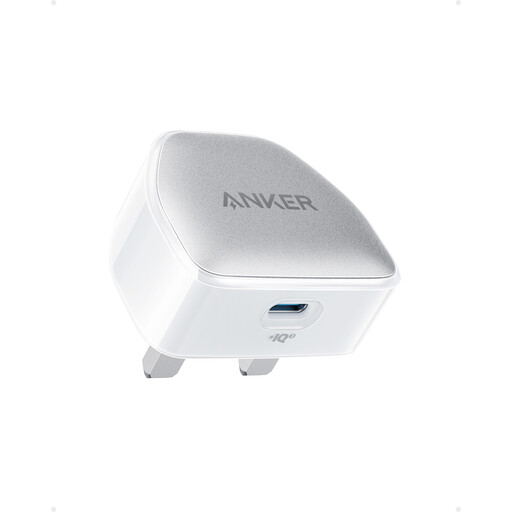
Why This Fits Their Persona: A compact option for everyday phone charging at home, in the office or in a small travel bag.
Its stated 20W USB-C output is clear, avoiding vague “fast charging” descriptions without a wattage figure.
20W USB-C output and a compact design specified as 33% smaller than a conventional 20W charger.
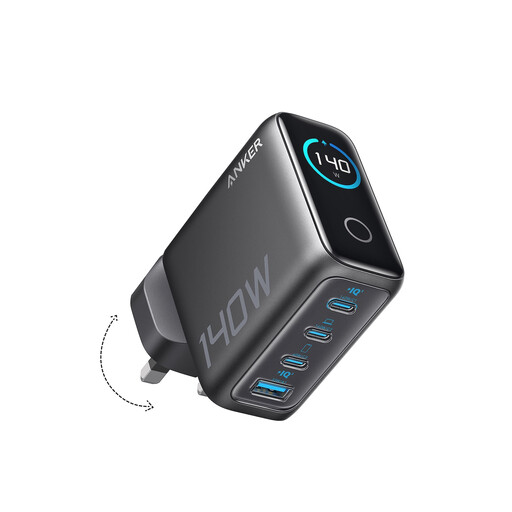
Why This Fits Their Persona: Designed for users managing a laptop, tablet, phone and accessories from one mains socket.
Its four-port configuration and charging display make power distribution easier to monitor than a single-output adapter.
Four-device charging, two high-output USB-C ports and a colour display showing charging status and temperature.
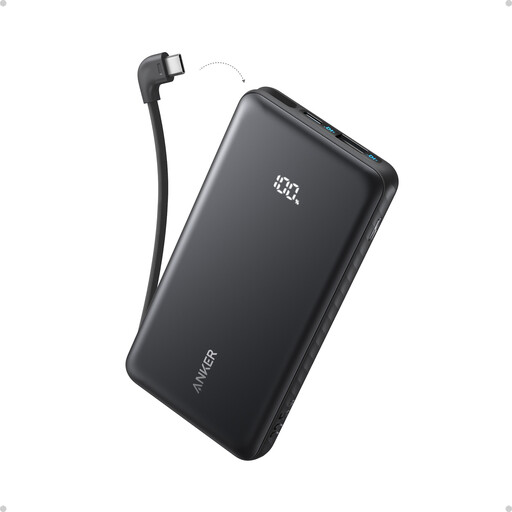
Why This Fits Their Persona: A practical portable charger for long commutes, travel days and users carrying several USB-C devices.
The capacity, maximum output and input figures are stated separately, helping buyers distinguish stored energy from charging speed.
10,000mAh capacity, 22.5W output, a built-in USB-C cable, USB-C and USB-A ports, plus a charging-status screen.
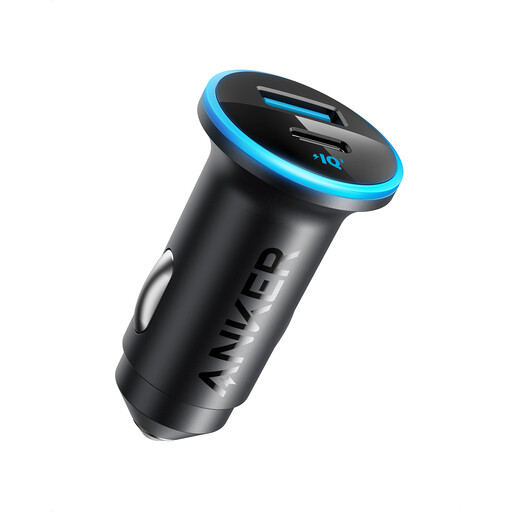
Why This Fits Their Persona: Suitable for drivers who need to charge two devices during journeys without occupying multiple vehicle sockets.
The separate USB-C and USB-A ratings show how the total 52.5W is allocated rather than implying both ports provide the same output.
USB-C output up to 30W, USB-A output up to 22.5W and two-device charging for compatible phones and tablets.
We have compiled a complete, real-time list of products that fully satisfy these strict selection criteria and UK safety regulations.
Many are, provided the connector or wireless standard matches the phone. A USB-C power bank works with compatible USB-C devices, while a magnetic power bank requires suitable magnetic alignment. For older iPhones using a Lightning port, select a power bank with the correct cable or use a compatible Lightning charging cable.
A 20W USB-C charger is sufficient for many everyday iPhone charging setups. A 30W model offers extra capacity for compatible phones, tablets and accessories, and may be more useful if one charger serves several devices. The phone determines its actual charging rate.
Keep chargers dry and ventilated, avoid crushing cables, and do not use a power bank in extreme heat or humidity. For magnetic models, remove metal objects from between the phone and charger. Follow the supplied instructions, and replace any cable showing exposed conductors, damaged connectors or heat damage.