
24/7 Customer Support

Free returns

Same-day & Next-day Delivery

Quality Guaranteed

Unlock Your Welcome Offers: FREE Delivery | Up to 80% OFF | Free 30-day JoyPlus trial
Download the APP
A charger may look like a simple purchase, but the wrong combination of plug, port, cable and power output can leave you with slow charging, unnecessary bulk or accessories that do not work together. This guide explains what to check before buying Anker charging accessories, whether you use an iPhone, Android phone, tablet, laptop, smartwatch or wireless earbuds.
A charger advertised as an Anker fast charger may quote its highest output when only one port is being used. When several devices are connected, the available power can be shared between ports.
For example, the Anker Prime 100W USB-C 3-port GaN Charger provides up to 100W when one port is in use, while its listed maximum output with three ports connected is 89W. That remains useful for a laptop, phone and earbuds, but it is important to understand the charging distribution rather than assume every port supplies 100W simultaneously.
A USB-C charger does not automatically make every cable a fast-charging cable. Check both ends of the cable and whether your device uses USB-C, Lightning or another connector. A USB-C to Lightning cable also requires a compatible Power Delivery charger to support faster charging on suitable Apple devices.
For older cars, bedside plugs or existing USB-A adapters, a USB-A to Lightning cable may be more practical than replacing the entire setup.
Magnetic wireless charging depends on the phone, case and charging standard. A magnetic power bank may not hold securely through a thick or non-magnetic case. Wireless charging can also be slower than wired charging and may generate more heat, particularly if the phone is being used at the same time.
Before buying an Anker MagSafe charger or wireless charging stand, check device compatibility, case thickness and whether the required wall adapter is included.
For a compact Anker USB-C charger, 20W or 30W is generally suited to phones and smaller tablets, while 67W, 100W or more may be appropriate for laptops and multi-device charging. The device determines how much power it accepts, so a higher-rated charger will not necessarily charge a phone at a higher speed than its own limits allow.
Look for support for common standards such as USB Power Delivery (PD). For a multi-port charger, read the one-port and multi-port output figures separately.
Port choice affects convenience. Two USB-C ports are useful for newer phones, tablets and laptops, while USB-A remains helpful for older cables, accessories and some travel equipment.
A three-port charger with two USB-C ports and one USB-A port can reduce the number of plugs needed at a desk or in university accommodation. A four-port model may suit a household or professional workspace, but it is likely to be larger and more expensive.
Power banks are commonly rated in mAh, but usable energy is affected by voltage conversion and charging losses. A 5,000mAh model is easier to carry and suitable for a convenient top-up, whereas a 10,000mAh Anker portable charger offers more reserve for commuting or travel.
Also check output wattage, built-in connectors, recharge input and airline or transport requirements. Keep power banks dry, avoid crushing them and follow the manufacturer’s storage instructions.
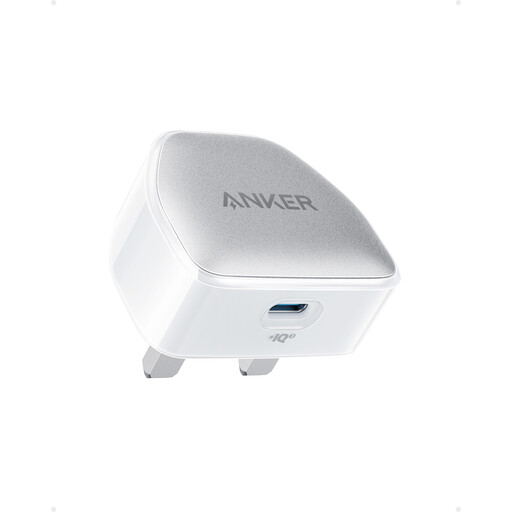
Why This Fits Their Persona: A straightforward option for a phone user replacing an old plug at home, work or university. Its compact size is convenient for a handbag, drawer or small travel pouch.
Its 20W USB-C output is clearly defined, helping buyers avoid paying for laptop-level wattage when they mainly need a phone charger.
20W USB-C Power Delivery support; compact design listed as 33% smaller than a conventional 20W charger.
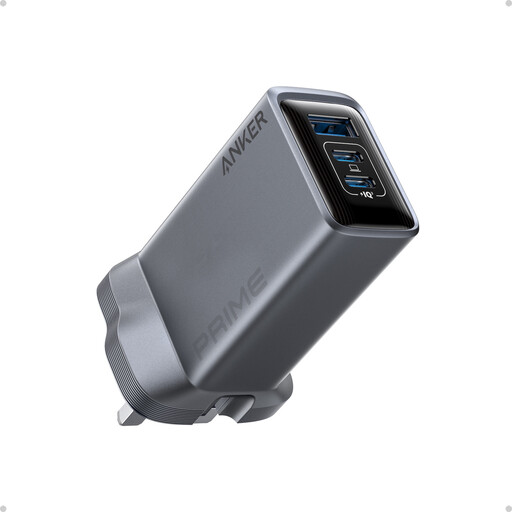
Why This Fits Their Persona: Suitable for professionals and frequent travellers who want one compact charger for a laptop, phone and smaller accessory.
The specification separates single-port performance from three-port distribution, making its multi-device capability easier to assess.
Two USB-C ports plus USB-A; up to 100W from one USB-C port; foldable prongs for travel.
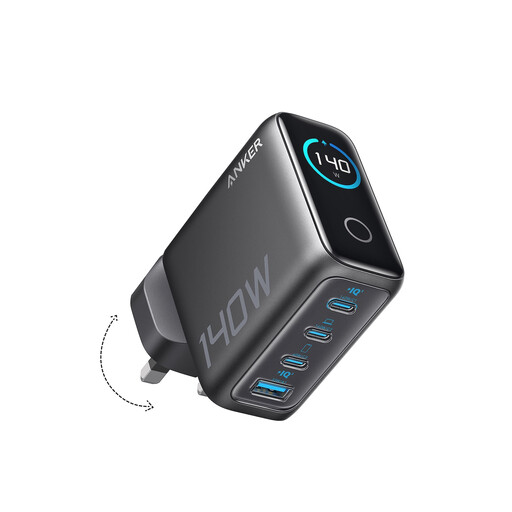
Why This Fits Their Persona: Designed for a busy household, shared office or laptop-heavy setup where several devices need power from one socket.
Four ports reduce the temptation to overload extension leads with separate plugs. Buyers should still check how power is allocated between connected devices.
Four-device charging; GaN design; listed ActiveShield 2.0 temperature monitoring and an integrated display.
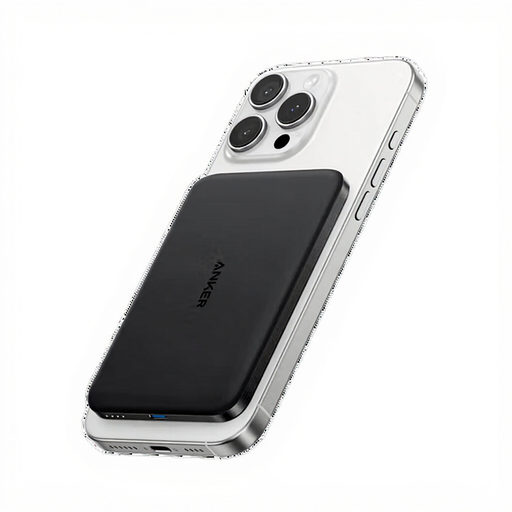
Why This Fits Their Persona: A practical choice for commuters who prefer cable-free top-ups on trains, in cafés or while walking between meetings.
The listed guidance specifies a MagSafe-compatible case under 2.5mm and warns against metal objects between the phone and charger.
5,000mAh capacity; 15W magnetic wireless output; compact cable-free format for compatible phones.
We have compiled a complete, real-time list of products that fully satisfy these strict selection criteria and UK safety regulations.
No. Charging speed depends on the device, cable and charging protocol. A 100W Anker GaN charger can power a laptop and phone, but a phone may only accept a lower wattage. Using the correct USB-C PD cable is also necessary for compatible fast charging.
Lifespan depends on charging cycles, storage conditions and usage. Keep it away from heat and moisture, avoid crushing it and use a suitable charger for recharging. A 5,000mAh model prioritises portability, while a 10,000mAh Anker power bank provides more capacity for longer journeys.
Wireless charging can use slightly more electricity than wired charging because energy is transferred across a gap and some is lost as heat. For occasional top-ups, the difference is generally modest; wired charging is more suitable when efficiency and speed are the main priorities.