Who is each format for?

Hosts serving one soup to several guests

A same-flavour multipack simplifies shopping when everyone can eat the same recipe. Tesco Groceries lists Heinz Cream of Tomato and Cream of Chicken in 4 × 400g packs; use the chosen soup’s serving statement to plan the quantity.

Hosts accommodating different tastes or diets

Individual tins let you offer more than one recipe instead of committing everyone to a single multipack. Check each tin’s ingredients and allergy information, even when its name or dietary label seems to fit.

Couples planning a smaller starter

A family multipack may not fit a small dinner. Marks & Spencer lists M&S Collection soups in 550g to 580g tins; check the particular recipe and serving information rather than treating a larger tin as a set number of portions.

What should you check before buying?

One-flavour multipack

Choose it when: Everyone can share the same soup and you need several tins for the table.

Trade-off: A pack gives you less flexibility if a guest needs a different recipe.

Mixed individual tins

Choose them when: Guests want different flavours or need separate dietary options.

Trade-off: You must plan quantities and check the label of each recipe separately.

Larger single tin

Choose it when: A smaller table wants one recipe and a family multipack would leave more tins than needed.

Trade-off: A larger tin is not a multipack, and its weight alone does not establish how many people it serves.

Priority What to check Your needs
Portions Check the number and weight of tins, then the serving statement on the exact recipe. Sainsbury’s lists two servings per 400g can for its Heinz Chunky Big Chicken & Vegetable multipack; that statement should not be applied to other soups. I’m serving soup as a starter rather than a main course, so I need to plan portions for that menu.
Flavour and texture Decide whether the menu calls for a smooth soup or one with chunky ingredients. Check that a single-flavour pack suits everyone before buying several tins of it. A familiar starter may work for the whole table, or I may need separate choices for guests with different tastes.
Ingredients and allergens Read the ingredients and allergy statements on each exact tin. Marks & Spencer lists milk ingredients in its Cream of Tomato; its vegan Minestrone page also warns that the product is unsuitable for people with a milk or egg allergy. Guests have different dietary requirements, so I need to check each recipe rather than rely on a flavour name or vegan label.
Dates and leftovers Check the pack’s date marking and storage instructions. GOV.UK distinguishes safety-related use-by dates from quality-related best-before dates; follow the chosen soup’s own instructions after opening. Any soup left after dinner needs to be stored and used according to its label.

Common buying mistakes

  • Counting tins as portions

    Can size does not establish the serving count. Sainsbury’s states that each 400g can in its Heinz Chunky Big Chicken & Vegetable multipack contains two servings.

    Use the serving statement on the soup you are buying, then decide how much to serve for a starter or main course.

  • Choosing one recipe before checking guests’ needs

    A familiar soup name does not tell you everything about its ingredients. Marks & Spencer lists milk ingredients in its Cream of Tomato, while the Heinz chunky chicken-and-vegetable product listed by Sainsbury’s contains wheat and milk ingredients.

    Ask about dietary requirements before committing to one flavour, and read the label on every recipe you plan to serve.

  • Treating an online listing as the final label

    Ingredients and product information can change, which matters especially when a guest has an allergy.

    Check availability before settling the menu, then confirm the ingredients and allergy statements on the tins you receive.

  • Leaving opened soup without following its instructions

    The Heinz product page at Sainsbury’s and the M&S soup pages specify refrigeration in a suitable container and use within two days after opening.

    Follow the instructions on each chosen tin for transferring, refrigerating and using any leftovers.

Brand and retailer references

These examples show different pack and recipe formats; they do not indicate which products will be available when you shop.

Heinz

Tesco Groceries lists Heinz Cream of Tomato and Cream of Chicken in 4 × 400g multipacks. Sainsbury’s lists a 3 × 400g Chunky Big Chicken & Vegetable multipack.

  • The four-can packs provide one flavour across several tins.
  • Check the exact recipe’s serving statement and allergens; the chunky chicken-and-vegetable listing includes wheat and milk ingredients.

Campbell's

Tesco Groceries lists 295g condensed Cream of Mushroom and Cream of Chicken tins.

  • Individual tins offer another recipe format when assembling a mixed selection.
  • Check the preparation and serving instructions on the exact condensed soup before planning portions.

Tesco

Tesco Groceries’ tinned-soup listings include the Heinz four-can multipacks and individual Campbell's condensed soups described above.

  • The listed formats allow a choice between one-flavour multipacks and individual tins.
  • Confirm the selected recipes and availability when placing an order.

M&S

Marks & Spencer lists vegetarian and vegan tinned-soup options, alongside M&S Collection soups in 550g to 580g tins.

  • The larger single-tin formats offer an alternative to buying a family multipack for a small dinner.
  • Check each product’s allergy information: the M&S vegan Minestrone page states that it is unsuitable for people with a milk or egg allergy.

Joybuy multipack options

These six-can Heinz packs are options for serving one soup flavour to several guests. Check the exact tin’s serving and allergy information before deciding how many cans the dinner requires.
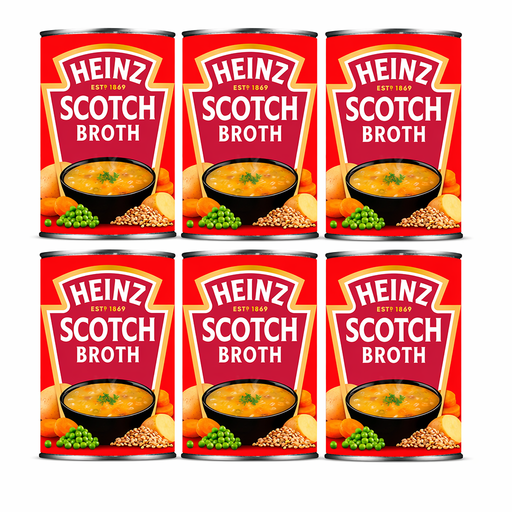
Six 400g cans of Heinz Scotch Broth Soup

Heinz Scotch Broth Soup, 6 × 400g

A six-can pack suits a table sharing Scotch broth, particularly if a soup with mutton, pearl barley and vegetables fits the menu.

It contains gluten from barley and wheat. Check the exact can label against guests’ dietary requirements; its half-can nutrition basis should not be treated as a serving declaration.

View on Joybuy
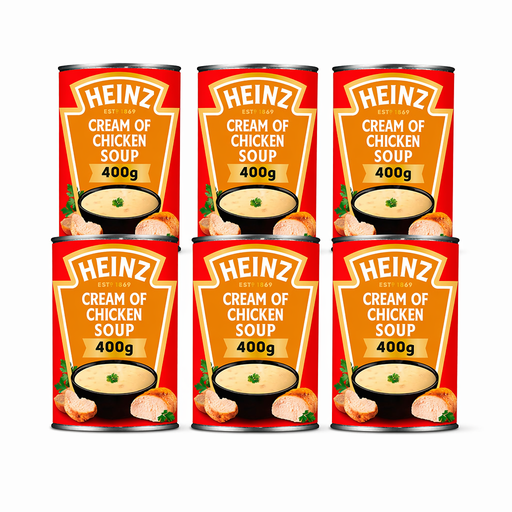
Six 400g cans of Heinz Cream of Chicken Soup

Heinz Cream of Chicken Soup, 6 × 400g

This six-can pack is for a shared creamy chicken soup when the same recipe suits everyone at the table.

The product information identifies milk and wheat ingredients. Check the exact label for allergens and servings per can before planning portions.

View on Joybuy

Questions about choosing and serving soup

How much tinned soup should I buy for an anniversary dinner?

Use the serving statement on the exact soup and decide whether it will be a starter or a main course. For example, Sainsbury’s states that its Heinz Chunky Big Chicken & Vegetable soup has two servings per 400g can; do not assume the same serving count for another recipe.

When should I buy individual tins instead of a multipack?

Choose individual tins when guests need different flavours or dietary options. A single-flavour multipack is simpler to shop for when everyone can have the same recipe, but each alternative tin still needs its own ingredient and serving check.

Can I rely on a vegan or vegetable soup name when checking allergies?

No. Read the exact product’s ingredients and allergy statement: Marks & Spencer labels its Minestrone vegan and vegetarian, yet its product page says it is unsuitable for people with a milk or egg allergy.

How should I store soup left after opening a tin?

Follow that tin’s opened-storage instructions. The Heinz chunky soup listed by Sainsbury’s calls for unused soup to be refrigerated in a covered non-metallic container and eaten within two days; the cited M&S soup pages also specify refrigeration in an airtight container and use within two days.

What is the difference between best-before and use-by dates?

GOV.UK says a best-before date concerns food quality, while a use-by date concerns safety. Check the date marking and storage instructions on the particular soup rather than applying one rule to every tin.