
24/7 Customer Support

Free returns

Same-day & Next-day Delivery

Quality Guaranteed

Unlock Your Welcome Offers: FREE Delivery | Up to 80% OFF | Free 30-day JoyPlus trial
Download the APP
Welcoming a new baby is a joyous time, but it can also bring challenges. If your little one is experiencing discomfort, fussiness or long periods of crying after feeds, you might be dealing with colic or trapped wind. It’s a stressful experience for both baby and parent and finding a solution is often a top priority. The sheer number of baby bottles on the market can be overwhelming, but many are specifically designed to help.
This guide is here to help you navigate the options. As your Joybuy Product Recommendation Officer, I’ve filtered through the features and functions to provide practical advice on choosing effective anti-colic baby bottles. We will explore what makes these bottles different and highlight a few standout options to help make feeding time a calmer, more comfortable experience for everyone.
When searching for bottles for colic and reflux, it’s helpful to understand the technology behind them. Here are the key features that can make a significant difference.
The primary goal of an anti-colic bottle is to reduce the amount of air your baby swallows during a feed, as this is a common cause of gas and discomfort. Manufacturers achieve this in several ways:
For parents who are combination feeding or transitioning from breast to bottle, the teat's design is crucial. Look for breast-like bottles for newborns that feature:
Modern life requires convenient and safe solutions. Always ensure any bottle you choose is a BPA-free baby bottle, which is the standard in the UK. Beyond safety, consider features that make your life easier. For instance, self-sterilising baby bottles can be a real time-saver, as they can be sterilised in a microwave in minutes without needing a separate, bulky steriliser.
Based on features designed to address colic, ease of use and parent feedback, here are some of our top recommendations.
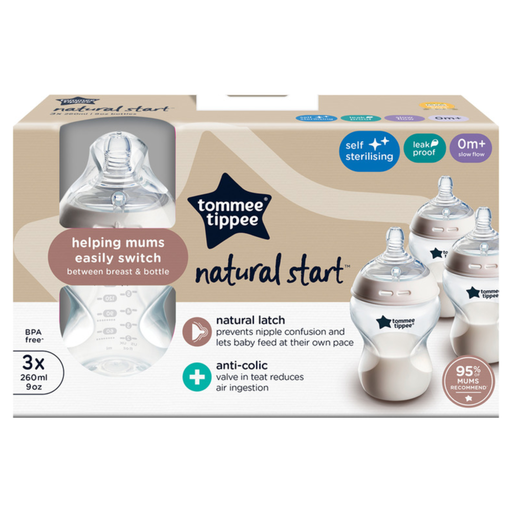
Why It Stands Out: This bottle is a popular choice for its intuitive, breast-like design. The teat is crafted from soft silicone that flexes and stretches, which helps babies achieve a natural latch. This makes it a strong candidate for parents looking for effective combination feeding bottles. The anti-colic valve is integrated directly into the teat, making assembly and cleaning straightforward.
Pros:
Who is it for? Parents looking for a reliable, straightforward bottle that supports combination feeding and helps reduce common feeding discomforts without complex parts.
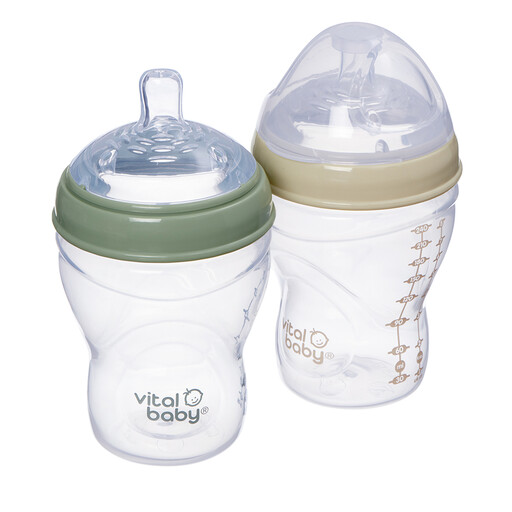
Why It Stands Out: The Vital Baby Nurture bottle combines advanced anti-colic technology with exceptional convenience. It features triple anti-colic valves to minimise air ingestion effectively. Its most notable feature is its ability to self-sterilise in the microwave in just three minutes, making it ideal for travel or for parents wanting to simplify their routine. It also has an eco-conscious design, with the bottle base made from a material that biodegrades in landfill over time.
Pros:
Who is it for? Busy, eco-aware parents who prioritise convenience and want a highly effective anti-colic system without the need for a separate steriliser.
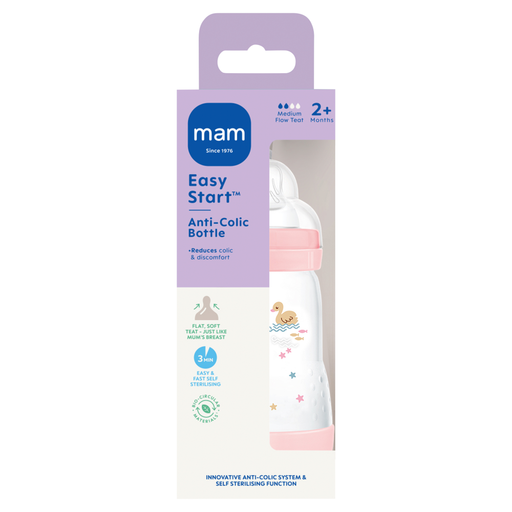
Why It Stands Out: The MAM bottle is well-regarded for its unique patented vented base. This system allows air to escape through the bottom of the bottle, ensuring a smooth, bubble-free flow of milk that prevents the baby from swallowing air. According to the brand's own research, this design has been shown to reduce colic symptoms in a high percentage of babies. It also offers a convenient self-sterilising feature and comes apart completely for exceptionally thorough cleaning.
Pros:
Who is it for? Parents seeking a bottle with a proven venting system specifically engineered to tackle colic, gas and reflux, combined with the practicality of self-sterilisation.
Every baby is unique, and what works for one may not work for another. If the bottles highlighted here aren't quite the right fit or if you simply want to see a wider selection, there are many other designs and brands to consider.
Explore our full range of milk bottles to find the ideal match for your little one.
How do anti-colic bottles work? They are designed with special vents, tubes or bases that allow air to enter and circulate within the bottle without mixing into the milk. This prevents a vacuum from forming, reduces the amount of air a baby swallows and helps to minimise gas, spit-up and the general discomfort associated with colic.
What is the difference between colic and normal fussiness? While all babies get fussy, colic is typically defined by predictable periods of intense, inconsolable crying. A common guideline is the "rule of threes": crying for more than three hours a day, for more than three days a week, for over three weeks. However, this is just a guide. If you are concerned about your baby's crying or discomfort, it is always best to speak with your health visitor or GP.
Can I use anti-colic bottles for a newborn who doesn't have colic? Yes, absolutely. Anti-colic bottles are not just for babies with diagnosed colic. They are beneficial for any baby, as they are designed to create a more comfortable feeding experience by preventing air ingestion. Using them from the start can be a good preventative measure to help keep your baby happy and settled during and after feeds.