
24/7 Customer Support

Free returns

Same-day & Next-day Delivery

Quality Guaranteed

Unlock Your Welcome Offers: FREE Delivery | Up to 80% OFF | Free 30-day JoyPlus trial
Download the APP
As a new parent, few things are more distressing than seeing your baby uncomfortable after a feed. The fussing, crying and trapped wind associated with colic can be challenging for the whole family. While many factors can contribute to colic, the type of bottle you use can play a significant role in managing symptoms.
This guide is designed to help you navigate the world of anti-colic baby bottles. We will explore the key features to look for and highlight some recommended options that prioritise your baby's comfort and your peace of mind.
As the Joybuy Product Recommendation Officer, my role is to provide clear, practical information to help you make choices that feel right for your family.
Choosing the right bottle can feel overwhelming with so many features to consider. Here are a few key points to focus on when making your selection.
The core feature of these bottles is a system designed to reduce the amount of air your baby swallows during a feed. Air ingestion is a primary cause of gas, colic and reflux. These systems typically work in one of two ways:
For parents who are combination feeding, finding breast-like bottles is often a top priority. Teats made from soft, flexible silicone that are shaped to mimic the breast can encourage a more natural latch. This not only helps prevent nipple confusion but also ensures a better seal, further reducing air intake.
Pay attention to the flow rate. Newborn feeding bottles should always start with a slow-flow teat to mimic the pace of breastfeeding and prevent your baby from being overwhelmed. As your baby grows and their feeding becomes more efficient, you can move up to medium or fast-flow teats.
Safety is paramount. Always look for BPA-free baby bottles, which is the standard in the UK. Beyond that, consider features that make your life easier. Many modern bottles are dishwasher-safe, but some go a step further. Self-sterilising bottles are a game-changer for busy parents, allowing you to sterilise them quickly in the microwave without needing a separate, bulky steriliser.
Based on features that address common parental concerns like colic, combination feeding and convenience, here are a few standout options.
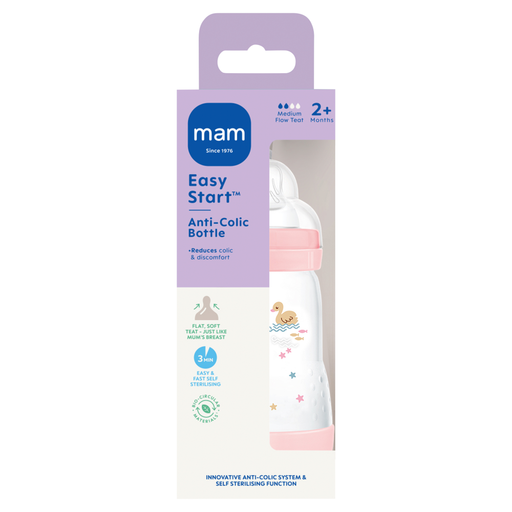
Why It Stands Out: The MAM bottle is well-regarded for its patented vented base. This design promotes an even flow of milk and is engineered to minimise air bubbles. According to MAM's own research, this system is designed to reduce colic symptoms. Its other major benefit is the simple self-sterilising function, making it ideal for use at home or while travelling.
Pros:
Who is it for?: Parents looking for a bottle with a well-established anti-colic system and the ultimate convenience of on-the-go sterilisation.
View MAM Easy Start Anti-Colic Bottle on Joybuy
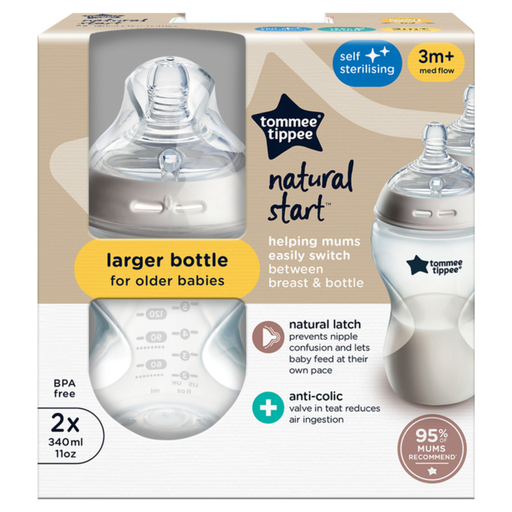
Why It Stands Out: Tommee Tippee focuses heavily on creating a feeding experience that closely mimics breastfeeding. The teat is exceptionally soft and designed to flex and stretch like a natural breast, which can be a great help for combination feeding. The brand reports a high acceptance rate among babies. The anti-colic valve is built directly into the teat and like the MAM bottle, it also offers a convenient self-sterilising feature.
Pros:
Who is it for?: Families who are combination feeding and want a bottle with a highly-rated, breast-like teat to ease the transition.
View Tommee Tippee Natural Start Bottles on Joybuy
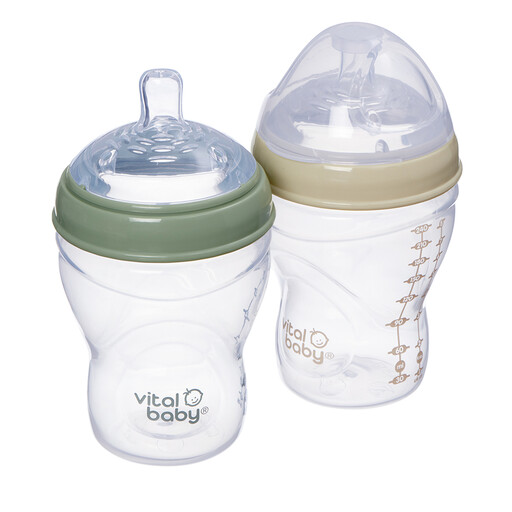
Why It Stands Out: This bottle combines an effective anti-colic system with an impressive eco-conscious design. It features triple anti-colic valves to provide advanced air reduction, while the breast-like teat includes a FlexZone area to mimic natural flex. Uniquely, the bottle is made with EarthSmart technology, which allows the main body to biodegrade in landfill over time, reducing long-term plastic waste.
Pros:
Who is it for?: Eco-conscious parents who want an effective anti-colic solution without compromising on their environmental values.
View Vital Baby Nurture Bottles on Joybuy
Every baby is unique, and what works for one may not work for another. The recommendations above are excellent starting points, but you may wish to explore other shapes, sizes and features.
If you're looking for more options, you can explore our full collection of BPA-free bottle solutions to find the perfect match for your little one's needs.
Explore All BPA-Free Baby Bottles
Anti-colic bottles are designed with vents or valves that allow air to flow into the bottle as your baby drinks. This prevents a vacuum from forming, ensuring the milk flows steadily and your baby swallows less air. Less ingested air can lead to a reduction in gas, fussiness and general discomfort.
You should start newborns on a slow-flow teat. Signs that your baby may be ready for a faster flow include taking a very long time to finish a bottle, becoming fussy or frustrated during feeds, or falling asleep mid-feed. Conversely, if your baby is choking, sputtering or letting milk dribble from their mouth, the flow is likely too fast.
Yes, many anti-colic bottles are specifically designed for combination feeding. Look for options described as breast-like bottles, which feature wide, soft teats that promote a deep, natural latch similar to breastfeeding. This can help minimise nipple confusion and make switching between breast and bottle smoother.