
24/7 Customer Support

Free returns

Same-day & Next-day Delivery

Quality Guaranteed

Unlock Your Welcome Offers: FREE Delivery | Up to 80% OFF | Free 30-day JoyPlus trial
Download the APP
Watching your baby struggle with discomfort during or after a feed is distressing for any parent. While many factors can contribute to colic, gas and reflux, the right feeding equipment can make a significant difference. The market for anti-colic baby bottles is vast, but navigating it can be confusing. As a Joybuy Product Recommendation Officer, my role is to help you sidestep common purchasing mistakes and identify the features that truly matter for a calmer feeding experience.
Before you buy, be aware of a few common traps that can lead to wasted money and continued feeding frustrations.
To find the right baby bottles for colic and gas, focus on these non-negotiable technical aspects rather than marketing hype.
The primary function of an anti-colic bottle is to prevent your baby from swallowing air along with their milk. This is achieved through a venting system. There are two main types:
The teat is your baby's direct point of contact, making its design critical, especially for combination feeding bottles.
Consider the practicalities of daily life. Newborn baby bottles typically start at smaller sizes (around 120-160ml), which are perfect for the small, frequent feeds of the early weeks. As your baby grows, you will need larger bottles (240ml+). Look for bottles with wide necks, which are significantly easier to fill with formula powder and clean with a bottle brush.
Instead of a one-size-fits-all approach, we have matched specific bottles to different parenting needs.

Why This Fits Their Persona: For busy parents, especially those with limited kitchen space or who travel, the all-in-one design is a game-changer. It removes the need for a separate, bulky steriliser, simplifying the daily routine.
It directly solves the sterilisation convenience pitfall. The bottle disassembles and can be sterilised in a microwave in just 3 minutes, making it ideal for home and on-the-go use.
Features a vented base for a smooth milk flow and a flat, soft SkinSoft teat with a high acceptance rate (94% according to MAM's market research).
Why This Fits Their Persona: For mothers who are breastfeeding and introducing a bottle, finding a teat that the baby will accept is the biggest hurdle. This bottle's design is focused on mimicking the natural breast to make that transition smoother.
It directly addresses the "one-teat-fits-all" myth by offering a highly specialised, flexible teat (FlexZone) designed to feel and move more like a natural nipple, increasing the chance of acceptance.
Features a triple anti-colic valve system to reduce air intake. It also offers the convenience of self-sterilisation in the microwave.
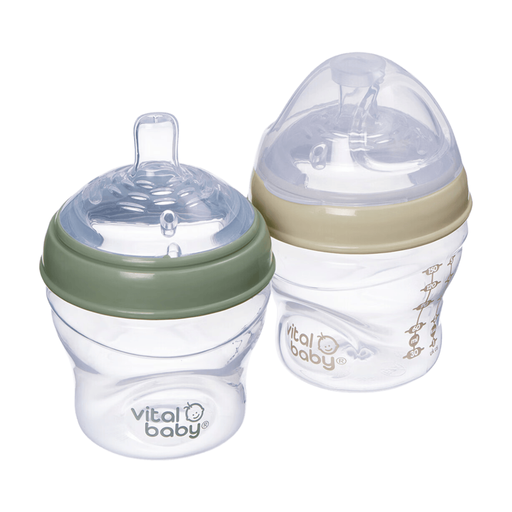
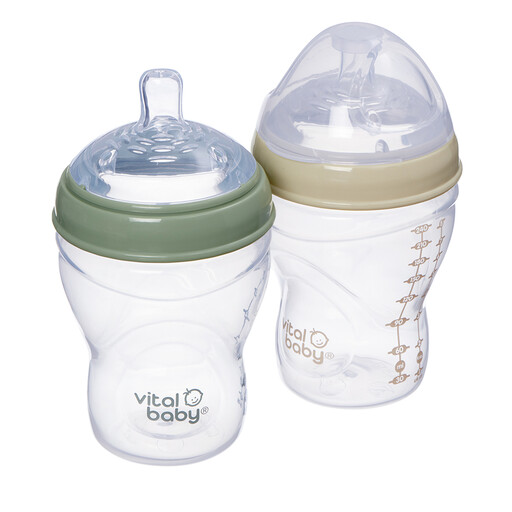
Why This Fits Their Persona: For families who need the durability and safety of plastic but are concerned about its long-term environmental impact, this bottle offers a more responsible end-of-life solution.
This bottle looks beyond immediate use and addresses the hidden environmental cost of baby products. It provides a practical feeding solution without compromising on ecological values.
Made with EarthSmart technology, the bottle body (excluding the silicone teat) is designed to biodegrade in landfill. It also features the brand's breast-like teat and triple anti-colic valves.
We have compiled a complete, real-time list of products that fully satisfy these strict selection criteria and UK safety regulations.
For hygiene and safety, most manufacturers recommend replacing teats every 1-2 months. You should also inspect them before every feed for any signs of wear, such as thinning, tackiness or tears. If you see any damage, replace the teat immediately.
Many modern BPA-free baby bottles are top-rack dishwasher safe. However, the high temperatures and harsh detergents can sometimes cause the measurement markings to fade over time. It can also be difficult for a dishwasher to thoroughly clean the small components of some anti-colic systems. For this reason, hand washing with warm, soapy water and a bottle brush is often the most reliable cleaning method. Always check the manufacturer's instructions.
Yes, they are a highly effective and convenient option. They work by using a small, measured amount of water and the power of your microwave to create steam, which sterilises the bottle parts. This method is just as effective as traditional electric steam sterilisers but without the need for a separate, bulky appliance. Always follow the instructions carefully regarding water volume and microwave timings to ensure proper sterilisation.