
24/7 Customer Support

Free returns

Same-day & Next-day Delivery

Quality Guaranteed

Unlock Your Welcome Offers: FREE Delivery | Up to 80% OFF | Free 30-day JoyPlus trial
Download the APP
As a new or expectant parent, navigating the world of baby products can feel overwhelming. When your little one is struggling with discomfort from colic or gas, the pressure to find a solution is immense. The market for anti colic baby bottles is vast, with every brand promising a calmer, happier baby. However, many parents find themselves with a cupboard full of bottles their baby refuses, or designs that are a hassle to use and clean.
My role as Joybuy’s Product Recommendation Officer is to help you sidestep the common purchasing traps. Before you spend your money, let’s look at the three most frequent pitfalls that catch parents out.
To make an informed choice, focus on the core features that directly impact performance and usability. Here are the non-negotiable parameters to check before you buy.
The primary goal of bottles for gassy babies is to reduce the amount of air they swallow during a feed. This is typically achieved in one of two ways:
Both systems are effective, but the key is ensuring they are easy to clean and assemble correctly to function as intended.
For parents who are combination feeding, the teat is arguably the most critical component.
Hygiene is paramount. A bottle that is difficult to clean is a risk. Look for bottles with a wide neck, which makes it much easier to get a baby bottle cleaning brush inside for a thorough scrub. Better yet, consider self sterilising baby bottles. These innovative designs allow you to use your microwave to sterilise the bottle in just a few minutes, eliminating the need for a separate, bulky electric steriliser. This is a game-changer for convenience, especially when you're away from home.
Based on these practical considerations, here are a few standout options matched to different parental needs.

Why This Fits Their Persona: For parents juggling a hectic schedule, convenience is everything. This bottle's standout feature is its ability to self-sterilise in the microwave in just three minutes, freeing you from the need for a separate steriliser and making travel simpler.
It directly solves the "hidden inconvenience" of sterilisation. The vented base is also effective and disassembles for easy, thorough cleaning, avoiding the trap of overly complex systems.
The self-sterilising function is a major time-saver. Its SkinSoft teat has a high acceptance rate (94% according to the brand's market research), increasing the chance of success.
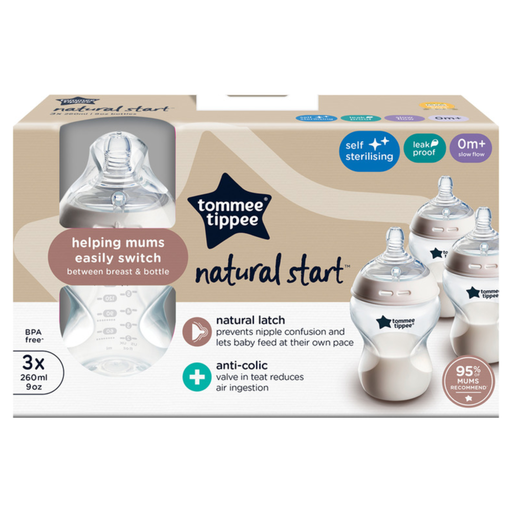
Why This Fits Their Persona: When switching between breast and bottle is a priority, the teat design is paramount. This bottle's main selling point is its wide, soft silicone teat, specifically shaped to mimic the breast to encourage a natural latch and minimise confusion.
It tackles the "universal teat" myth by offering a design with a very high acceptance rate, making it one of the most popular choices for combination feeding in the UK. The anti-colic valve is integrated into the teat, avoiding complex multi-part systems.
The breast-like shape and feel are its core strengths. The wide neck also simplifies cleaning, and the compact bottle shape is easy for both parent and baby to hold.
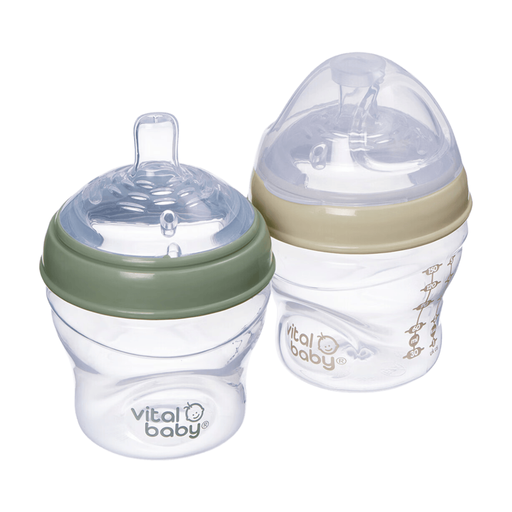
Why This Fits Their Persona: For families looking to minimise their environmental impact, this bottle offers a unique solution. The bottle body is made with EarthSmart technology, designed to biodegrade in landfill, offering a more responsible end-of-life option than traditional plastics.
This bottle provides a tangible benefit beyond marketing hype by using an innovative, more sustainable material. It also features a triple anti-colic valve system and a breast-like teat, covering the essential performance features.
The primary benefit is its reduced environmental footprint. It also offers the convenience of microwave self-sterilisation for the bottle body, combining eco-consciousness with practicality.
We have compiled a complete, real-time list of products that fully satisfy these strict selection criteria and UK safety regulations.
For both safety and hygiene, it is recommended to replace teats every 1-2 months. You should also inspect them before every single use by pulling the teat in all directions. If you notice any signs of damage, weakness, tackiness or tears, discard it immediately to prevent a choking hazard.
Yes, when used according to the manufacturer's instructions, they are highly effective. Both methods use steam to kill bacteria. Self-sterilising bottles use a small amount of water and the power of your microwave to create this steam inside the bottle itself. This makes them a perfectly safe, effective and much more convenient alternative for most families.
While an anti-colic bottle can make a significant difference, it is one part of the solution. Ensure you are also using other techniques to minimise air intake. This includes feeding your baby in a more upright position (not lying flat) and taking regular breaks to wind them thoroughly during and after the feed. If you remain concerned about colic or feeding issues, it is always a good idea to speak with your health visitor or GP for personalised advice.