
24/7 Customer Support

Free returns

Same-day & Next-day Delivery

Quality Guaranteed

Unlock Your Welcome Offers: FREE Delivery | Up to 80% OFF | Free 30-day JoyPlus trial
Download the APP
Keeping a home clean and hygienic is a top priority for many of us, but navigating the crowded aisles of cleaning products can be overwhelming. With so many options available, each making bold claims, how do you choose the right antibacterial surface cleaner for your household?
As a Joybuy Product Recommendation Officer, my role is to help you cut through the marketing jargon. This guide offers practical advice and highlights some standout options to help you find an effective cleaner that suits your needs, whether you're looking for an eco-friendly cleaning spray or a powerful disinfectant spray for the kitchen.
Before we look at specific products, here are a few key points to consider during your search. Understanding these can help you make a more informed decision.
Many labels feature the phrase "kills 99.9% of bacteria". This claim is typically verified against specific standards, such as EN 1276 in the UK and EU, which is a chemical disinfectant and antiseptic quantitative suspension test. For a product to be effective, it must be left on the surface for a specific "contact time," which can range from a few seconds to several minutes. Always check the directions for use on the product label to ensure you are using it correctly for proper disinfection.
The ingredients in a cleaner determine its suitability for different tasks and households.
While many products are marketed as an all purpose cleaner, it's vital to check their compatibility with the surfaces in your home. Some powerful formulas can damage delicate materials like natural stone (marble, granite), untreated wood, or certain metals like copper and brass. If you're ever in doubt, it is always a good practice to test the product on a small, inconspicuous area first.
Here are a few antibacterial surface cleaners that stand out for their specific features and suitability for different household needs.
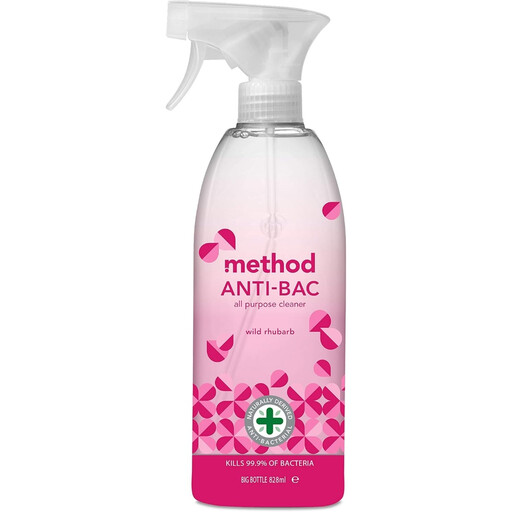
Why It Stands Out: This cleaner uses a naturally derived, plant-based formula centred on lactic acid to disinfect surfaces. It combines effective cleaning with a commitment to environmental responsibility, all while leaving behind a distinctive and pleasant wild rhubarb fragrance.
Pros:
Who is it for: Households looking for an effective, ethically produced and eco-friendly cleaning spray that doesn't compromise on fragrance.

Why It Stands Out: This spray is a household name for a reason. Its non-bleach formula is suitable for use in food preparation areas and is stated by the manufacturer to be effective against a wide range of bacteria and viruses, including E. coli, Salmonella and the Covid-19 Virus (SARS-CoV-2).
Pros:
Who is it for: Families and individuals seeking a reliable and versatile cleaner for high-traffic areas where thorough disinfection is a priority.
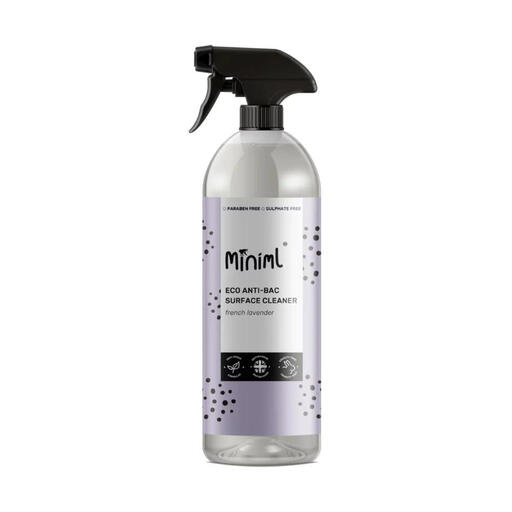
Why It Stands Out: Miniml places sustainability at the forefront with its plant-powered, non-toxic formula and a zero-waste refill system. The cleaner is tested to multiple European standards for efficacy and leaves behind a calming French lavender scent derived from essential oils.
Pros:
Who is it for: Environmentally conscious households that prioritise natural ingredients, sustainability and supporting a circular economy.

Why It Stands Out: This cleaner is designed for maximum efficiency. Its "Spray, Wipe, Done" approach simplifies the cleaning process by removing grease and disinfecting surfaces without the need for scrubbing or rinsing (unless used on food prep areas), saving you time and effort.
Pros:
Who is it for: Busy individuals and families who value speed and convenience and want a powerful all purpose cleaner that gets the job done quickly.
Every home has unique cleaning challenges and preferences. If you haven't found the perfect match here, or if you're looking for cleaners tailored to specific surfaces or needs, there are many other choices available.
Explore our full collection to find the ideal solution for your home. Browse our complete range of antibacterial household cleaners
The term 'antibacterial' specifically refers to agents that kill or inhibit the growth of bacteria. 'Disinfectant' is a broader term for a substance that destroys a wider range of microorganisms, which can include bacteria, viruses and fungi. Many products sold as an antibacterial surface cleaner are also effective disinfectants, but it's always best to check the label for specific claims and the list of microorganisms it targets.
A multi-purpose cleaner is designed for versatility, but not all are suitable for every surface. Common exceptions include unsealed or oiled wood, natural stone like marble and certain metals which can be damaged by acidic or harsh formulas. Always read the manufacturer's instructions and, if in doubt, test the product on a small, hidden area first.
This is known as 'contact time' and is crucial for effective disinfection. The required time varies significantly between products, from as little as 30 seconds to 15 minutes or more. To ensure you achieve the claimed germ-killing effect, such as "kills 99.9% of bacteria", you must follow the contact time specified in the product's directions for use.