
24/7 Customer Support

Free returns

Same-day & Next-day Delivery

Quality Guaranteed

Unlock Your Welcome Offers: FREE Delivery | Up to 80% OFF | Free 30-day JoyPlus trial
Download the APP
Choosing an antiperspirant deodorant can seem straightforward until you compare protection claims, formats, fragrances and skincare ingredients. A low-priced can may not suit your routine, while a product promising several days of protection may be unnecessarily expensive if you shower and reapply daily.
The practical approach is to look beyond the front label and check the product format, active ingredients, application instructions and suitability for your skin.
A 48-hour antiperspirant or 72-hour antiperspirant claim describes the protection period stated for the formula under the manufacturer’s usage conditions. It does not mean every user will remain completely dry for that length of time.
Sweat levels vary with exercise, temperature, clothing, stress and individual skin chemistry. For many UK shoppers, a 24- or 48-hour product is sufficient for normal workdays, commuting and light activity. Longer stated protection may be more useful if you have irregular schedules or want fewer applications.
A deodorant primarily helps manage body odour, usually through fragrance or odour-control ingredients. An antiperspirant deodorant also contains an aluminium-based active ingredient intended to reduce perspiration at the application area.
Check the wording on the label rather than assuming every deodorant spray controls wetness. If sweat management is your priority, look for terms such as “anti-perspirant”, “sweat protection” or “wetness control”.
An invisible deodorant is designed to reduce visible residue, but application technique still matters. Spraying too closely, applying too much or dressing before the product dries can transfer residue to clothing.
Anti-white-mark deodorant formulas may help with marks on dark fabrics, while some products also mention yellow-stain protection on lighter garments. These features are useful, but they should not replace allowing the product to dry fully.
Compare the stated duration with your actual routine. A product labelled for 48 hours may offer a sensible balance between performance and price. A 72-hour formula can suit long shifts, travel or people who prefer applying less frequently, but it still needs to be used according to the packaging.
Aluminium chlorohydrate and aluminium sesquichlorohydrate appear in several products in this range. These are common antiperspirant actives. Always check the current ingredient list supplied with the product, particularly if you have known sensitivities.
A 150–250ml aerosol is practical for regular home use, while a 50ml roll-on is easier to carry and may create less storage inconvenience.
For a deodorant for sensitive skin, consider an alcohol-free deodorant and look for wording such as “dermatologically tested”. These descriptions indicate product features, not a guarantee that irritation is impossible. Fragrance ingredients can still cause a reaction in some people.
If clothing marks are a concern, search for “invisible”, “clear”, “anti-white marks” or “anti-stain” on the product listing. Apply only to clean, dry, healthy skin and stop use if redness, itching or irritation develops.
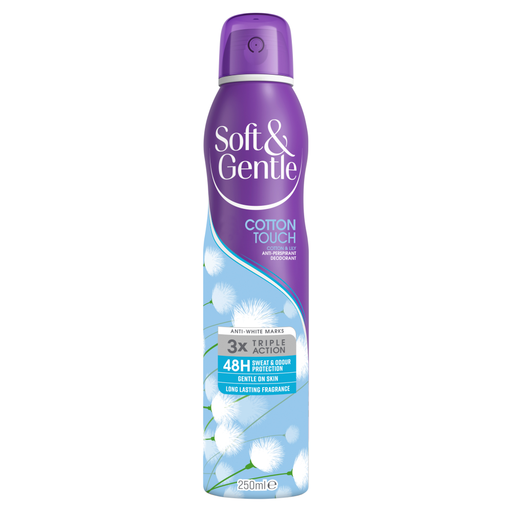
Why This Fits Their Persona: A full-size aerosol with a cotton-fresh fragrance suits shoppers wanting straightforward everyday protection for work, errands and commuting.
It states 48-hour protection, 0% alcohol and silicone-free formulation, while also addressing white marks.
250ml aerosol; vegan-friendly product description; cotton and lily fragrance.
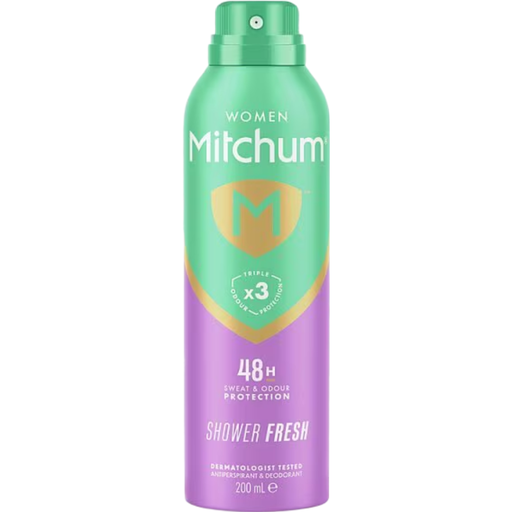
Why This Fits Their Persona: Suitable for shoppers prioritising a fresh fragrance, invisible application and a stated 48-hour protection period in one daily-use aerosol.
The listing identifies an alcohol-free, invisible formula, helping address common irritation and clothing-residue concerns.
Triple Odour Defence Technology; aloe vera and vitamin E; shower-clean fragrance.
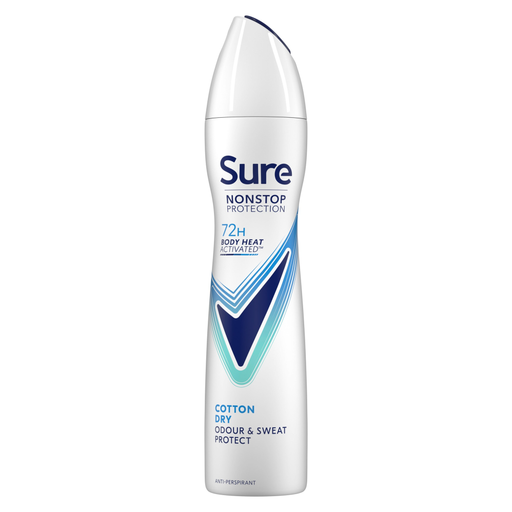
Why This Fits Their Persona: The stated 72-hour format is suited to long working days, travel, active routines and shoppers who prefer extended sweat and odour protection.
The listing clearly states an alcohol-free formula and gives precise 15cm spray instructions rather than relying only on a duration claim.
250ml aerosol; cotton-fresh fragrance; aluminium packaging described as infinitely recyclable.
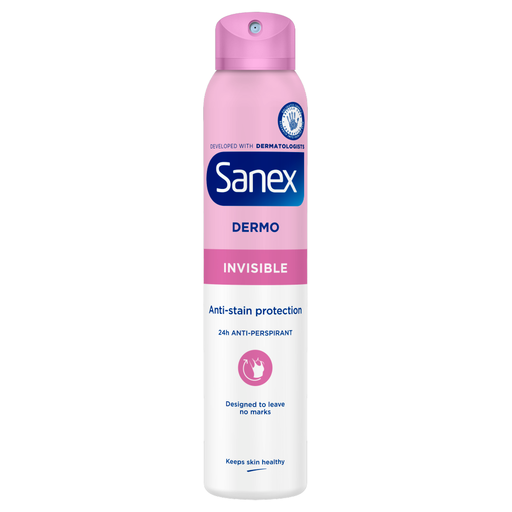
Why This Fits Their Persona: A practical option for shoppers seeking an alcohol-free deodorant with clothing-mark protection and a formula described as dermatologically tested.
It identifies 0% alcohol and anti-stain positioning, while the instructions advise application only to healthy skin.
200ml spray; pH-focused skincare positioning; anti-white-mark and yellow-stain feature.
We have compiled a complete, real-time list of products that fully satisfy these strict selection criteria and UK safety regulations.
Men’s antiperspirant and women’s antiperspirant often differ mainly in fragrance, packaging and product positioning. Choose according to scent, skin requirements and format rather than assuming one category is technically necessary for everyone.
Many products are designed for daily use when applied as directed. However, do not apply to damaged or irritated skin, avoid contact with the eyes and discontinue use if irritation occurs. Review the complete ingredient list before buying if you have known sensitivities.
Not necessarily. A 50ml roll-on usually has a lower purchase price and is easy to carry, while a 150–250ml aerosol may provide more product per container. Compare the price per 100ml and how much you apply each time rather than comparing shelf price alone.
Shelf-life guidance varies by product and packaging. Check the printed label, batch information and storage instructions. Store aerosols away from sunlight and heat, keep caps secured and do not use a product if its appearance, scent or packaging has changed.