
24/7 Customer Support

Free returns

Same-day & Next-day Delivery

Quality Guaranteed

Unlock Your Welcome Offers: FREE Delivery | Up to 80% OFF | Free 30-day JoyPlus trial
Download the APP
Choosing an antiperspirant deodorant spray can look straightforward until you compare protection claims, fragrances, ingredients and can sizes. A product may promise 48-hour or 72-hour freshness, yet still feel unsuitable if it irritates your skin, leaves marks on clothing or delivers a fragrance you find overpowering.
For UK shoppers, the practical choice depends on how much wetness and odour control you need, whether you prefer an aerosol or roll-on deodorant, and how your skin reacts to fragrance or alcohol. The following guide highlights common buying traps and the specifications worth checking before adding a product to your basket.
A 48-hour antiperspirant or 72-hour antiperspirant label describes the product’s stated protection period under specified conditions. It does not mean you should avoid washing or reapplying after exercise, hot weather or showering. Application technique, activity levels and individual perspiration can all affect how long the product feels effective.
Look for a duration that suits your routine rather than automatically choosing the largest number. A 48-hour formula may be practical for everyday commuting, while a 72-hour option may appeal to people who want longer-lasting odour protection between applications.
A deodorant primarily helps manage body odour, usually through fragrance or odour-neutralising ingredients. An antiperspirant contains an aluminium-based active ingredient, such as aluminium chlorohydrate, designed to reduce perspiration at the underarm.
If your main concern is dampness, check that the product is clearly labelled as an antiperspirant deodorant spray. An aluminium-free roll-on, such as L’Oréal Men Expert Carbon Protect 48 Hour Roll-On, may focus on odour and wetness management without aluminium salts, but it should not be assumed to work in the same way as a conventional antiperspirant.
“Fresh” can mean anything from powdery or floral to citrus, ocean or woody. Fragrance ingredients may also include common allergens such as limonene, linalool or citronellol. Read the ingredient list if your skin is easily irritated.
Similarly, an invisible deodorant may help reduce visible white residue, but correct use still matters. Spraying too closely, applying too much or dressing before the product dries can increase transfer onto clothing.
For sweat control, look for an active ingredient such as aluminium chlorohydrate or aluminium sesquichlorohydrate in the ingredients. A product marketed as a deodorant without aluminium salts may be more appropriate if odour is your main concern, but it may offer a different level of wetness management.
Claims such as “Triple Odour Defence” or “odour-neutralising fragrance technology” describe the product’s formulation and positioning. They should not be treated as a promise that odour will be eliminated in every situation.
An alcohol-free deodorant may be preferable if you find ethyl alcohol uncomfortable after shaving. However, “alcohol-free” does not mean that every person will tolerate the formula, as fragrance and other ingredients can still cause sensitivity.
Those seeking sensitive skin deodorant options should check the full label, apply only to clean, dry and healthy skin, and stop use if redness or irritation occurs. Dermatologist-tested and vegan-friendly labels are useful product details, but they do not replace checking the ingredients for your individual needs.
An aerosol deodorant offers quick, even coverage and is available in sizes such as 150ml, 200ml and 250ml. A roll-on deodorant is compact and produces less airborne spray, making it convenient for a gym bag or travel routine. It may take longer to dry, however.
For aerosols, shake well, hold the can around 15cm from the underarm, spray in short bursts and use in a well-ventilated area. Aerosols are flammable and pressurised: keep them away from heat, sparks and naked flames, and never expose them to temperatures above 50°C.
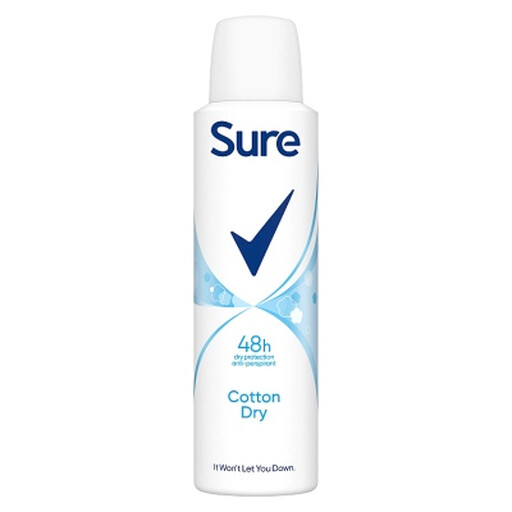
Why This Fits Their Persona: A straightforward everyday aerosol for shoppers wanting a light cotton fragrance, 150ml capacity and stated 48-hour sweat and odour protection.
The label clearly identifies the format, size and alcohol-free positioning, helping shoppers avoid paying for unclear or unsuitable features.
150ml aerosol; 0% alcohol formula; light cotton-inspired fragrance.
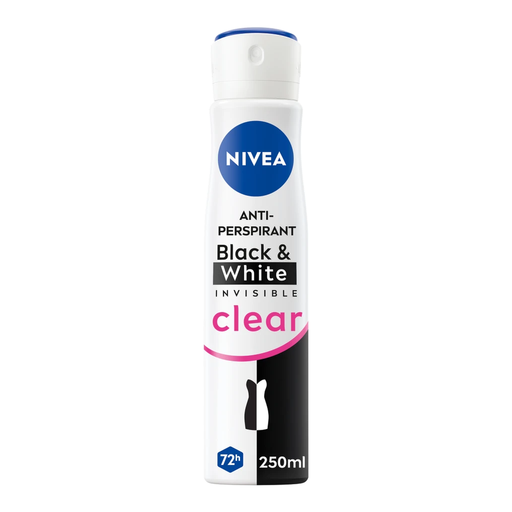
Why This Fits Their Persona: A practical option for people who regularly wear dark workwear, white shirts or mixed wardrobes and want a larger can with a floral fragrance.
Its product description specifically references anti-stain technology and no ethyl alcohol, rather than relying only on a general “fresh” claim.
250ml aerosol; stated 72-hour protection; invisible and anti-stain positioning.
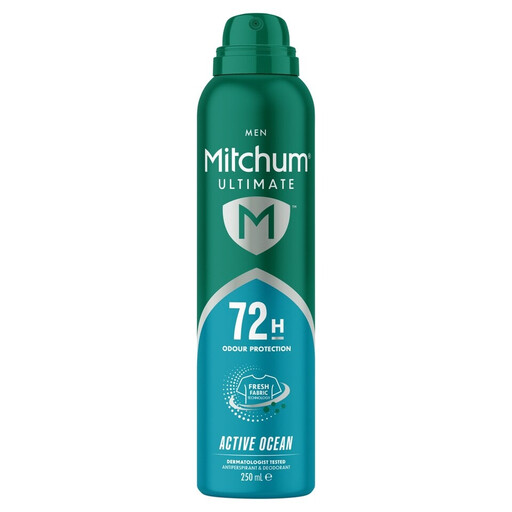
Why This Fits Their Persona: Suitable for shoppers prioritising a larger format, wetness control and a clean ocean fragrance for active daily routines.
The listing separates wetness control, odour protection and clothing odour-transfer features, making it easier to compare with generic duration claims.
250ml size; stated 72-hour odour protection; formulated without ethyl alcohol and suitable for vegans.
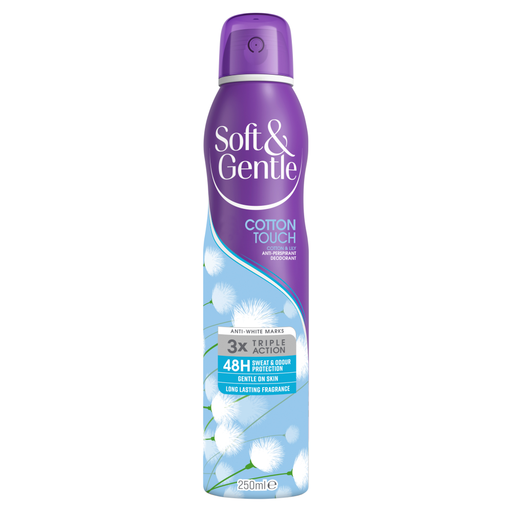
Why This Fits Their Persona: A larger aerosol for shoppers looking for an alcohol-free, silicone-free formula with a cotton and lily fragrance.
The formula details address two frequent concerns—alcohol and silicone—while the anti-white-mark feature helps with clothing care.
250ml aerosol; 0% alcohol and silicone-free formula; vegan-friendly positioning.
We have compiled a complete, real-time list of products that fully satisfy these strict selection criteria and UK safety regulations.
Many are designed for daily use when applied as directed to healthy, dry skin. If shaving causes sensitivity, follow the product’s specific instructions and avoid applying to irritated skin.
Not necessarily. The stated period is a product-use claim, not a fixed schedule. You may wish to reapply after washing, exercise or when you no longer feel adequately protected. Always follow the packaging directions.
The answer depends on usage, pack size and how much you apply. A 250ml aerosol may offer more product per container, while a 50ml roll-on is compact and can help control the amount applied. Comparing price per 100ml is a useful way to assess running cost.