Detail-led portfolio makers
If viewers need to inspect button faces, shanks, holes or engraving, the lens’s magnification and your control over which surfaces appear sharp matter more than the camera body alone.


Choose the lens before the camera body: if tiny markings, holes and surface texture need to fill the frame, start with a 1:1 macro lens rather than assuming a kit zoom will focus closely enough. For raised buttons, check how the camera handles multiple focus positions; if whole-button views and wider craft photographs matter more, a less specialised lens may be sufficient, provided its close-focus capability meets your framing needs.
If viewers need to inspect button faces, shanks, holes or engraving, the lens’s magnification and your control over which surfaces appear sharp matter more than the camera body alone.
If you photograph individual buttons alongside arrangements or process records, look for a close-focusing lens and a screen you can use comfortably when the camera is positioned over a tabletop.
If your portfolio also includes wider photographs or process video, consider how the camera serves those tasks without assuming its supplied zoom will reproduce minute button details.
For an antique-button portfolio, decide how large the smallest details must appear, then consider front-to-back sharpness and whether the same camera must handle wider craft work.
Consider it when: you want a 1:1 macro lens alongside the OM-1 Mark II’s in-camera focus stacking, as described by OM SYSTEM.
Trade-off: this specialist setup still calls for steady framing and controlled light.
Consider it when: life-size button detail is the priority; Nikon specifies 1:1 magnification for the NIKKOR Z MC 50mm f/2.8.
Trade-off: Nikon says the lens front can be about 5 cm from the subject at minimum focus, leaving little room for lighting.
Consider it when: you want an EOS R50 for broader craft photography and 1:2 close-ups meet your framing needs.
Trade-off: Canon’s RF 35mm F1.8 MACRO IS STM reaches 1:2, not the 1:1 magnification of the macro lenses above.
| Concern | What to check | Who this matters to |
|---|---|---|
| Small-detail magnification | Check the exact lens’s maximum magnification. The OM SYSTEM 60mm Macro and Nikon Z MC 50mm f/2.8 are specified at 1:1; Canon’s RF 35mm F1.8 MACRO IS STM reaches 1:2. | If tiny markings or thread holes must occupy much of my photograph, I need to prioritise lens magnification; around 42% of consumers put that detail-first need ahead of the other concerns here. |
| Front-to-back sharpness | Check whether the exact body offers focus bracketing, in-camera stacking or both, and which lenses and conditions those functions require. | When a button has a raised centre and rim, I want both areas to remain clear in the finished image; roughly 33% of consumers make depth-of-field control their primary concern. |
| Flexible craft workflow | Check the supplied lens as well as the body, particularly its close-focus specification and whether the camera’s screen suits your tabletop position. | If I also photograph arrangements or make process clips, I need a camera that works beyond extreme close-ups; about 25% of consumers place that wider workflow first. |
Maximum magnification belongs to the lens, not the camera body. The lenses discussed here differ: OM SYSTEM and Nikon specify 1:1, while Canon specifies up to 1:2 for its RF 35mm close-up lens.
Decide whether life-size capture is necessary, then check the magnification of the exact lens supplied with the camera or the separate lens you intend to use.
A dedicated macro lens may be a separate addition to a camera kit.
Canon notes that depth of field is typically tiny in close-up photography. Focusing on a button’s centre can therefore leave its rim or raised decoration soft.
For a stationary button, use stable framing and check the exact camera’s focus-bracketing or stacking instructions rather than assuming every body handles these functions alike.
Nikon states that the front of its Z MC 50mm f/2.8 can be about 5 cm from the subject at minimum focus. At that position, the camera or lens may obstruct the light you planned to use.
Check the working position with your button and lighting arrangement before relying on the minimum-focus figure; side or diffused lighting may be easier to position.
GOV.UK guidance on ivory-containing items says dealing requires an exemption and includes selling, arranging a sale and advertising an ivory item. Whether this affects a particular button depends on its material and the intended activity.
If a button may contain ivory and the portfolio supports a sale, establish what it is made from and check the applicable official guidance before advertising it.
Consider the OM-1 Mark II paired with the M.Zuiko Digital ED 60mm F2.8 Macro when detailed, stationary close-ups are the main job.
A Nikon Z body with the NIKKOR Z MC 50mm f/2.8 is another route when life-size button details are the priority.
The EOS R50 with an RF 35mm F1.8 MACRO IS STM suits a mix of craft photographs and close-ups when life-size capture is not essential.
These Sony mirrorless camera-and-zoom options suit shoppers considering wider craft-portfolio photographs or process video alongside button images. Before choosing one for detailed close-ups, check the exact supplied lens’s magnification and the body’s focus-bracketing options.
 No image available
Consider this kit if button photographs are part of a wider stills-and-video craft portfolio; check the supplied lens’s maximum magnification before relying on it for tiny details.
The product name specifies an APS-C mirrorless camera, a 16–50 mm f/3.5–5.6 power zoom lens, 26 megapixels and 4K60p video.
 No image available
This full-frame camera-and-zoom kit is an option for wider portfolio views; check the lens’s maximum magnification if individual button details must fill the frame.
The product name identifies a full-frame mirrorless camera supplied with a 28–70mm zoom lens.
 No image available
Consider this kit for a portfolio that includes wider craft scenes as well as buttons; establish how closely its zoom lens can frame the smallest subjects you photograph.
The product name specifies an APS-C mirrorless camera and a 16–50mm power zoom lens.
 No image available
This APS-C camera-and-lens combination can serve broader craft photography; check the supplied lens’s magnification and the camera’s focus options against your button-detail requirements.
The product name identifies a mirrorless A6700 body with a 16–50mm lens.
 No image available
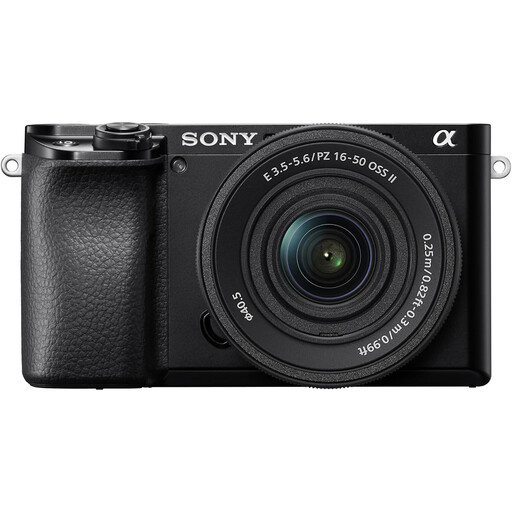
For mixed craft photographs, confirm the exact lens included before choosing this kit: the available bundle descriptions differ on its zoom range, which also matters when checking close-focus capability.
The product name identifies an APS-C mirrorless A6100 camera supplied with a zoom lens.
You need a 1:1 macro lens if minute button details must occupy a substantial part of the frame, but wider arrangements do not necessarily require one. OM SYSTEM specifies 1:1 for its M.Zuiko Digital ED 60mm F2.8 Macro and Nikon specifies 1:1 for its NIKKOR Z MC 50mm f/2.8; Canon specifies up to 1:2 for the RF 35mm F1.8 MACRO IS STM.
Close-up photographs have very little depth of field, so a raised centre and outer rim may not both appear sharp in one exposure. Canon highlights the precision needed for close-up focusing; for a stationary button, check whether your exact camera offers focus bracketing or stacking and use stable framing.
Image stabilisation does not keep repeated tabletop compositions in the same position or increase depth of field. If consistent framing matters across a portfolio, use stable support and arrange the lighting deliberately; treat stabilisation as a separate camera-shake feature.
Establish the button’s material and your intended use before advertising or arranging a sale. GOV.UK guidance on ivory-containing items says dealing in ivory requires an exemption and includes buying, selling, hiring out, arranging a sale and advertising an ivory item; a photograph alone does not establish what the button contains or whether a proposed transaction qualifies.