Hosts serving an apple-only drink
If you want apple juice rather than a water-based juice drink, start with the ingredient list of a 100% juice. Plan the amount poured as well: NHS guidance counts sugars in unsweetened fruit juice as free sugars.


Choose 100% apple juice if an apple-only drink matters most; choose a no-added-sugar juice drink or squash if you prefer the ingredients and serving format of those alternatives. Compare sugars at the serving size you will pour, then check for sweeteners and any allergens your guests need to avoid. NHS guidance counts the sugars in unsweetened fruit juice as free sugars, so “no added sugar” does not mean sugar-free.
If you want apple juice rather than a water-based juice drink, start with the ingredient list of a 100% juice. Plan the amount poured as well: NHS guidance counts sugars in unsweetened fruit juice as free sugars.
If the listed sugars in each served glass matter to you, compare nutrition values at the same volume. Juice drinks and squash differ from 100% juice in fruit content and other ingredients, so check the label as well as the sugar figure.
If guests avoid sweeteners or particular allergens, read the ingredients and allergen statement on the exact pack. A no-added-sugar claim does not, by itself, answer those questions.
Choose the type of drink first, then compare the ingredients, serving-size nutrition and storage instructions of the packs you are considering.
Choose it when: you want apple juice rather than a water-based juice drink.
Bear in mind: NHS guidance counts its naturally occurring sugars as free sugars.
Choose it when: its listed sugars per glass and ingredient list suit your guests.
Bear in mind: the checked Tesco, Sainsbury’s and ASDA examples contain sweeteners and are not 100% apple juice.
Choose it when: you want a concentrate that you can prepare by the glass or jug.
Bear in mind: compare nutrition for the prepared drink and check the ingredients before serving guests with restrictions.
| Priority | What to check | Your needs |
|---|---|---|
| Sugars per glass | Compare sugars at the volume you will serve, not just the front-of-pack claim. Tropicana UK lists 15g per 150ml for Orchard Apple; Sainsbury’s lists 3.9g per 150ml for its no-added-sugar Apple & Pear Juice Drink. They are different types of drink. | I want to know how much sugar is in the glass I pour, even if the pack says “no added sugar”. |
| Drink ingredients | Check whether the pack is 100% juice, a water-based juice drink or a concentrate. Read the fruit percentage and sweetener declaration: Tesco lists 20% apple juice from concentrate and sucralose in its No Added Sugar Apple Juice Drink. | An apple-only drink matters to me, or I need to check whether a juice drink contains sweeteners. |
| Serving format | Check the pack volume, stated serving size and number of servings. For squash, follow the dilution instructions and compare nutrition for the prepared drink rather than the concentrate alone. | I need to decide between individual cartons or cans and drinks I can pour for several guests. |
| Storage and allergens | Check whether the unopened pack needs chilling, how to store it after opening and how soon to use it. Read the exact pack’s allergen statement, particularly when considering a squash for a guest who avoids sulphites. | Fridge space is limited, or a guest needs me to check particular ingredients before I serve the drink. |
Tropicana UK and Tesco Groceries each list 15g sugars per 150ml for the checked Tropicana Orchard Apple and Copella Apple Juice products. NHS guidance counts sugars in unsweetened fruit juice as free sugars.
Read the nutrition panel at the serving size you intend to pour, and offer a choice of drinks alongside juice.
The checked Tesco no-added-sugar apple juice drink contains water, apple juice from concentrate and sucralose; that is a different formulation from 100% apple juice.
Check fruit percentage, sweeteners and the allergen statement on the pack you buy, especially when serving guests with ingredient restrictions.
A squash is diluted before serving, so a value for the prepared drink must not be treated as a value for undiluted concentrate or for a different-sized glass.
Follow the pack’s dilution instructions and compare nutrition at the volume each guest will actually drink.
A chilled juice may take up fridge space during a gathering, and opened packs have their own storage and use instructions.
Check the exact pack before buying, then plan where it will be kept and when it will be served.
These examples show why the drink type and exact product label matter more than the brand name alone.
Orchard Apple is an example to compare when you want apple juice rather than a water-based juice drink.
The checked 900ml Apple Juice is another apple-juice option for guests who prefer juice to a water-based drink.
Its No Added Sugar Apple Juice Drink illustrates the difference between an apple juice drink and 100% apple juice.
The checked range includes a ready-to-drink Apple & Pear Juice Drink and an Apple High Juice Squash.
Its checked Apple & Pear Juice Drink comes in a 150ml carton, an option for individual servings.
Apple and Elderflower High Juice is a concentrate to consider if its flavour and ingredients suit the gathering.
These options cover an apple-and-pear fruit water in cartons and a lightly sparkling 100% apple juice in cans. Their formats offer different ways to serve guests; neither product name tells you the sugars per glass.
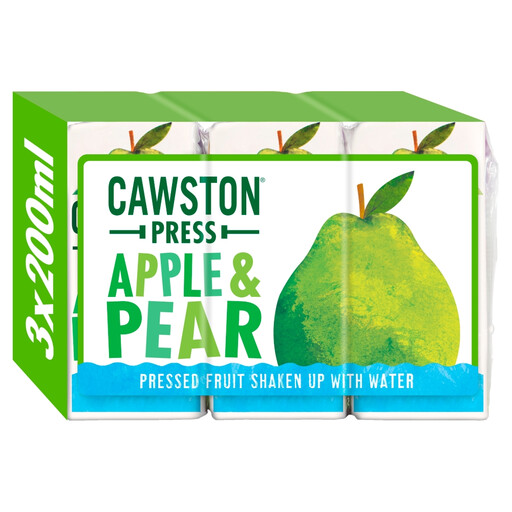 No image available
The three 200ml cartons offer individual servings for a gathering. This apple-and-pear fruit water is not 100% apple juice; check the carton’s sugars, ingredients and storage instructions when deciding whether it suits your guests.
 No image available
For guests who want apple juice in a sparkling format, this pack contains six 250ml cans. Check the sugars per can and the pack wording if an explicit no-added-sugar claim matters; NHS guidance counts sugars in unsweetened fruit juice as free sugars.
No. A drink can contain sugars from fruit even when no sugar has been added. NHS guidance counts sugars in unsweetened fruit juice as free sugars; check the nutrition panel for the amount in the glass you plan to serve.
A 150ml glass is a useful serving size to plan around. NHS guidance recommends limiting fruit juice and smoothies to a combined 150ml a day, so consider offering other drinks too rather than treating a larger glass of juice as the default.
Check the exact drink first. The checked Tesco, Sainsbury’s and ASDA no-added-sugar juice drinks list sweeteners, so the front-of-pack sugar claim does not establish that a product is sweetener-free.
Read the ingredient and allergen statement on each exact pack before serving it. Do not assume that all apple drinks or all squashes have the same ingredients.
Use it to compare options, then read the pack you will serve. That final check matters particularly for sweeteners, allergens, dilution instructions and storage after opening.