For a short or easy ride, a low-carbohydrate no-added-sugar apple drink can provide flavour when you are not relying on it for fuel. For intense cycling lasting more than an hour, do not assume an apple drink covers your fuelling plan: reviews indexed by PubMed discuss carbohydrate intake and sodium-containing fluid for prolonged exercise. A 100% apple juice supplies more carbohydrate than the checked low-carbohydrate drinks, but its serving size, salt content and how you tolerate it still matter.
Which drink suits your ride?
Short-ride cyclists looking for apple flavour
If the drink is not part of your fuel plan, compare its carbohydrate content and ingredients rather than choosing by the no-added-sugar claim alone. The checked Sainsbury’s, ASDA and Tesco apple-based drinks list 1.1g to 2.7g carbohydrate per 100ml.
Endurance cyclists planning on-bike fuel
For intense exercise lasting 1 to 2.5 hours, a 2015 review indexed by PubMed advises 30g to 60g carbohydrate per hour. A separate 2004 review discusses carbohydrate and sodium-containing fluid during prolonged intense exercise. Check what your whole ride plan provides, not just the drink’s name.
Cyclists considering 100% juice off the bike
Pure apple juice may suit a deliberate serving alongside food rather than serving as your entire ride drink. The checked innocent juice lists 11g carbohydrate per 100ml. For everyday consumption, the NHS advises limiting juice and smoothies to a combined 150ml a day because their released sugars can damage teeth.
What should you check before choosing?
Start with whether the drink needs to contribute ride fuel; then compare the nutrition panel, ingredients and portion you intend to use.
| Priority | What to check | Your needs |
|---|
| Ride fuel |
Compare carbohydrate per 100ml with the amount you would drink. A 2015 review indexed by PubMed advises 30g to 60g per hour for 1 to 2.5 hours of high-intensity exercise. |
On a long, intense ride, I need to account for carbohydrate across my drinks and food; apple flavour alone does not tell me how much fuel I have. |
| Lower-carbohydrate flavour |
Check carbohydrate and sugars on the prepared drink’s label. Sainsbury’s Apple High Juice Squash lists 1.1g carbohydrate per 100ml; Tesco Apple & Pear Juice Drink lists 2.7g per 100ml. |
For an easy ride, I may want a flavoured drink without treating it as a substantial carbohydrate source. |
| Juice or drink |
Read the product description and ingredients: a squash, a fruit-and-water blend and 100% juice are different products. Check the ‘of which sugars’ figure even when the label says no added sugar. |
If I want fruit juice rather than a sweetened squash, I need to distinguish the product type before comparing portions. |
| Sodium |
Check the salt declaration and any separate sodium source in your ride plan. The checked Tropicana blend lists 0g salt per 100ml; a 2004 endurance review indexed by PubMed discusses fluid containing carbohydrate and sodium for prolonged intense exercise. |
When planning a prolonged ride, I cannot assume that a fruit drink also provides the sodium accounted for in my fuelling plan. |
| Everyday portions |
Check the amount you pour, not just the bottle size. The NHS advises a combined limit of 150ml a day for juice and smoothies in general dietary guidance and notes that their released sugars can damage teeth. |
If I drink juice regularly away from cycling, I want to consider the serving and how often I sip it, separately from a ride-specific fuel decision. |
Common label and fuelling mistakes
-
Treating ‘no added sugar’ as a fuelling claim
The checked Sainsbury’s, ASDA and Tesco low-carbohydrate drinks list 1.1g to 2.7g carbohydrate per 100ml. That is a different contribution from the 30g to 60g per hour discussed for 1 to 2.5 hours of high-intensity exercise in a 2015 review indexed by PubMed.
For a long, intense ride, count carbohydrate from the whole plan and check sodium separately instead of relying on the front-of-pack wording.
-
Reading ‘no added sugar’ as ‘sugar-free’
Fruit sugars can still appear on the nutrition panel. ASDA lists 7.5g sugars per 100ml for Tropicana Fresh & Light Apple Juice Blend Drink, while Sainsbury’s lists 9.5g per 100ml for innocent Pure Apple Juice.
Compare carbohydrate and ‘of which sugars’ per 100ml and per intended serving, then read the ingredients if sweeteners matter to you.
-
Sipping juice throughout the day without considering teeth
The NHS notes that juicing releases sugars that can damage teeth and advises limiting juice and smoothies to a combined 150ml a day in general dietary guidance.
Keep routine juice portions deliberate rather than using a juice bottle as an all-day drink; consider ride-specific fuelling needs separately.
-
Choosing by a retailer listing alone
Ingredients matter if you avoid particular sweeteners or need to check allergens. The checked Tesco and ASDA apple-and-pear drinks list sucralose.
Read the current pack for the exact product and size you will carry, including its ingredients and nutrition per 100ml.
Brand and retailer examples
These references describe particular UK product lines or listings, not every drink made by each brand.
Tropicana
ASDA lists Tropicana Fresh & Light Apple Juice Blend Drink as an apple, grape and water blend.
- Its listed 8.0g carbohydrate per 100ml is more than in the checked low-carbohydrate squashes and juice drinks.
- The same listing gives 0g salt per 100ml, so account for sodium separately if your ride plan calls for it.
Copella
Sainsbury’s lists Copella Cloudy Apple Fruit Juice in 300ml, 900ml and 1.35L formats.
- The 300ml listing offers a smaller format to compare with larger bottles.
- Check the exact pack’s ingredients, no-added-sugar wording and nutrition before assigning it a role in a ride plan.
Tesco
Tesco No Added Sugar Apple & Pear Juice Drink is an apple-and-pear drink with sweetener.
- Tesco lists 2.7g carbohydrate and 2.6g sugars per 100ml, making its contribution straightforward to calculate from a serving.
- It contains sucralose and lists less than 0.01g salt per 100ml; do not count on it as a complete endurance drink.
Sainsbury’s
Sainsbury’s Apple High Juice Squash is a concentrated apple drink; its listed nutrition is for the prepared drink.
- The prepared drink lists 1.1g carbohydrate and 1.0g sugars per 100ml.
- It contains sucralose; check the dilution instructions and current pack before comparing a serving with ready-to-drink products.
Asda
ASDA Apple & Pear Juice Drink is listed in 150ml cartons.
- ASDA lists 1.2g carbohydrate per 100ml, equivalent to 1.8g in a 150ml carton.
- It contains sucralose and lists 0g salt per 100ml; a carton is not a complete fuel-and-sodium plan for prolonged intense riding.
M&S
M&S Apple and Mango High Juice is an apple-containing concentrate, not plain apple juice.
- Marks & Spencer lists 40% apple juice and 10% mango purée in its ingredients.
- Its 1.1g carbohydrate figure is stated per 100g, not per 100ml; check the preparation directions before comparing a glass with ready-to-drink options.
Apple-based drinks on Joybuy
These options cover a portioned apple-and-pear fruit water and a no-added-sugar blackcurrant-and-apple drink for riders considering flavoured drinks. Neither product name describes plain apple juice or a complete endurance-fuelling drink.
 No image available
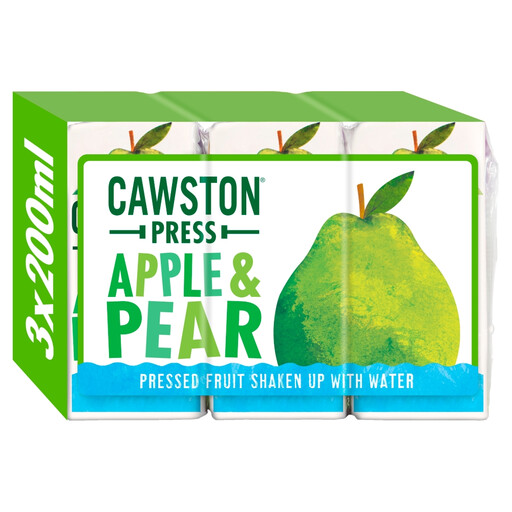
CAWSTON PRESS Apple & Pear Fruit Water, 3 × 200ml
The individual cartons offer defined portions for a short or easy ride when the drink is not your entire fuel plan. This is an apple-and-pear fruit water rather than plain apple juice; check the pack’s nutrition if you are counting ride carbohydrate.
View on Joybuy
 No image available
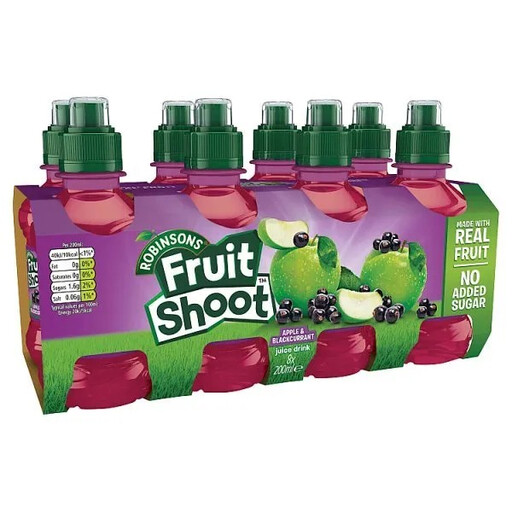
Fruit Shoot Black & Apple No Added Sugar, 8 × 200ml
The 200ml bottles offer portions for riders seeking a flavoured drink on a short or easy ride. It is a blackcurrant-and-apple drink, not apple-only juice; check its carbohydrate, salt and sweeteners on the pack rather than treating the no-added-sugar wording as a fuelling measure.
View on Joybuy
Questions about apple drinks and cycling
Does no added sugar mean an apple drink is sugar-free?
No. Naturally occurring fruit sugars can still be present. ASDA lists 7.5g sugars per 100ml for Tropicana Fresh & Light Apple Juice Blend Drink, and Sainsbury’s lists 9.5g per 100ml for innocent Pure Apple Juice. Read both the ‘of which sugars’ figure and the ingredients.
Can a no-added-sugar apple drink replace a sports drink on a long ride?
Do not assume it can cover the whole plan for an intense ride lasting more than an hour. The checked Sainsbury’s, ASDA and Tesco low-carbohydrate drinks list 1.1g to 2.7g carbohydrate per 100ml. Reviews indexed by PubMed discuss 30g to 60g carbohydrate per hour for 1 to 2.5 hours of high-intensity exercise and carbohydrate-and-sodium fluid for prolonged intense exercise. Count what your drinks and food actually provide.
Does 100% apple juice provide more ride carbohydrate than squash?
The checked examples do: Sainsbury’s lists 11g carbohydrate per 100ml for innocent Pure Apple Juice and 1.1g per 100ml for prepared Sainsbury’s Apple High Juice Squash. More carbohydrate does not make the juice a complete ride drink; also consider your serving, sodium plan and how you tolerate it.
What does the NHS say about everyday juice portions?
The NHS advises limiting fruit juice, vegetable juice and smoothies to a combined 150ml a day in general dietary guidance. It notes that juicing releases sugars that can damage teeth. That everyday guidance is not a personalised cycling-fuelling plan.
What should I check if I avoid sweeteners?
Read the ingredient list on the exact pack before buying. The checked Tesco No Added Sugar Apple & Pear Juice Drink and ASDA Apple & Pear Juice Drink list sucralose; a no-added-sugar claim alone does not tell you whether a drink contains a sweetener.


