People seeking an everyday fizzy apple flavour
If labelled sugar and carbohydrate are your main concerns, compare flavoured water with juice-based drinks. A zero-sugar flavoured water may contain sweeteners without containing apple juice.


If your priority is a sparkling apple-flavoured drink labelled with 0g sugar and carbohydrate, the ASDA flavoured-water example meets those specifications, but it contains sweeteners and is not apple juice. If actual juice matters more, compare the amount you expect to drink: Sainsbury’s lists 4.3g sugars per 100ml for Cawston Press’s 49% juice drink, while ASDA Groceries lists 10.5g per 100ml for 100% Appletiser.
The useful distinction is whether you want apple flavour, some apple juice or 100% sparkling apple juice.
If labelled sugar and carbohydrate are your main concerns, compare flavoured water with juice-based drinks. A zero-sugar flavoured water may contain sweeteners without containing apple juice.
If you want pressed apple juice as an ingredient, check its percentage and compare sugars per 100ml and for the amount you plan to pour.
If genuine sparkling apple juice is the priority, check the serving’s labelled carbohydrate and sugar when planning what you drink. Diabetes UK notes that sugars in fruit juice count as free sugars.
Consider it: When fizz and apple-style flavour matter more than juice content; ASDA Groceries lists 0g sugars and carbohydrate for its apple-and-elderflower flavoured water.
Trade-off: It contains sweeteners and flavourings, not apple juice.
Consider it: When you want apple juice in the drink but not a 100% juice formulation; Sainsbury’s lists Cawston Press Sparkling Cloudy Apple as 49% pressed juice.
Trade-off: It still contains fruit sugars, listed at 4.3g per 100ml.
Consider it: When actual 100% apple juice is the deciding requirement; ASDA Groceries describes Appletiser as carbonated apple juice from concentrate.
Trade-off: ASDA Groceries lists 10.5g sugars and 11g carbohydrate per 100ml, so check the amount you intend to drink.
| Priority | What to check | Your needs |
|---|---|---|
| Sugars and carbohydrate | Compare both figures per 100ml, then check the figures for your intended serving. Keep comparisons on the same volume basis. | I want to know what is in the amount I will actually drink, rather than judging a can or bottle by its front label. |
| Juice content | Read the ingredients for the apple-juice percentage and whether the drink is juice, a diluted juice drink or flavoured water. | Actual apple juice may matter more to me than simply having an apple flavour. |
| Sweetening | Check total sugars as well as any “no added sugar” wording. Read the ingredients for added sugar and sweeteners. | I might accept sweeteners, or I might prefer a juice-containing drink; neither preference tells me its total sugars without the nutrition panel. |
| Serving size | Check the can size, suggested serving and number of containers in a pack. Joybuy lists 26g sugars and 28g carbohydrate for a 250ml serving of Appletiser. | A per-100ml figure is useful for comparing drinks, but I also need the figure for the portion I plan to have. |
Diabetes UK explains that sugars in fruit juice count as free sugars. ASDA Groceries lists 10.5g sugars per 100ml for Appletiser, while Joybuy lists 26g for its 250ml serving.
Choose 100% juice because you want that type of drink, not because its fruit content answers a sugar question. Check the nutrition panel for the portion you intend to drink.
Juice can contain naturally occurring sugars without added sugar. Sainsbury’s lists 4.3g sugars per 100ml for Cawston Press Sparkling Cloudy Apple.
Read the total-sugars and carbohydrate lines alongside the claim, then compare drinks using the same volume.
ASDA Groceries lists 0g sugars and carbohydrate for its Sparkling Apple & Elderflower Flavour Water, whose ingredients include sweeteners and flavourings rather than apple juice.
Check the ingredients if having apple juice in the drink matters to you; choose flavoured water on its own terms, not as an equivalent juice.
A single can and a multipack may show nutrition for different stated serving sizes, making their front-of-pack figures difficult to compare.
Check the container size and current nutrition panel, and calculate your comparison from the amount you intend to drink.
These examples show why the particular drink matters more than the brand name: juice content, sweeteners and nutrition vary by product.
A 100% sparkling apple-juice example, rather than a flavoured-water substitute.
Sparkling Cloudy Apple combines pressed apple juice with sparkling water.
Sparkling Apple & Elderflower Flavour Water offers apple-style flavour without being apple juice.
Its sparkling apple drinks illustrate why each formulation needs its own label check.
Cloudy Apple is a still pressed-juice reference, not a sparkling option in this comparison.
Orchard Apple is another still-juice reference rather than a sparkling apple drink.
These options include one 100% sparkling apple juice and two sparkling apple-and-fruit blends. Compare their current labels for the portion you intend to drink; the blends should not be treated as pure apple juice.
 No image available
For a 100% sparkling apple-juice choice, rather than a flavoured-water alternative. Joybuy lists 26g sugars and 28g carbohydrate per 250ml serving; check that serving against the amount you intend to drink.
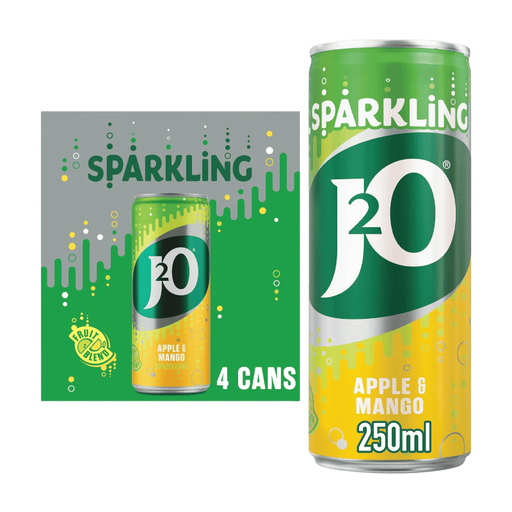 No image available
A sparkling apple-and-mango blend for someone who does not require 100% apple juice. It contains added sugar and sucralose; check the current nutrition panel for your intended serving.
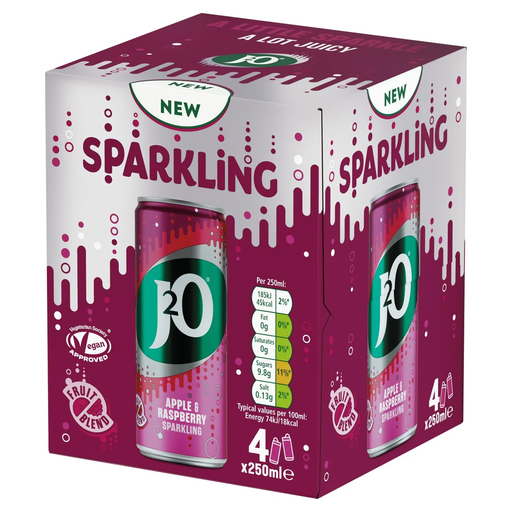 No image available
A sparkling apple-and-raspberry blend, not 100% apple juice. It contains sugar and sucralose; check the current ingredients and nutrition panel if juice content or the amount you plan to drink affects your choice.
Do not treat 100% juice as a low-sugar claim. ASDA Groceries lists 10.5g sugars and 11g carbohydrate per 100ml for Appletiser, and Joybuy lists 26g sugars and 28g carbohydrate per 250ml serving. Diabetes UK explains that sugars in fruit juice count as free sugars; use the serving figures when considering your own drinking plan.
No. A drink can contain naturally occurring fruit sugars without added sugar. For example, Sainsbury’s lists 4.3g sugars per 100ml for Cawston Press Sparkling Cloudy Apple, while Marks & Spencer’s Apple and Elderflower sparkling drink also lists sugars despite its no-added-sugar wording. Check total sugars and carbohydrate on the nutrition panel.
Consider an apple-flavoured sparkling water rather than assuming juice will meet that specification. ASDA Groceries lists 0g sugars and carbohydrate for its Sparkling Apple & Elderflower Flavour Water, but its ingredients include sweeteners and flavourings, not apple juice.