Hosts comparing sugar labels
If you want an apple-flavoured option with less listed sugar, compare sugars per 100ml as well as the juice percentage. A no-added-sugar drink is not necessarily sugar-free.


Choose 100% apple juice if guests want a drink made wholly from fruit juice, but do not mistake its naturally occurring sugars for zero sugar. A no-added-sugar apple juice drink can list less sugar while containing less apple juice and a sweetener, so compare the labels for the drinks you are considering. For a street party, plan juice portions and offer water alongside either option.
If you want an apple-flavoured option with less listed sugar, compare sugars per 100ml as well as the juice percentage. A no-added-sugar drink is not necessarily sugar-free.
Pack size matters when guests serve themselves. The NHS advises limiting fruit juice and smoothies to a combined 150ml a day, so consider how you will pour juice and keep water available.
If 100% apple juice matters more to you than a lower sugars figure, check the product description and ingredients. Fruit juice can still contain naturally occurring sugars.
Choose when: You want a drink made wholly from apple juice; Tropicana describes Orchard Apple as 100% pressed juice.
Bear in mind: Tropicana lists 10g sugars per 100ml, and the NHS advises a combined daily limit of 150ml for fruit juice and smoothies.
Choose when: The listed sugars figure matters more to you than having 100% juice; Tesco lists 2.0g sugars per 100ml for its 1L no-added-sugar apple juice drink.
Bear in mind: That Tesco drink contains 20% apple juice from concentrate and sucralose, rather than being 100% apple juice.
Once you have chosen the type of drink, compare the serving size and storage instructions for the packs you might buy.
| Priority | What to check | Your needs |
|---|---|---|
| Drink type and sugars | Read the product description, apple-juice percentage and ingredients. Compare sugars per 100ml and for the amount you intend to serve. | I want to know whether I am serving 100% juice, an apple juice drink or an apple-flavoured soft drink, rather than treating them as interchangeable. |
| Juice portions | Check the serving volume in ml. The NHS advises limiting fruit juice and smoothies to a combined 150ml a day; a 250ml bottle of juice is larger than that amount. | If I serve fruit juice, I want to be able to pour a smaller glass and provide water too. |
| Party format and storage | Compare shared bottles with individual cartons or cans. Read the pack’s refrigeration and after-opening instructions; Tesco Groceries lists refrigerated storage for the innocent 900ml juice. | Individual packs would be easier to hand out, but a shared bottle would let me control how much juice goes into each cup. |
Tesco Groceries lists 2.0g sugars per 100ml for its no-added-sugar apple juice drink. The wording does not mean the finished drink contains no sugar.
Compare the sugars figure per 100ml and per planned serving rather than relying on the front-of-pack phrase.
Tropicana lists 10g sugars per 100ml for Orchard Apple, which it describes as 100% pressed apple juice.
Choose 100% juice because you want that drink type, and check its sugars figure and serving size separately.
A 250ml bottle of fruit juice exceeds the NHS guidance of no more than a combined 150ml of fruit juice and smoothies a day.
If serving juice, consider pouring smaller amounts from a bottle rather than assuming one individual bottle is one guided portion.
Tesco Groceries says its listed innocent 900ml apple juice must be refrigerated and used within four days of opening.
Check the storage instructions on each pack and plan where opened drinks will be kept during and after the party.
These labelled products illustrate different apple-drink choices; the figures apply to the named products, not every drink sold under each brand.
Tropicana describes Orchard Apple as 100% pressed apple juice, not from concentrate.
Tesco Groceries lists a 1L no-added-sugar apple juice drink made with 20% apple juice from concentrate.
Tesco Groceries describes the listed innocent 900ml apple product as 100% fruit juice.
These options span apple juice, a mixed-fruit drink and an apple-flavoured soft drink. Check the drink type before choosing between shared pouring and individual packs.
 No image available
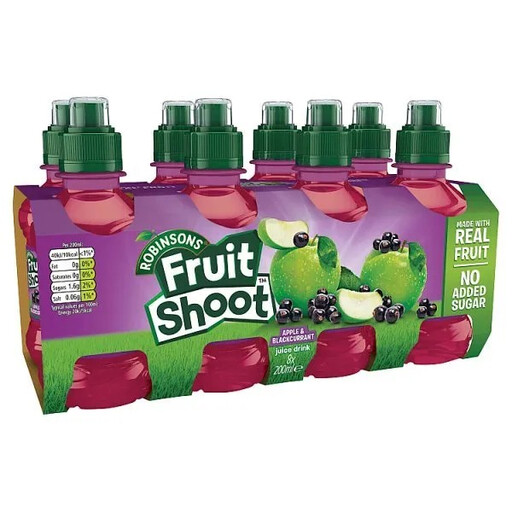
Individual bottles suit handout-style serving, but this is a blackcurrant-and-apple drink rather than 100% apple juice.
Check the juice percentage, sweeteners and sugars on the pack. The product information warns that bottle caps contain small parts and says the drink is unsuitable for children under 36 months.
 No image available
This canned apple-flavoured soft drink suits guests who want a sugar-free option rather than 100% apple juice.
Check the juice percentage and sweeteners on the pack, and handle the pressurised cans with care.
 No image available
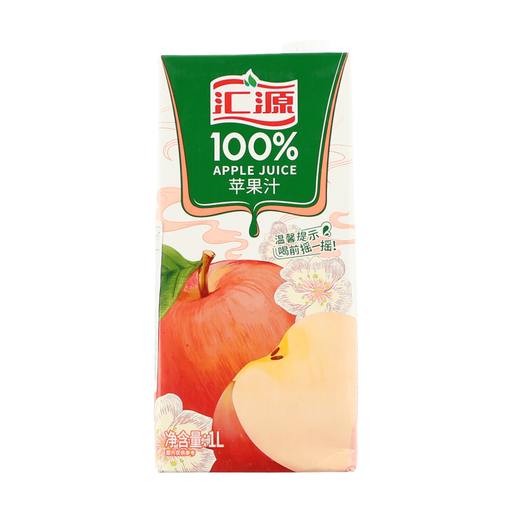
The 1L bottle allows shared pouring when guests want apple juice rather than an individual soft drink.
Check its ingredients and sugars label before buying. For fruit juice, the NHS advises no more than a combined 150ml of juice and smoothies a day; offer water alongside it.
 No image available
These individual bottles offer a lightly sparkling 100% apple juice option for guests who prefer a bottled serving.
Each 250ml bottle is larger than the NHS advised combined daily amount of 150ml for fruit juice and smoothies. Check the sugars label and consider smaller poured portions.
No. Tesco Groceries lists 2.0g sugars per 100ml for its no-added-sugar apple juice drink. Read the sugars figure on the drink’s nutrition label if zero sugar is important to your choice.
The NHS advises limiting fruit juice and smoothies to a combined 150ml a day. If serving fruit juice, plan a pour of no more than 150ml rather than assuming a larger individual bottle matches that guidance, and provide water as another option.
No single drink fits both priorities: 100% juice suits someone who wants a product made wholly from fruit juice, while a juice drink may have a lower listed sugars figure. Tropicana lists 10g sugars per 100ml for Orchard Apple; Tesco Groceries lists 2.0g per 100ml for its no-added-sugar drink, which contains 20% apple juice and sucralose.
Check whether each product is juice, a juice drink or a soft drink, then compare sugars per 100ml, ingredients, pack size and storage instructions. These details will help you plan portions and decide which drinks need space in the fridge.