Walkers planning one ready-to-drink break
An individual carton fits a planned snack stop without mixing. ASDA’s 150ml apple-and-pear juice drink is one example, but it contains sweetener and is not 100% juice.


Choose a single-serve, no-added-sugar apple-containing carton for a ready-to-drink break, or apple squash if you can bring a bottle and enough drinking water to dilute it. Choose 100% apple juice if you prefer that ingredient list, but check the portion: NHS guidance counts fruit-juice sugars as free sugars, and Tesco lists 15g sugars per 150ml for its Tropicana example. Carry water separately for the walk.
An individual carton fits a planned snack stop without mixing. ASDA’s 150ml apple-and-pear juice drink is one example, but it contains sweetener and is not 100% juice.
Apple squash is an option if you can dilute it with drinking water on your route. Check the dilution instructions and ingredients before relying on a concentrate as a trail drink.
Pressed apple juice suits a preference for juice rather than a flavoured drink or squash. Check the sugars per serving and plan when to drink it: the larger Tropicana and Copella examples need refrigeration.
Start with whether the drink must be ready to open on the trail; then compare the ingredients, sugars per serving and storage instructions for the format you choose.
Choose when: you want one portion for a break without carrying water to mix it.
Bear in mind: ASDA’s apple-and-pear example is a sweetened-by-sweetener juice drink, not 100% apple juice.
Choose when: you have a bottle and enough drinking water to make up the concentrate.
Bear in mind: the cited Sainsbury’s and M&S squashes need dilution and contain sweetener and sulphites.
Choose when: you want apple juice rather than a diluted juice drink or squash.
Bear in mind: NHS guidance counts its naturally occurring sugars as free sugars; check the serving size and chilled-storage instructions.
| Priority | What to check | Your needs |
|---|---|---|
| Sugars and serving size | Read “of which sugars” for the amount you will drink, not just the no-added-sugar claim. Tesco lists 15g per 150ml for Tropicana; ASDA lists 1.8g per 150ml carton for its apple-and-pear juice drink. NHS guidance counts unsweetened juice sugars as free sugars. | I want to know what one snack drink contains before choosing between full juice and a juice drink. |
| Mixing and water | Check whether the pack is ready to drink or needs dilution. For squash, follow the pack directions and plan for a bottle and drinking water. | If I cannot mix a drink on the route, I would rather pack a ready-to-drink portion. |
| Ingredients | Check whether the product is 100% juice, a juice drink or squash. Read the current ingredient and allergen statements for sweeteners and sulphites where relevant. | I prefer to check for sweeteners or sulphites before choosing a flavoured drink or concentrate. |
| Storage | Check unopened storage requirements, then the instructions for refrigeration and use after opening. Plan when a larger chilled bottle will be opened. | For a drink carried until a later break, I need a pack that suits the time it will spend in my rucksack. |
| Drinking water | Plan the water you will carry for the walk separately from an optional apple drink. NHS guidance identifies water as a choice for hydration. | I want an apple drink with my snack, without making it my only drink for the route. |
A 100% juice can contain sugars even when none have been added. Tesco lists 15g sugars per 150ml for Tropicana, and NHS guidance counts fruit-juice sugars as free sugars.
Compare the ingredient list and sugars for the portion you intend to drink, rather than relying on the front-of-pack wording.
Apple high-juice squash is a concentrate, so the bottle alone is not a ready-to-drink trail option.
Pack a bottle and enough drinking water for the route, or choose a ready-to-drink carton if mixing is impractical.
The bottle and water also add to what you need to carry.
ASDA’s cited carton contains sucralose. The cited Sainsbury’s and M&S squashes contain sweetener and sulphites, which matter if you avoid those ingredients.
Read the ingredient and allergen statements on the pack you buy, rather than treating “no added sugar” as a description of every ingredient.
Apple juice may be part of a snack break, but it is worth planning drinking water for the activity and conditions. NHS guidance identifies water as a choice for hydration.
Work out what water you will carry for the walk before adding an apple drink to your rucksack.
These examples show how pack format and ingredients differ; check the current label for the particular product you choose.
Tesco lists Tropicana Pressed Apple Fruit Juice 1.5L as a no-added-sugar, 100% pressed apple juice.
Tesco lists Copella Apple Juice as apple juice with ascorbic acid.
ASDA lists a no-added-sugar Apple & Pear Juice Drink in a 150ml carton.
Sainsbury’s lists a no-added-sugar Apple High Juice Squash as a concentrate with 50% fruit juice.
Marks & Spencer lists Apple and Elderflower High Juice as a no-added-sugar concentrate with 50% fruit juice.
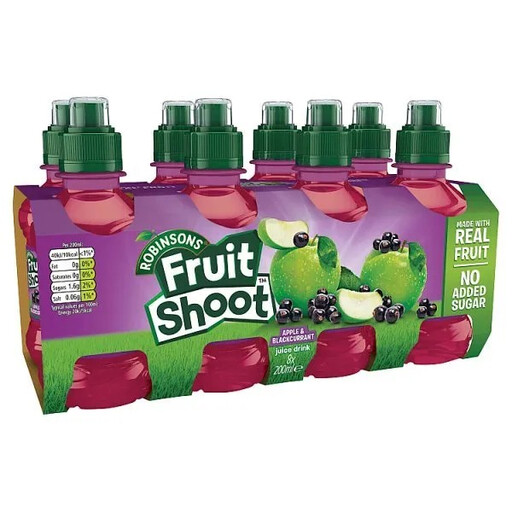
These ready-to-drink options cover two different hiking-snack preferences: a portioned blackcurrant-and-apple drink and a lightly sparkling 100% apple juice. Check the current pack label for ingredients, sugars and storage instructions before choosing either one.
 No image available
The separate ready-to-drink bottles suit planned snack breaks without dilution. This is a blackcurrant-and-apple drink rather than 100% apple juice; check the pack for sweeteners and unopened storage instructions before taking it on a hike. Once opened, keep refrigerated and drink within three days. The caps contain small parts, and the bottles are unsuitable for children under 36 months.
 No image available
The individual cans provide a ready-to-drink, lightly sparkling apple-juice option for a snack break. A 250ml can is larger than the 150ml serving used in the pressed-juice examples above. Check the current pack for its no-added-sugar wording and sugars per can rather than assuming that 100% juice is sugar-free.
No. NHS guidance says naturally occurring sugars in unsweetened fruit juice count as free sugars. For example, Tesco lists 15g sugars per 150ml for its no-added-sugar Tropicana apple juice; read the nutrition panel for the drink and portion you choose.
Check the pack size against the nutrition panel’s stated serving so you can see how much juice and sugar you plan to drink. Tesco’s Tropicana example lists 15g sugars per 150ml; a larger bottle contains more than one such portion.
Plan drinking water separately. NHS guidance identifies water as a choice for hydration; you can pack an apple drink for a snack break while taking account of your route, activity and conditions when deciding what water to carry.
No. The cited Sainsbury’s Apple High Juice and M&S Apple and Elderflower High Juice contain sweetener and sulphites. Read the ingredient and allergen statements on the current pack before choosing a squash.
The cited Sainsbury’s and M&S high-juice squashes are concentrates that need dilution. Follow the pack instructions and take a bottle and drinking water if you plan to prepare one on your walk.