Who might choose each drink?
The useful distinction is whether you want pure juice, a drink with less labelled sugar, or something you can dilute for a break.
Night workers planning a snack break
If you take a drink with a lighter meal or snack overnight, choose a format and portion you can plan into that break. The British Dietetic Association notes that breaks including drinks and lighter meals or snacks may be useful during night shifts.
Shoppers comparing labelled sugars
A no-added-sugar juice drink or prepared squash may have less sugar on its nutrition label than 100% apple juice. Check the stated serving size as well as the ingredients: these alternatives can contain sweeteners and have different fruit content.
Shoppers who want 100% apple juice
Pressed apple juice suits a preference for a juice-led ingredient list. Its naturally occurring sugars still count as free sugars under NHS guidance, so the amount poured matters even when no sugar has been added.
What should you check before buying?
100% apple juice
Choose it when: You want apple juice rather than an apple-flavoured drink and will measure the amount you have.
Bear in mind: NHS guidance counts sugars in unsweetened fruit juice as free sugars, whether or not sugar is added.
No-added-sugar juice drink
Choose it when: Less labelled sugar matters more to you than having 100% juice.
Bear in mind: Fruit content and sweeteners vary; Tesco lists 20% apple juice and sucralose in its No Added Sugar Apple Juice Drink.
Diluted apple squash
Choose it when: You are happy to prepare a concentrate rather than carry a ready-to-drink juice.
Bear in mind: Compare nutrition for the prepared drink, and check the ingredient list for sweeteners and sulphites.
Decide on the drink format first, then compare sugars on a like-for-like volume and check the portion you expect to finish.
| Priority |
What to check |
Your needs |
| Drink type and sugars |
Read the product description and sugars per 100ml as well as per serving. Tropicana Orchard Apple and Copella Cloudy Apple each list 15g per 150ml; Tesco lists 3.1g per 150ml for its 20%-apple-juice drink. |
I want to know whether I am buying pure juice or a juice drink with less labelled sugar. A no-added-sugar claim alone will not tell me the total sugars. |
| Portion size |
Check the bottle size against the labelled serving. ASDA lists two 150ml servings in a 300ml Copella bottle; the NHS advises no more than 150ml a day in total from fruit juice, vegetable juice and smoothies. |
A bottle is convenient for my break, but I want to decide how much to pour rather than assume the whole pack is one juice portion. |
| Ingredients |
Look for the fruit percentage, sweeteners and allergen statement. Tesco lists sucralose in its apple juice drink; M&S lists sucralose and E223 sulphites in its Apple and Elderflower High Juice. |
If I avoid a particular sweetener or need to check sulphites, the current pack matters more than the no-added-sugar wording on the front. |
| Shift-break format |
Check whether the drink is ready to serve or needs diluting, and follow the pack's storage directions. The British Dietetic Association notes that drinks can form part of a night-shift break with a lighter meal or snack. |
I need a drink that works with my planned break and the storage available during my shift. |
Brand and retailer references
These examples show how differently apple drinks can be labelled and served; a retailer's juice and juice-drink ranges should not be treated as interchangeable.
Tropicana
Tropicana describes Orchard Apple as 100% pressed apple juice, not from concentrate.
- Tropicana lists 15g sugars per 150ml for Orchard Apple.
- A juice-led ingredient list does not make those sugars irrelevant: NHS guidance counts sugars in unsweetened juice as free sugars.
Copella
Copella lists Cloudy Apple as pressed apple juice in several bottle sizes, including 250ml and 300ml.
- Its stated sugars are 15g per 150ml, making the serving size clear for comparison.
- ASDA lists two 150ml servings in the 300ml bottle; the whole bottle is not one measured juice portion.
Tesco
Tesco's No Added Sugar Apple Juice Drink is a juice drink rather than 100% apple juice.
- Tesco lists 20% apple juice from concentrate and 3.1g sugars per 150ml.
- It contains sucralose, so check whether its ingredient list fits your preferences.
Sainsbury's
Its listed alternatives include a no-added-sugar Apple & Pear Juice Drink and an Apple High Juice Squash.
- Sainsbury's lists 3.9g sugars per 150ml for the juice drink and 2.5g per prepared 250ml for the squash; those serving sizes differ.
- The squash needs diluting. Check its current ingredient and allergen statement before choosing it.
Asda
ASDA's Copella Cloudy Apple listing illustrates a portable 300ml pure-juice format.
- The listing identifies two 150ml servings and gives sugars as 15g per serving.
- Consider the full bottle volume if you intend to drink it during one shift break.
M&S
M&S Apple and Elderflower High Juice is a flavoured squash, not plain apple juice.
- M&S describes it as a no-added-sugar concentrate made with 50% fruit juice.
- Its listed ingredients include sucralose and E223 sulphites. M&S advises checking the current pack label.
Joybuy apple-drink options
These options include portable apple-containing drinks and apple juice for a planned shift break. They span different flavours and formats, so compare the current pack's ingredients, sugars and serving size rather than assuming they are equivalent.
 No image available
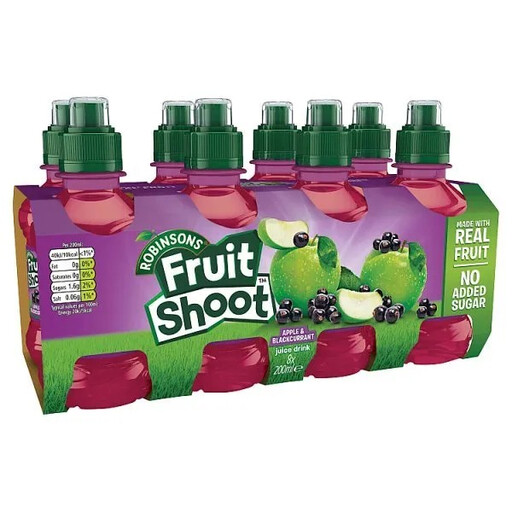
Fruit Shoot Black & Apple No Added Sugar 8x200ml
Individual 200ml bottles could suit a planned shift break if you want a blackcurrant-and-apple drink rather than plain apple juice. Check the current ingredients and sugars per bottle when comparing it with other no-added-sugar drinks.
View on Joybuy
 No image available
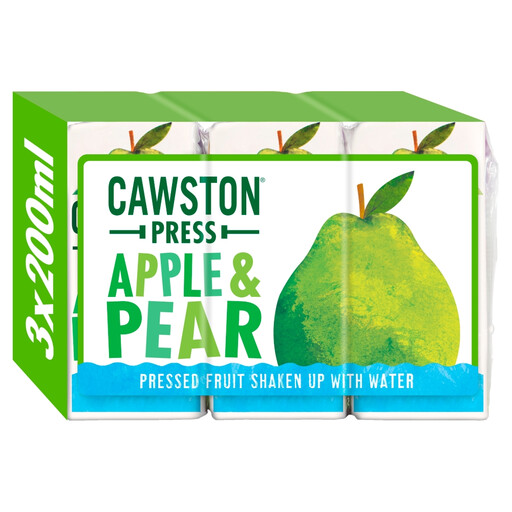
CAWSTON PRESS Apple & Pear Fruit Water 3x200ml
The 200ml cartons are an option for a break if an apple-and-pear fruit water appeals more than plain apple juice. Compare the pack's sugars and serving information with any juice drink you are considering.
View on Joybuy
 No image available
Appletiser 100% Apple Juice Lightly Sparkling 6x250ml
This lightly sparkling apple-juice option comes in 250ml cans. A whole can exceeds the NHS daily guidance of 150ml in total from fruit juice, vegetable juice and smoothies, so consider the amount you intend to drink; check the pack if an explicit no-added-sugar claim matters to you.
View on Joybuy
 No image available
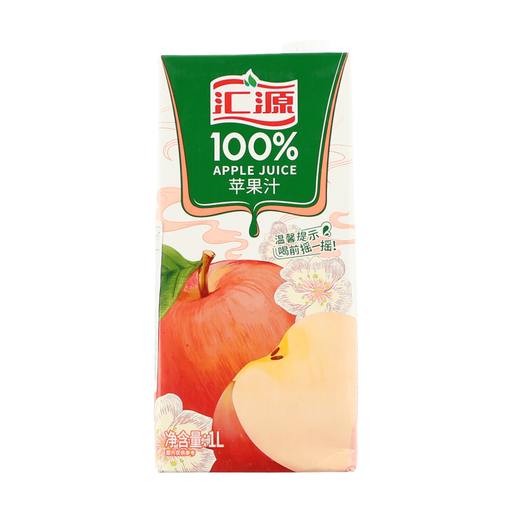
Huiyuan Apple Juice 1L
A 1L bottle allows you to pour a portion for a break instead of treating the pack as one serving. Check the current ingredients, sugars and how any juice-content claim applies to the finished drink before comparing it with other apple juices.
View on Joybuy
Frequently asked questions
Does 'no added sugar' mean an apple drink is sugar-free?
No. The NHS counts naturally occurring sugars in unsweetened fruit juice as free sugars. For example, Tropicana Orchard Apple and Copella Cloudy Apple each list 15g sugars per 150ml, so check the nutrition panel as well as the claim.
Should I choose pure apple juice or a no-added-sugar juice drink for a night-shift break?
Choose pure juice if its juice-led ingredients are your priority and you will measure the portion. If less labelled sugar matters more, compare juice drinks: Tesco lists 3.1g sugars per 150ml for its No Added Sugar Apple Juice Drink, which contains 20% apple juice and sucralose, rather than the 15g per 150ml listed for Tropicana Orchard Apple and Copella Cloudy Apple.
How much fruit juice should I plan for a shift?
The NHS advises no more than 150ml a day in total from fruit juice, vegetable juice and smoothies, not 150ml of each. If apple juice is part of your shift snack, measure what you pour and account for any juice you have at another time of day.
What should I check before choosing an apple squash?
Check the dilution directions, nutrition for the prepared drink, and the current ingredient and allergen statement. Sainsbury's lists 2.5g sugars per prepared 250ml serving for its No Added Sugar Apple High Juice Squash; M&S lists sucralose and E223 sulphites in its Apple and Elderflower High Juice.
How should I store chilled apple juice during a shift?
Follow the storage instructions on the particular pack and keep a chilled juice appropriately cold while carrying it. ASDA's Copella Cloudy Apple listing says to refrigerate it and consume it within four days of opening; do not assume another product has the same instructions.


