Who is each option for?
The useful distinction is whether the lunch offer prioritises a lower sugar figure, an ingredient list without sweeteners or a fixed serving format.
Canteen buyers comparing sugar per serving
Diluted no-added-sugar juice drinks may suit a menu that accepts sweeteners. Compare the labelled amount for the portion actually served, rather than assuming every drink with the same front-of-pack claim has a similar sugar content.
Menus avoiding sweeteners
Pressed apple juice and some juice-and-water blends offer alternatives without listed sweeteners. They are different drinks: Copella lists 15g sugars per 150ml, while Tropicana Fresh & Light lists 11g per 150ml, according to their product information.
Lunch counters needing fixed portions
Individual cartons can be handed out without pouring from a shared bottle. Asda lists its apple-and-pear juice drink in a 150ml carton; check its ingredients as well as its size, since it is not 100% apple juice.
What should a canteen check?
Decide which type of drink belongs on the menu, then compare labels on the same serving basis and choose a pack format that fits lunch service.
100% apple juice
Choose when: An apple-juice ingredient profile without sweeteners matters more than a lower labelled sugar figure.
Trade-off: Copella lists 15g sugars per 150ml; for fruit juice, the NHS advises a maximum of one 150ml glass a day with a meal.
Juice drink with sweeteners
Choose when: A lower labelled sugar amount per served drink takes priority and sweeteners are acceptable.
Trade-off: These are diluted juice drinks, not equivalent to 100% apple juice; Tesco lists sucralose in its apple juice drink.
Juice-and-water blend
Choose when: The menu avoids sweeteners but does not require full-strength apple juice.
Trade-off: Tropicana Fresh & Light lists 11g sugars per 150ml and needs chilled storage, according to its product information.
| Priority | What to check | Your needs |
|---|
| Sugar and drink type |
Compare sugars per 100ml and per served portion. Check whether the label describes 100% juice, a juice drink or a blend; Copella lists 15g per 150ml, while Tesco lists 3.1g per 150ml for its diluted drink. |
I want the sugar figure for the drink people will actually receive, without treating “no added sugar” as “sugar-free”. |
| Sweeteners and fruit content |
Read the ingredients for sweeteners and juice proportions. Tesco lists apple juice from concentrate and sucralose; Sainsbury’s lists apple and pear juice from concentrate with acesulfame K and sucralose. |
If sweeteners are excluded from the menu, I need to check the ingredient list rather than rely on the no-added-sugar wording. |
| Portion format |
Check carton or bottle size and whether staff will serve a measured portion. Asda’s apple-and-pear drink comes in a 150ml carton. For fruit juice, the NHS advises adults to limit intake to one 150ml glass a day with a meal. |
A ready-to-serve carton may work better at a busy counter; with a shared bottle, I need a consistent serving measure. |
| Storage after opening |
Check whether unopened packs need refrigeration, then follow each product’s post-opening instructions. Match shared-pack size to expected lunch demand. |
When demand varies between shifts, I need a pack we can use within its stated period after opening. |
Relevant brand and retailer examples
These named products illustrate different formulations and service formats; check the label on the product being ordered rather than applying one example to an entire range.
Tropicana
Fresh & Light Apple is a chilled juice-and-water blend for a menu avoiding sweeteners without choosing full-strength apple juice.
- The ASDA product information labels it no added sugar and without sweeteners.
- It lists 11g sugars per 150ml and requires refrigeration.
Copella
Cloudy Apple is a pressed-apple-juice option rather than a diluted juice drink.
- Copella lists pressed apple juice and vitamin C in its product information.
- Its nutrition panel lists 10g sugars per 100ml and 15g per 150ml.
Tesco
Its 1L No Added Sugar Apple Juice Drink is a shared-pack example for canteens accepting sweeteners.
- Tesco lists 3.1g sugars per 150ml serving.
- It contains apple juice from concentrate and sucralose; check local availability before planning service around it.
Sainsbury’s
Its 1L No Added Sugar Apple & Pear Juice Drink is another shared-pack juice-drink option.
- Sainsbury’s lists 3.9g sugars per 150ml serving.
- The drink contains apple and pear juice from concentrate with acesulfame K and sucralose; follow its post-opening instructions.
Asda
Its Apple & Pear Juice Drink comes in a 150ml carton for individual counter service.
- ASDA lists 1.8g sugars per carton.
- Its ingredients include apple and pear juice from concentrate and sucralose; it is not 100% apple juice.
M&S
Apple and Elderflower High Juice belongs in a squash comparison, not a ready-to-drink apple juice comparison.
- Marks & Spencer describes it as a no-added-sugar concentrate made with 50% fruit juice.
- It requires dilution and lists sucralose and sulphites.
Joybuy product options
These apple-containing drinks offer individual bottles, fruit-water cartons and sparkling apple juice for lunch service. Compare each pack’s ingredients and serving size with the type of drink your canteen intends to offer.
 No image available
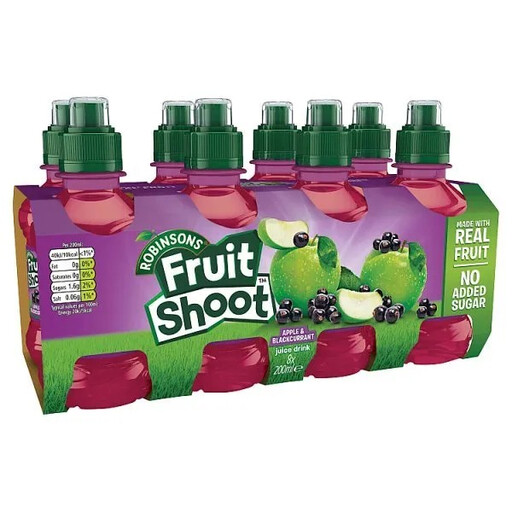
Fruit Shoot Black & Apple No Added Sugar 8 × 200ml
The individual 200ml bottles suit a counter serving apple-containing drinks without pouring from a shared pack. This is not pure apple juice and it contains sweeteners; check the delivered label if the menu needs a particular sugar figure or ingredient declaration.
View on Joybuy
 No image available
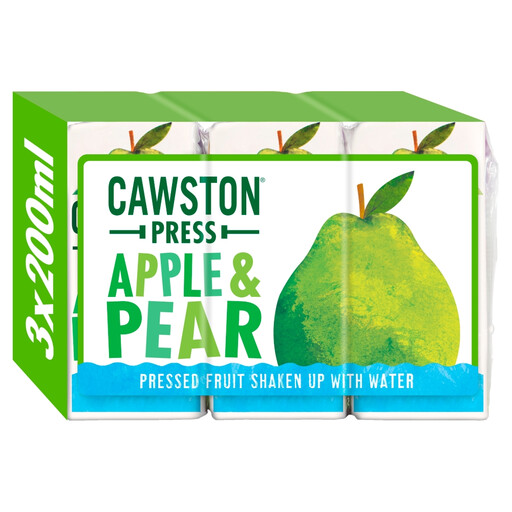
Cawston Press Apple & Pear Fruit Water 3 × 200ml
The three individual 200ml cartons offer an apple-and-pear drink for portioned lunch service. It is a diluted fruit water, not 100% apple juice; if serving less than a full carton, check the pack’s instructions for handling the remainder.
View on Joybuy
 No image available
Appletiser 100% Apple Juice Lightly Sparkling 6 × 250ml
This is a sparkling apple-juice option in individual 250ml cans, rather than a diluted juice drink. A full can is larger than the NHS’s 150ml adult fruit-juice reference; check the delivered label for no-added-sugar wording if the menu requires that claim, and plan how a measured portion would be served.
View on Joybuy
Questions about canteen apple drinks
Does “no added sugar” mean an apple drink is low in sugars?
No. The phrase does not remove sugars present in fruit juice: Copella lists 15g sugars per 150ml of Cloudy Apple, while Tesco lists 3.1g per 150ml of its diluted no-added-sugar apple juice drink. Compare the nutrition panel and the product type.
What portion should a canteen use for fruit juice at lunch?
For adults, the NHS advises limiting fruit juice and smoothies to one small 150ml glass a day and drinking them with a meal. A shared bottle needs a measured serving if the canteen is using that reference; check the size of individual packs rather than assuming each contains 150ml.
Are no-added-sugar apple drinks free from sweeteners?
Not necessarily. Tesco’s apple juice drink lists sucralose, and Sainsbury’s apple-and-pear drink lists acesulfame K and sucralose. The ASDA listing for Tropicana Fresh & Light Apple says it has no sweetener, but lists 11g sugars per 150ml.
What should staff check when substituting an apple drink?
Check the delivered pack’s product name, ingredients, allergen information, nutrition panel and storage instructions before putting it on the menu. A substitute may be a juice drink or a concentrate rather than ready-to-drink apple juice; M&S Apple and Elderflower High Juice, for example, requires dilution and lists sulphites.
Can one storage rule be used for every opened bottle?
No. Follow the instructions on the individual pack and plan shared-bottle servings around its stated post-opening period. Packs also differ in whether they need chilled storage before opening, so check both instructions when choosing a format for the canteen.


