TV-dinner drinkers comparing sugars
If you want an apple-flavoured drink with dinner, the sugars shown for the glass you pour are more useful than a no-added-sugar claim on its own.


Choose pure apple juice if you want undiluted juice, but do not take “no added sugar” to mean sugar-free: the NHS counts sugars in unsweetened fruit juice as free sugars and advises limiting fruit juice and smoothies to a combined 150ml a day, taken with meals. If the listed sugar in your dinner drink matters more than pure juice, compare juice drinks or prepared squash instead; check their serving sizes, sweeteners and, where relevant, sulphites.
If you want an apple-flavoured drink with dinner, the sugars shown for the glass you pour are more useful than a no-added-sugar claim on its own.
If you prefer undiluted apple juice to a juice drink, check the ingredients and plan a modest serving. The NHS counts sugars in unsweetened fruit juice as free sugars.
Read the ingredients and allergen information if you avoid particular sweeteners or are sensitive to sulphites. The products discussed here do not all have the same ingredients.
Decide whether you want pure juice, a ready-to-drink juice drink or squash you dilute, then compare the label for the amount you will actually serve.
Choose it when: Undiluted apple juice matters more to you than selecting the lowest listed sugar figure.
Bear in mind: Tropicana Orchard Apple lists 15g sugars per 150ml; the NHS counts sugars in unsweetened fruit juice as free sugars.
Choose it when: You want an apple-based drink with a lower listed sugar amount in the examples shown: Tesco lists 3.1g per 150ml and Sainsbury’s Apple & Pear lists 3.9g per 150ml.
Bear in mind: These are juice drinks with sweeteners, not pure apple juice; the Sainsbury’s drink also contains pear.
Choose it when: You want a drink made by diluting a concentrate; Sainsbury’s Apple High Juice Squash lists 2.5g sugars per prepared 250ml serving.
Bear in mind: This squash contains sucralose and sodium metabisulphite, so it is not suitable for someone who needs to avoid sulphites.
| Priority | What to check | Your needs |
|---|---|---|
| Sugars in the glass | Read sugars per 100ml and per stated serving. Note how much you intend to pour; “no added sugar” does not give the total sugars. | I want to know the sugars in my dinner drink, not just whether sugar was added. |
| Drink type | Check whether the pack says pure juice, juice drink or concentrated squash. For squash, use the nutrition information for the prepared drink and follow its dilution directions. | Undiluted apple juice matters to me, or I would rather have a diluted apple-based drink. |
| Juice portion | For fruit juice and smoothies, the NHS advises a combined maximum of 150ml a day for adults and children, taken at mealtimes. | If I choose pure juice with dinner, I want the portion to fit alongside any other juice or smoothie I have that day. |
| Ingredients | Look for named sweeteners, other fruits and any sulphites on the exact pack. Sainsbury’s Apple High Juice Squash lists sodium metabisulphite; the Food Standards Agency identifies sulphites as a possible risk for people sensitive to them. | I may prefer an apple-only drink, avoid particular sweeteners or need to check for sulphites. |
| Opened carton | Check the pack’s refrigeration and after-opening instructions before choosing a size. The stated time varies between products. | A carton should suit how much we will drink after opening, not just the one meal. |
Tropicana Orchard Apple lists 15g sugars per 150ml. The NHS counts sugars in unsweetened fruit juice as free sugars, even though they occur naturally.
Check the sugars line for the amount you will pour. For fruit juice, keep the NHS’s combined daily 150ml juice-and-smoothie advice in mind.
A figure for 150ml of ready-to-drink juice is not the same serving as a figure for 250ml of prepared squash. Squash also needs diluting before drinking.
Use the per-100ml information and your intended glass size, while noting whether each figure describes concentrate or the prepared drink.
The Sainsbury’s Apple & Pear Juice Drink contains acesulfame K and sucralose; its Apple High Juice Squash contains sucralose and sodium metabisulphite. The Food Standards Agency flags sulphites as a possible risk for people sensitive to them.
Check the current ingredients and allergen information if sweeteners or sulphites affect your choice.
Pack instructions differ: M&S Cloudy Apple Juice says to drink within 24 hours of opening, innocent Pure Apple Juice within four days and Tesco No Added Sugar Apple Juice Drink within five days.
Check the instructions on the carton you buy and choose a size you can use within its stated opened-life.
An unfinished carton may need to be discarded once its stated opened-life has passed.
These examples show why the exact product matters: a brand name alone does not establish its sugar content, ingredients or no-added-sugar claim.
Orchard Apple is an apple-juice example for someone choosing juice rather than a diluted drink.
Tesco No Added Sugar Apple Juice Drink is a ready-to-drink juice drink with sweetener, rather than pure apple juice.
The Apple & Pear Juice Drink is ready to drink; Apple High Juice Squash must be diluted.
Cloudy Apple Juice is a not-from-concentrate juice to consider if you are looking at juice rather than a diluted drink.
These packaged apple-based drinks offer alternatives to a carton of pure apple juice alongside dinner. Check each pack’s ingredients and nutrition information against the kind of drink you want.
 No image available
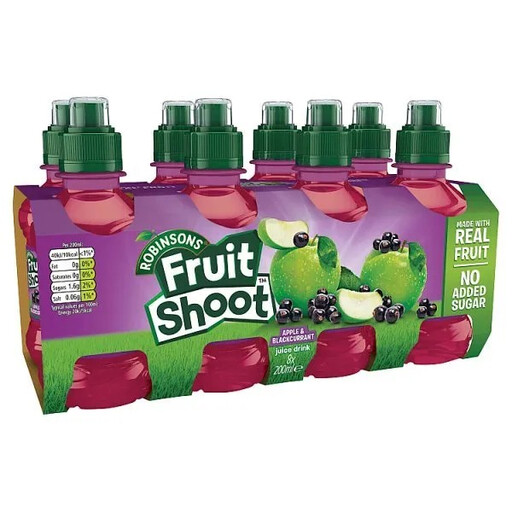
A small-bottle option with a TV dinner, but an apple-and-blackcurrant drink rather than apple-only juice. Check the ingredients if you avoid sweeteners. Its caps pose a choking risk for children under 36 months.
 No image available
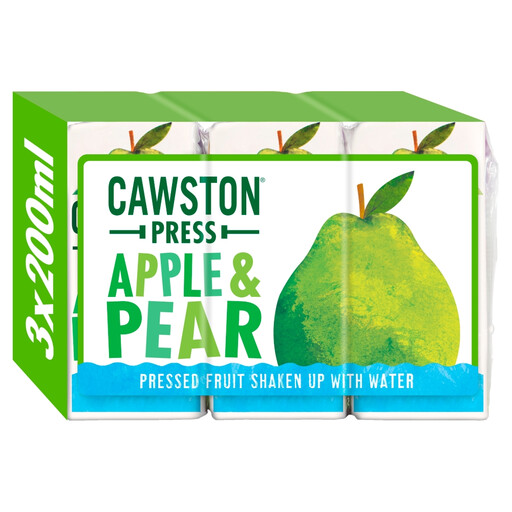
For an apple-and-pear drink alongside dinner, this fruit water is a different choice from pure apple juice. Check the carton’s sugar information for the serving you will drink and its current wording if a no-added-sugar claim is essential.
No. A no-added-sugar claim does not tell you the total sugars in the drink. The NHS counts naturally occurring sugars in unsweetened fruit juice as free sugars, so check the nutrition panel for the serving you intend to have.
The NHS advises adults and children to have no more than a combined 150ml of fruit juice and smoothies a day and, if they have them, to do so at mealtimes. A 150ml serving with dinner uses that daily amount if you have no other juice or smoothie.
These are different types of drink, so compare their ingredients as well as equal serving sizes. Tesco No Added Sugar Apple Juice Drink lists 3.1g sugars per 150ml and contains sweetener; Sainsbury’s Apple & Pear Juice Drink lists 3.9g per 150ml and contains sweeteners. Tropicana Orchard Apple lists 15g per 150ml.
Yes, check the exact product’s ingredients and allergen information. Sainsbury’s Apple High Juice Squash lists sodium metabisulphite, and the Food Standards Agency identifies sulphites as a possible risk for people sensitive to them.
Follow the instructions on that carton; opened-life varies. Tesco No Added Sugar Apple Juice Drink says to refrigerate after opening and consume within five days, while innocent Pure Apple Juice says to drink within four days and M&S Cloudy Apple Juice within 24 hours.