Budget shoppers comparing apple drinks
Decide whether you want 100% apple juice or a juice drink before comparing cartons. The juice percentage, sugars per 100ml and ingredients show what each contains.


Choose the drink type before judging a no-added-sugar label: 100% apple juice, a ready-to-drink juice drink and a dilutable squash differ in fruit content and preparation. If you want full-juice composition, look for 100% apple juice; if a juice drink or squash suits you, check its juice percentage, sugars and sweeteners rather than assuming “no added sugar” means sugar-free.
Decide whether you want 100% apple juice or a juice drink before comparing cartons. The juice percentage, sugars per 100ml and ingredients show what each contains.
A no-added-sugar label does not tell you the total sugars in a drink. The NHS notes that sugars naturally present in unsweetened fruit juice still count as free sugars.
Drink type matters here too. The NHS recommends water and milk as drinks for children and says to limit fruit juice and smoothies to 150ml a day, with a meal.
Start with the type of drink, then compare the label details that matter for how you will serve it.
| Priority | What to check | Your needs |
|---|---|---|
| Drink type | Check whether it is 100% juice, a juice drink or a concentrate that needs diluting. Read the fruit percentage and preparation directions. | “I want apple juice rather than a drink containing some apple juice.” |
| Total sugars | Compare the “of which sugars” figure on the same per-100ml basis for ready-to-drink products. The NHS says sugars in unsweetened fruit juice count as free sugars. | “No added sugar matters to me, but I also want to know how much sugar is in the drink.” |
| Ingredients | Read the ingredients for sweeteners and the allergen information for sulphites. Sainsbury’s lists acesulfame K and sucralose in its Apple & Pear Juice Drink; M&S lists sucralose and sulphites in its Apple and Elderflower High Juice. | “I avoid a particular sweetener or need to check for sulphites.” |
| Serving | Check pack size, whether dilution is required and the instructions for use after opening. | “I need a ready-to-drink carton, rather than a concentrate to prepare at home.” |
| Children’s drinks | The NHS recommends water and milk for children. It says fruit juice and smoothies should be limited to 150ml a day and served with a meal. | “I’m choosing a drink for a child and do not want to treat ‘no added sugar’ as an everyday-drink recommendation.” |
The claim does not mean a drink contains no sugars. Tropicana lists 10g sugars per 100ml for Orchard Apple juice, which it describes as containing naturally occurring sugars from juice.
Read the “of which sugars” figure per 100ml alongside the ingredients.
Tesco lists 20% apple juice in its No Added Sugar Apple Juice Drink, while Tropicana describes Orchard Apple as 100% pressed juice. M&S Apple and Elderflower High Juice is a concentrate that needs diluting.
Choose between juice, juice drink and squash before comparing their labels.
No-added-sugar formulas can still contain sweeteners. The checked Sainsbury’s apple-and-pear drink lists acesulfame K and sucralose; M&S Apple and Elderflower High Juice lists sucralose and sulphites.
Check the current ingredients and allergen information for the exact product you intend to use.
Carton size and instructions for use after opening can affect whether the format works for your household.
Check availability and the pack’s storage instructions before choosing a size.
These examples illustrate different formulations, not a judgement about every drink sold under each brand.
Tesco No Added Sugar Apple Juice Drink is a ready-to-drink apple juice drink, rather than 100% apple juice.
Sainsbury’s No Added Sugar Apple & Pear Juice Drink is a mixed-fruit, ready-to-drink option.
Tropicana describes Orchard Apple as 100% pressed apple juice, not from concentrate.
M&S Apple and Elderflower High Juice is a dilutable apple-based concentrate, not ready-to-drink apple juice.
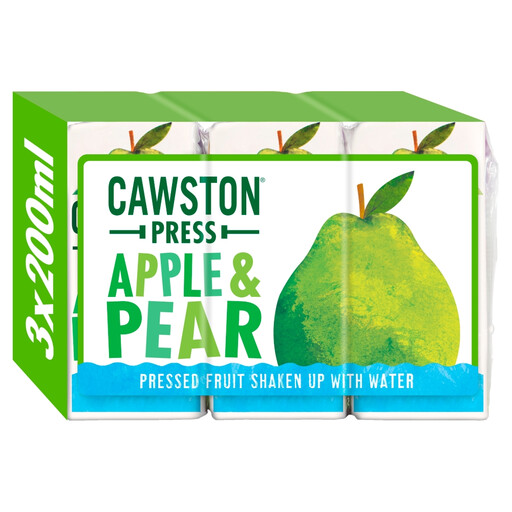
This apple-and-pear fruit water is an option to consider if a mixed-fruit drink suits you; it is not plain apple juice. Check its current label against your no-added-sugar requirements.
 No image available
The three 200ml cartons suit someone seeking individual portions of an apple-and-pear drink rather than plain apple juice. Check the current ingredients and sugars per 100ml if a no-added-sugar formulation is important to you.
No. The claim does not tell you that the finished drink contains no sugars. Check “of which sugars” per 100ml: Tropicana lists 10g per 100ml for Orchard Apple juice and describes those sugars as naturally occurring from juice.
Apples contain sugars that remain in the juice. The NHS says sugars in unsweetened fruit juice count as free sugars, so compare the nutrition label even when a juice has no added sugar.
The NHS advises limiting fruit juice and smoothies to one small glass of 150ml a day and having it with a meal. A no-added-sugar label does not remove that guidance for fruit juice.
Yes. Tesco lists sucralose in its No Added Sugar Apple Juice Drink, while Sainsbury’s lists acesulfame K and sucralose in its Apple & Pear Juice Drink. Check the ingredients of the product you choose.
Do not treat the claim as an everyday-drink recommendation. The NHS recommends water and milk as drinks for children and advises limiting fruit juice and smoothies to 150ml a day, with a meal.