For a board game night, a no-added-sugar apple juice drink can have less sugar than pure apple juice: Tesco lists 2.0g sugars per 100ml for its apple juice drink, while Ocado lists 10g per 100ml for Copella Cloudy Apple. Choose pure juice if a juice-led ingredient list matters more, or consider an apple-based concentrate if you want to mix drinks for guests; check sweeteners, dilution instructions and the sugars in the serving you plan to pour. NHS guidance limits fruit juice and smoothies to one 150ml glass a day and recommends having them with a meal.
Who is each drink for?
Hosts comparing sugars per glass
If several guests will be drinking apple-flavoured drinks, compare the sugars per 100ml and the amount you intend to serve. Tesco lists 2.0g per 100ml for its no-added-sugar apple juice drink; Ocado lists 10g per 100ml for Copella Cloudy Apple. Check whether guests are happy with sweeteners before choosing a juice drink.
Guests who prefer pure juice
If a juice-led ingredient list matters more than a lower sugar figure, Copella Cloudy Apple lists apple juice and vitamin C. Pure juice still contains sugars: NHS guidance recommends no more than one 150ml glass of fruit juice or smoothies a day, with a meal.
Guests checking carbohydrate intake
Check the carbohydrate and sugars figures for the exact drink and portion rather than assuming fruit-derived sugars do not count. Diabetes UK notes that juice contributes to free-sugar intake differently from whole fruit and can be easy to drink in large quantities quickly.
What should you check?
Start with the type of drink you want to serve, then compare nutrition on the same ready-to-drink basis—or follow the dilution instructions for a concentrate.
Pure apple juice
Choose it when: A juice-led ingredient list matters more to you than reducing the listed sugars.
Bear in mind: Ocado lists 10g sugars per 100ml for Copella Cloudy Apple; NHS guidance limits fruit juice and smoothies to 150ml a day, with a meal.
No-added-sugar juice drink
Choose it when: A lower listed sugar figure is the priority and guests accept a juice drink containing sweetener.
Bear in mind: Tesco lists 2.0g sugars per 100ml for its apple juice drink, which contains 20% apple juice from concentrate and sucralose; it is neither pure juice nor sugar-free.
Apple-based concentrate
Choose it when: You want to mix drinks with water for the group rather than pour a ready-to-drink juice.
Bear in mind: Check the prepared drink’s dilution and ingredients; Marks & Spencer lists sucralose and sulphites in its Apple and Mango High Juice.
| Priority |
What to check |
Your needs |
| Sugars per glass |
Compare sugars per 100ml for ready-to-drink products, then use the amount you plan to pour. Tesco lists 2.0g per 100ml for its apple juice drink; Ocado lists 10g per 100ml for Copella Cloudy Apple. |
I want to know how much sugar is in the drink I will actually serve, not just whether the front says ‘no added sugar’. |
| Juice and sweeteners |
Read the juice percentage and ingredient list. Tesco’s apple juice drink contains 20% apple juice from concentrate and sucralose; Sainsbury’s Apple & Pear Juice Drink contains apple and pear juice plus acesulfame K and sucralose. |
A juice-led ingredient list matters to me, or I need to know whether guests are comfortable with sweeteners and a blended-fruit flavour. |
| Serving size |
Plan the glass size. NHS guidance limits fruit juice and smoothies to one small 150ml glass a day and recommends drinking them with a meal. |
During a long game, I would rather plan portions than keep refilling glasses of pure juice without noticing how much has been poured. |
| Dilution |
Follow the concentrate’s mixing instructions before assessing nutrition per prepared glass. Do not compare an as-sold figure per 100g directly with a ready-to-drink figure per 100ml. |
Mixing drinks for the table could work, but I want to compare what guests will drink rather than the concentrate in the bottle. |
| Ingredients and leftovers |
Check the exact pack’s allergen declaration and after-opening storage directions. Marks & Spencer lists sulphites in its Apple and Mango High Juice. |
Guests need to see what is in the drink, and I want a pack size that makes sense for one evening. |
Common buying mistakes
-
Reading ‘no added sugar’ as ‘zero sugar’
Tesco’s no-added-sugar apple juice drink lists 2.0g sugars per 100ml, while Sainsbury’s no-added-sugar apple-and-pear drink lists 2.6g per 100ml. The claim does not tell you that a drink is sugar-free.
Read the ‘of which sugars’ figure per 100ml and check it against the glass size you intend to serve. If zero sugar is essential, confirm it on the exact product’s nutrition panel.
-
Comparing concentrate with juice as sold
A concentrate needs diluting, so its as-sold nutrition figure does not describe a prepared glass.
Follow the maker’s dilution instructions before comparing a prepared drink with ready-to-drink juice.
-
Overlooking ingredients when serving guests
Lower-sugar juice drinks in these examples contain sweeteners, and Marks & Spencer lists sulphites in its Apple and Mango High Juice. Those details may matter to different guests for different reasons.
Check the exact ingredient and allergen labels, and keep the packaging available when you serve the drinks.
-
Buying more pure juice than you plan to serve
A large bottle can leave leftovers after one evening. It can also make it easy to pour larger glasses than intended; NHS guidance limits fruit juice and smoothies to 150ml a day, with a meal.
Estimate the number of servings before buying and follow the pack’s refrigeration and after-opening instructions.
An unfinished bottle also takes up fridge space and may go unused.
Brand and retailer examples
These examples show how apple juices and apple-based drinks can differ; compare the exact product label rather than assuming every drink from a brand has the same ingredients.
Copella
Copella Cloudy Apple is a not-from-concentrate apple juice listed by Ocado.
- Ocado lists apple juice and vitamin C as its ingredients.
- Ocado lists 10g sugars per 100ml; ‘no added sugar’ would not make pure juice sugar-free.
Tesco
Tesco No Added Sugar Apple Juice Drink is a ready-to-drink alternative to pure juice.
- Tesco lists 2.0g sugars per 100ml for this product.
- It contains water, 20% apple juice from concentrate and sucralose, so check that a sweetened juice drink suits your guests.
Sainsbury's
Sainsbury's lists both pure apple juice and an apple-and-pear no-added-sugar juice drink.
- Its Apple & Pear Juice Drink lists 2.6g sugars per 100ml.
- That drink includes pear juice, acesulfame K and sucralose; it is not apple-only juice.
M&S
The M&S range includes apple juices and an Apple and Mango High Juice concentrate for mixing.
- Marks & Spencer describes its Apple and Mango High Juice as containing 50% fruit juice.
- It contains sucralose and sulphites. Follow its dilution instructions before comparing a prepared glass with ready-to-drink juice.
Tropicana
Sainsbury's lists Tropicana 1.8L Orchard Apple Juice in its apple-juice range.
- The listing identifies an orchard-apple option in a 1.8L bottle.
- Check the exact bottle’s nutrition panel and ingredients before comparing it with a juice drink.
Apple-based options on Joybuy
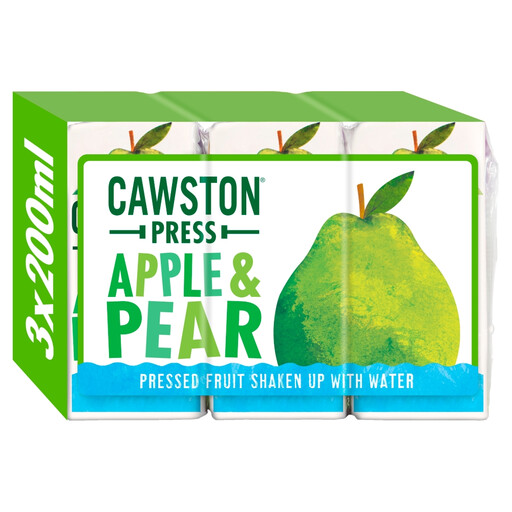
This apple-and-pear fruit water comes in separate cartons for serving guests. Compare its label with pure apple juice or a no-added-sugar juice drink according to the type of drink and sugar figure you want.
 No image available
Cawston Press Apple & Pear Fruit Water, 3 × 200ml
Three separate 200ml cartons offer individual portions for game night. This is an apple-and-pear fruit water rather than an apple-only juice; check its nutrition, ingredients and storage directions on the pack when comparing drinks for guests.
Joybuy
Questions about apple drinks
Does ‘no added sugar’ mean an apple drink has no sugar?
No. Tesco lists 2.0g sugars per 100ml for its No Added Sugar Apple Juice Drink, and Sainsbury's lists 2.6g per 100ml for its no-added-sugar apple-and-pear drink. Check the ‘of which sugars’ line rather than relying on the front-of-pack claim.
How much pure apple juice should I pour?
NHS guidance recommends limiting fruit juice and smoothies to one small 150ml glass a day and having it with a meal. Ocado lists 15g sugars in a 150ml serving of Copella Cloudy Apple.
Are no-added-sugar apple drinks free from sweeteners?
Not necessarily. Tesco lists sucralose in its apple juice drink, while Sainsbury's lists acesulfame K and sucralose in its apple-and-pear drink. Read the ingredients of the exact product if guests prefer to avoid sweeteners.
What changes if I serve a high juice or squash?
A concentrate needs mixing according to its dilution instructions, so compare the prepared drink rather than its as-sold nutrition figure with ready-to-drink juice. Check the exact allergen label too: Marks & Spencer lists sulphites in its Apple and Mango High Juice.


