Parents packing primary-school holiday lunches
If you are packing an apple-based drink, compare the sugar figure with the amount your child is likely to drink. A no-added-sugar claim does not tell you the total sugars in a serving.


For a school-holiday lunch, choose a no-added-sugar juice drink if its labelled sugar figure matters most and you are comfortable with its sweeteners; choose apple juice if you prefer the fruit-juice ingredient list. Check sugars per 100ml and the amount your child will drink either way: the NHS counts sugars in unsweetened fruit juice as free sugars, so ‘no added sugar’ does not mean sugar-free.
If you are packing an apple-based drink, compare the sugar figure with the amount your child is likely to drink. A no-added-sugar claim does not tell you the total sugars in a serving.
Ingredient lists help distinguish apple juice from juice drinks containing sweeteners. Tropicana lists apple juice and ascorbic acid for Orchard Apple; the Tesco and Sainsbury’s drinks discussed below list sweeteners.
Start with sugars per 100ml so that different pack sizes do not obscure the comparison. Then read the fruit percentage and ingredients: a lower sugar figure may come from a drink diluted with water rather than pure juice.
Decide whether the sugar figure or the ingredient format matters more to you, then check the portion you plan to pack.
| Priority | What to check | Your needs |
|---|---|---|
| Labelled sugars | Compare sugars per 100ml on the nutrition panels, then consider the amount served. Sainsbury’s lists 2.6g per 100ml for its No Added Sugar Apple & Pear Juice Drink. The NHS says sugars in unsweetened fruit juice count as free sugars. | I want to know how much sugar is in the drink, not just whether sugar was added. |
| Juice and sweeteners | Tesco lists 50% apple juice from concentrate and sucralose in its Grower’s Harvest drink. Sainsbury’s lists 20% apple juice and 5% pear juice from concentrate, plus sweeteners, in its apple-and-pear drink. Tropicana lists apple juice and ascorbic acid for Orchard Apple. | If avoiding sweeteners matters to my family, I’ll read the ingredients rather than treating every apple-labelled drink as the same product. |
| Serving size | Read the bottle or carton volume and decide how much will actually be served. Count any other juice or smoothies your child has that day when planning lunch. | A ready-to-pack carton is convenient, but I may want to pour a smaller amount rather than serve the whole pack. |
| Everyday drink | Consider what else to pack for drinking throughout the day. Healthier Together NHS identifies water and milk as the preferred drinks for children’s teeth. | I want a drink available beyond lunch, whether or not I include a portion of juice with the meal. |
The claim does not give the total sugar figure. The NHS also counts sugars naturally present in unsweetened fruit juice as free sugars.
Compare nutrition panels per 100ml, then use the amount you intend to serve to judge the lunch portion.
Juice drinks can contain water, other fruit juices and sweeteners. Tesco’s Grower’s Harvest apple drink lists 50% apple juice from concentrate and sucralose; Sainsbury’s no-added-sugar apple-and-pear drink lists both apple and pear juice from concentrate and sweeteners.
Check the product description, fruit percentages and named ingredients if the distinction matters to you.
These examples show why the product name and ingredient list matter more than the brand alone.
An apple-juice option for shoppers prioritising its stated ingredient list over a sweetened juice-drink format.
A no-added-sugar apple juice drink rather than pure apple juice.
An apple-and-pear juice drink for shoppers comparing labelled sugars and willing to choose a drink containing sweeteners.
A cloudy apple-juice reference for shoppers considering juice rather than a diluted juice drink.
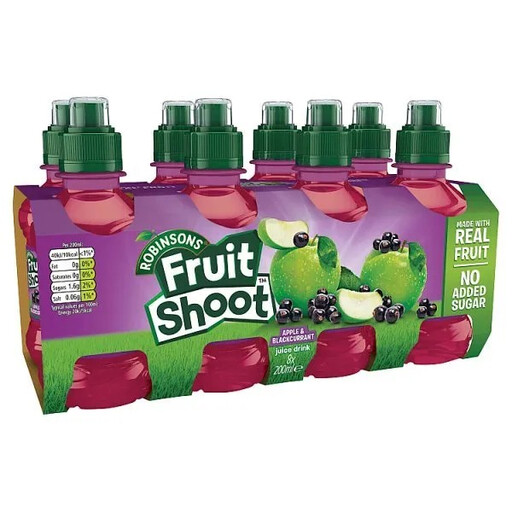
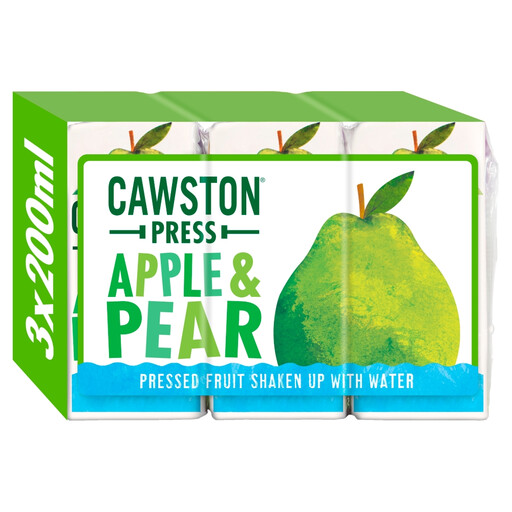
These options are mixed-fruit drinks in individual 200ml packs for holiday lunches, not plain apple juices. Compare their current labels if sugar content or sweeteners will decide your choice.
 No image available
The eight individual bottles offer a packable blackcurrant-and-apple drink rather than plain apple juice. Each bottle holds 200ml; check the ingredients and sugars per 100ml on the current label, and decide whether to serve the whole bottle.
 No image available
The three individual cartons offer an apple-and-pear drink for packed lunches, rather than plain apple juice. Each carton holds 200ml; compare its current ingredient and nutrition labels with other drinks before choosing a serving.
No. Check total sugars on the nutrition panel, both per 100ml and for the amount served. Sainsbury’s lists 2.6g sugars per 100ml for its No Added Sugar Apple & Pear Juice Drink; the NHS says sugars naturally present in unsweetened fruit juice count as free sugars.
Check the pack volume against the amount you plan to serve, and take account of any other juice or smoothies your child has that day. An individual 200ml bottle or carton need not be served in full.
Water or milk is a more suitable drink to keep available throughout the day: Healthier Together NHS identifies them as the preferred drinks for children’s teeth. If you include juice, consider it as part of the meal rather than relying on it for all drinking occasions.
No. Tesco’s Grower’s Harvest drink lists water, 50% apple juice from concentrate and sucralose, while Tropicana lists apple juice and ascorbic acid for Orchard Apple. Read the ingredients if you are choosing between a diluted drink with sweetener and an apple-juice ingredient list.