Students comparing sugar amounts
Compare sugars for the same serving size, then read the fruit-juice percentage and sweeteners. A no-added-sugar apple-based drink can contain sugars and need not be 100% juice.


Choose 100% apple juice if the juice content matters most, or an apple-based no-added-sugar drink if a lower labelled sugar amount per serving matters more and you are happy with its ingredients. Compare equal serving sizes and check the fruit-juice percentage and sweeteners: the Tesco and Sainsbury's drinks discussed here are not equivalent to pure apple juice. For a lecture lunch, NHS guidance limits fruit juice and smoothies combined to 150ml a day, while the pack's storage instructions determine whether it can stay in your bag until lunch.
The useful distinction is between the drink you want, the amount you plan to have with lunch and what happens to the pack afterwards.
Compare sugars for the same serving size, then read the fruit-juice percentage and sweeteners. A no-added-sugar apple-based drink can contain sugars and need not be 100% juice.
Check that the product is labelled as 100% juice rather than a juice drink. If you are packing it with lunch, NHS guidance limits fruit juice and smoothies combined to 150ml a day.
Check whether the unopened pack can be stored outside a fridge until lunch. If you will have some left over, follow that product's refrigeration and use-after-opening instructions.
Start with sugar and ingredients, then choose a portion and pack format that work for your lunch and storage arrangements.
| Priority | What to check | Your needs |
|---|---|---|
| Sugars per serving | Compare the same volume, using per 100ml figures or a stated 150ml serving. Tesco Groceries lists 3.9g sugars per 150ml for its No Added Sugar Apple & Pear Juice Drink; Tropicana UK lists 15g per 150ml for Orchard Apple. These are different types of drink. | I would choose the lower labelled sugar amount over pure juice, provided I am happy with the drink's other ingredients. |
| Juice and sweeteners | Read the product description, ingredient list and fruit-juice percentages. Tesco's apple-and-pear drink contains 20% apple juice, 5% pear juice and sucralose; Sainsbury's lists the same juice percentages with acesulfame K and sucralose. Tropicana describes Orchard Apple as 100% pressed apple juice. | Pure apple juice matters more to me than choosing a diluted drink; alternatively, I am comfortable with a juice drink containing sweeteners. |
| Portion size | Check the volume you will actually drink, not just the bottle size. NHS guidance limits fruit juice and smoothies combined to 150ml a day. A 300ml bottle contains more than that amount if finished in one sitting. | I want a lunch portion I can measure or save, rather than assuming a whole bottle is one serving. |
| Storage | Read the unopened-pack storage directions before putting a drink in your bag. Check the refrigeration instructions and use-after-opening period if you buy a larger carton. | I need the unopened drink to keep until lunch, or I have fridge access for any leftovers. |
Tesco Groceries lists 3.9g sugars per 150ml in its no-added-sugar apple-and-pear drink. Its ingredients include water, apple and pear juice, and sucralose, so the wording alone does not establish either zero sugars or 100% apple juice.
Compare sugars at the same volume and read the ingredients and juice percentages before deciding which product type you want.
A 300ml juice bottle contains twice the NHS's 150ml daily amount for fruit juice and smoothies combined if you drink it all.
Check the bottle volume against the amount you intend to have with lunch; a larger pack can be poured into a measured serving.
A 1L carton may cover several lunches, but the Tesco and Sainsbury's apple-and-pear drinks require refrigeration after opening.
Check the exact carton's use-after-opening instructions and whether you have somewhere to refrigerate it.
Without suitable storage or time to finish the carton, some of the drink may go unused.
These examples show how named products differ; the label of the particular drink you buy remains the place to check its ingredients and nutrition.
Tropicana UK describes Orchard Apple as 100% pressed apple juice, for shoppers seeking pure juice rather than a diluted juice drink.
Sainsbury's lists Copella Cloudy Apple Fruit Juice in 300ml, 900ml and 1.35L formats, giving shoppers different pack sizes to consider for lunch or home use.
Tesco No Added Sugar Apple & Pear Juice Drink 1L is a diluted apple-and-pear drink, not 100% apple juice.
Sainsbury's Apple & Pear Juice Drink, No Added Sugar 1L is another apple-based juice drink to compare with pure apple juice.
These options include a no-added-sugar mixed-fruit drink and apple-juice packs. Compare their labels and portion sizes according to whether lower labelled sugar or apple-juice content matters more to you.
 No image available
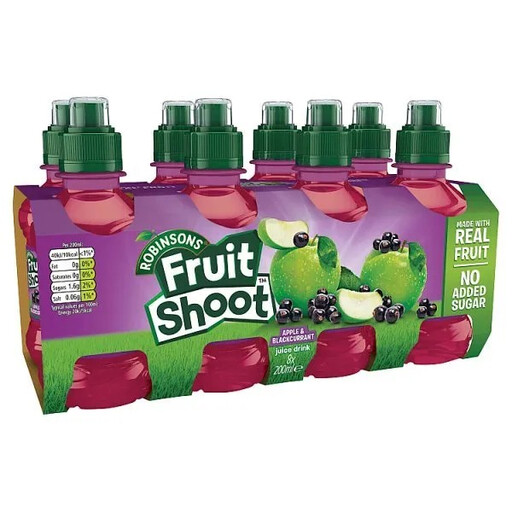
The eight 200ml bottles provide separate packs for lunches. This is an apple-and-blackcurrant drink rather than 100% apple juice: check its juice percentages, sweeteners and sugars per 100ml when comparing it with pure juice.
 No image available
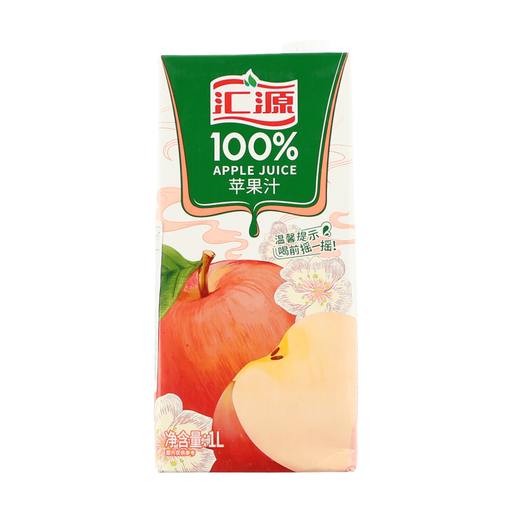
The 1L pack allows you to pour a measured portion with lunch instead of treating the carton as one drink. Compare its sugar figure with drinks at the same volume, and check the pack's storage instructions for any juice left after opening.
 No image available
This six-pack has 250ml bottles of lightly sparkling apple juice. One full bottle is larger than the NHS's 150ml daily amount for fruit juice and smoothies combined, so consider how much you intend to drink with lunch.
No. Tesco Groceries and Sainsbury's each list 3.9g sugars per 150ml for the no-added-sugar apple-and-pear drinks discussed here. Check the nutrition panel as well as the claim on the front of the pack.
Choose 100% apple juice if pure juice is the priority; choose an apple-based juice drink if its lower labelled sugar amount matters more and its sweeteners and juice content suit you. For a like-for-like example, Tropicana UK lists 15g sugars per 150ml for Orchard Apple, while Tesco Groceries lists 3.9g per 150ml for its diluted apple-and-pear drink.
NHS guidance limits fruit juice and smoothies combined to 150ml a day. Check the bottle volume before packing it: a 300ml bottle contains more than that amount if you plan to finish it at lunch.
An unopened carton can stay in your bag only if its label permits storage under the conditions in which you will carry it. The Tesco and Sainsbury's 1L no-added-sugar apple-and-pear cartons specify cool, dry storage before opening and refrigeration afterwards; check the instructions on the exact pack you buy.
Not necessarily. Tesco Groceries and Sainsbury's list 20% apple juice and 5% pear juice in their respective no-added-sugar apple-and-pear drinks. Check the fruit-juice percentages on an individual product rather than treating “apple” in its name as a statement of juice content.