Shoppers comparing sugar figures
If ‘no added sugar’ catches your eye, compare the ‘of which sugars’ figure as well. Pure apple juice still contains sugars from the fruit; a juice drink or prepared squash has a different composition to check.


Choose 100% apple juice if you want pure juice with your TV-night snacks, but do not read ‘no added sugar’ as ‘sugar-free’: the NHS counts sugars naturally present in fruit juice as free sugars. A no-added-sugar juice drink is ready to pour, while squash needs diluting; compare their prepared sugar figures, fruit content and ingredients before choosing.
If ‘no added sugar’ catches your eye, compare the ‘of which sugars’ figure as well. Pure apple juice still contains sugars from the fruit; a juice drink or prepared squash has a different composition to check.
If 100% juice matters more to you than choosing the lowest labelled sugar figure, look for the juice percentage and pour the amount you intend to drink rather than serving from a large bottle throughout the evening.
A bottle of juice can be poured for several people, while squash can be diluted a glass at a time. Check storage and after-opening instructions against how quickly your household will use the pack.
Choose it when: You want juice made from apples rather than an apple-flavoured drink.
Bear in mind: No sugar needs to be added for juice to contain fruit sugars, which the NHS counts as free sugars.
Choose it when: You want an apple drink you can pour without mixing.
Bear in mind: A juice drink is not necessarily pure juice: Tesco Groceries lists 20% apple juice and sucralose in its no-added-sugar example.
Choose it when: Making one glass at a time suits your TV-night plans.
Bear in mind: Squash needs diluting; Sainsbury’s lists its Apple High Juice Squash as a 50% fruit-juice concentrate with sweetener.
| Priority | What to check | Your needs |
|---|---|---|
| Sugar figure | Read ‘of which sugars’ per 100ml and for the amount you will serve. Waitrose & Partners lists 10g per 100ml for Copella Cloudy Apple Juice; ‘no added sugar’ alone does not tell you the total. | I want to know how much sugar is in my glass, not just whether sugar was added. |
| Drink type | Check whether the label says 100% juice, juice drink or squash, then read the fruit percentage. Tesco Groceries lists 20% apple juice in its no-added-sugar juice drink; Sainsbury’s lists 50% fruit juice in its squash concentrate. | If I want pure apple juice, an apple-flavoured drink or a concentrate will not meet that preference. |
| Serving size | Compare the container size with the amount you plan to pour. The NHS counts sugars naturally present in fruit juice as free sugars, even when it is unsweetened. | For a long film, I would rather decide on a glass size than keep refilling without noticing. |
| Ingredients and storage | Check sweeteners, allergens, dilution directions and after-opening storage. Marks & Spencer lists sucralose and sulphites in its Apple and Elderflower High Juice. | I need ingredients that suit my household and a pack we can use according to its storage instructions. |
Fruit juice contains naturally occurring sugars. Waitrose & Partners lists 10g sugars per 100ml for Copella Cloudy Apple Juice, despite it being a pure-juice option.
Compare the nutrition panel for the amount you will drink, as well as the wording on the front.
The NHS counts sugars in unsweetened fruit juice as free sugars, so repeated pours still matter when no sugar has been added.
Pour a measured glass at the start and consider another drink if you want something to sip for longer.
Tesco Groceries lists 20% apple juice and sucralose in its no-added-sugar juice drink. Sainsbury’s describes its Apple High Juice Squash as a concentrate with 50% fruit juice and sweetener.
Read the product type, fruit percentage and ingredients, and compare squash nutrition as prepared.
A large pack may be awkward to finish within its after-opening storage period if nobody else will drink it.
Check the pack instructions and choose a size your household can use in time.
These examples show how differently apple drinks can be labelled; compare the current pack before buying.
Sainsbury’s describes Tropicana Orchard Apple Juice as 100% pressed juice, not from concentrate, in a 1.8L pack.
Waitrose & Partners describes Copella Cloudy Apple Juice as not from concentrate.
Tesco Groceries lists a no-added-sugar apple juice drink in a 1L pack.
Sainsbury’s Apple High Juice Squash is a no-added-sugar concentrate made with 50% fruit juice.
Marks & Spencer describes Apple and Elderflower High Juice as a no-added-sugar squash made with 50% fruit juice.
These options span a sugar-free apple soft drink, a no-added-sugar mixed-fruit drink and 100% apple juice. They are different drink types, so check the label against the choice you want for TV night.
 No image available
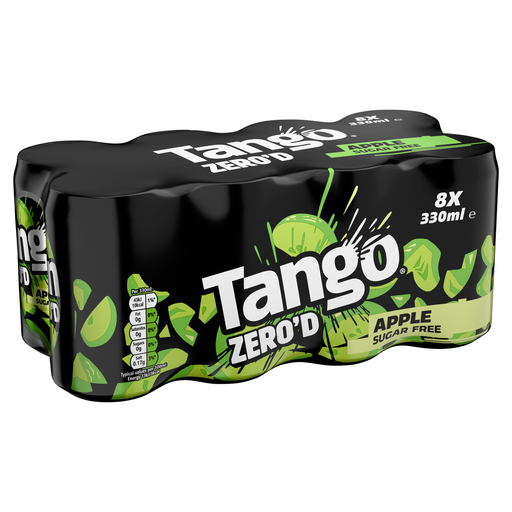
Individual cans may suit a TV night where everyone wants their own drink. This is an apple soft drink rather than a substitute for 100% apple juice; check its ingredients and nutrition panel if either matters to your choice.
 No image available
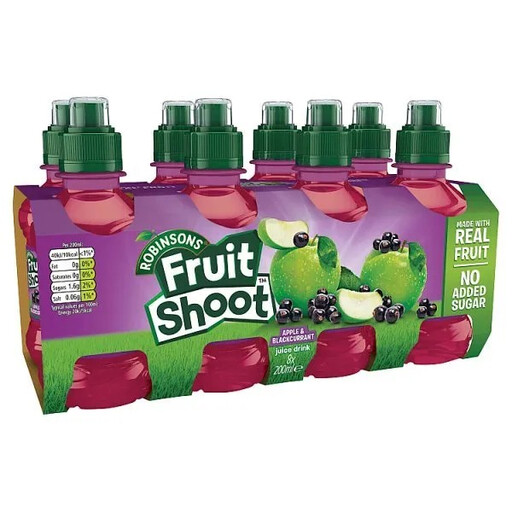
The individual 200ml bottles offer a ready-to-drink choice with blackcurrant as well as apple in the flavour. If you want pure apple juice instead, check the fruit content and ingredients before choosing this mixed-fruit drink.
 No image available
This is the 100% apple juice option for someone who wants individual, lightly sparkling cans. Each can contains 250ml; decide how much juice to serve, and check the sugar figure rather than assuming 100% juice means sugar-free.
No. The phrase concerns added sugar, not the total sugars shown on the nutrition panel. For a pure-juice example, Waitrose & Partners lists 10g sugars per 100ml for Copella Cloudy Apple Juice.
Choose it if pure apple juice is what you want, but check the sugar figure and the amount you pour. The NHS counts sugars naturally present in unsweetened fruit juice as free sugars.
A bottle of juice can be shared, while squash lets you prepare glasses individually. For either format, check the serving directions and whether the pack can be stored and used as its label instructs after opening.
Yes. Marks & Spencer lists sucralose and E223 sulphites in its Apple and Elderflower High Juice. Check the label of the particular squash you are buying if those ingredients matter to you.
Read the drink type, fruit percentage, ingredients and ‘of which sugars’ figure. For squash, follow the dilution directions and compare nutrition for the prepared drink; also check any allergen and after-opening instructions.