
24/7 Customer Support

Free returns

Same-day & Next-day Delivery

Quality Guaranteed

Unlock Your Welcome Offers: FREE Delivery | Up to 80% OFF | Free 30-day JoyPlus trial
Download the APP
For many UK drivers, particularly those invested in the Apple ecosystem, the idea of a dash cam that integrates with the Find My network is a game-changer. It promises not just a record of events on the road, but true peace of mind, knowing you can locate your vehicle from your iPhone, just like an AirTag. However, the market is filled with confusing terms and features that can lead to a disappointing purchase.
As a Joybuy Product Recommendation Officer, my role is to help you navigate this landscape. This guide cuts through the marketing clutter, focusing on the critical features you need and the common pitfalls to avoid when choosing a car camera system.
Before you invest, be aware of these common traps that catch out even savvy buyers:
To ensure you get a system that delivers on its promises, focus on these non-negotiable specifications.
This is the most critical distinction. A dash cam with native Apple Find My support is authorised by Apple to use its global network.
Your required coverage depends on your needs.
A dash cam is only useful if it's recording when you need it.
We've matched some leading options to different UK driver profiles to help you find the right fit.
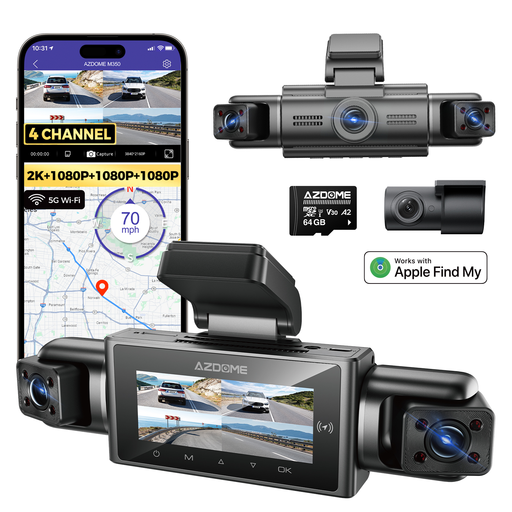
Why This Fits Their Persona: This is for the driver who wants seamless integration. If your life runs on Apple, the ability to track your car directly in the Find My app alongside your iPhone and AirPods is the primary reason to choose this model.
It directly solves the "GPS Tracking" misconception by offering true, native Apple Find My network tracking, not just passive GPS data logging.
Global vehicle location without a subscription. The 4 channel dash cam setup also provides a full 360-degree view for comprehensive incident recording.
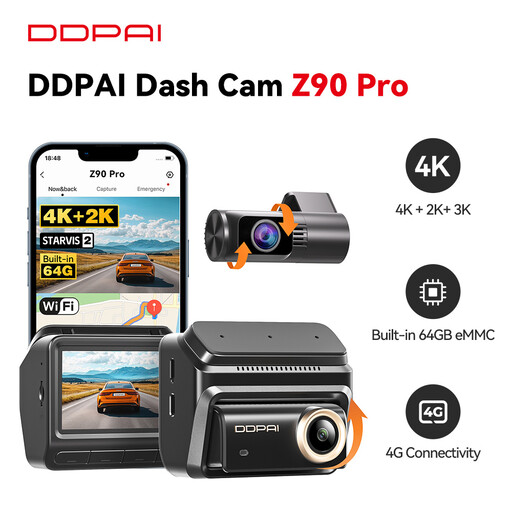
Why This Fits Their Persona: For the driver who prioritises undeniable video evidence above all else. This user wants the sharpest image possible to clearly capture number plates and details for insurance claims, regardless of lighting conditions.
It avoids the "resolution numbers game" by pairing its 4K resolution with a high-end Sony STARVIS 2 IMX678 sensor and advanced HDR, ensuring superior low-light performance.
Exceptional front and rear video clarity. It also uses a supercapacitor for enhanced durability and includes 64GB of built-in eMMC storage for reliability.
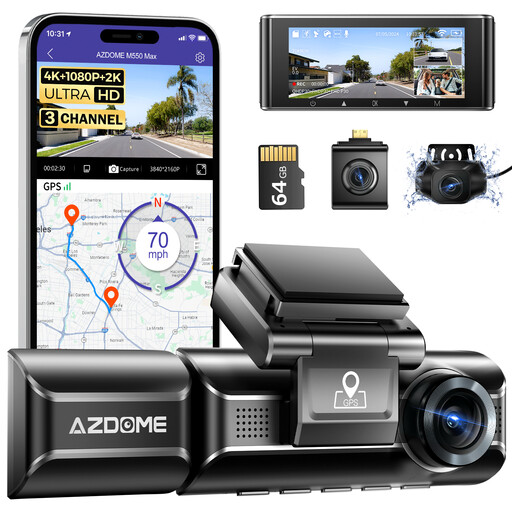
Why This Fits Their Persona: This is for drivers who need to monitor the vehicle's interior as well as the exterior. The three-channel setup is ideal for ride-sharing, taxis or company vehicles where cabin activity needs to be recorded for safety and liability.
It avoids the battery durability flaw by using a supercapacitor, ensuring reliable operation during long hours on the road and robust 24/7 parking mode functionality.
The key feature is the triple-channel recording (4K Front + 1080P Interior + 2.5K Rear) with excellent IR night vision for clear cabin footage in total darkness.
We have compiled a complete, real-time list of products that fully satisfy these strict selection criteria and UK safety regulations.
Here are answers to some common questions UK drivers have about these advanced dash cams.
For a 24/7 parking mode to function correctly, the dash cam needs to be connected to a constant power source via a hardwire kit. While it is possible to do this yourself if you are comfortable working with your vehicle's fuse box, we generally recommend professional installation. This ensures the connection is safe, does not interfere with other vehicle electronics and prevents accidental drainage of your car's battery.
It works on the same principle as an Apple AirTag. The device emits a secure, low-energy Bluetooth signal that can be detected by the hundreds of millions of Apple devices (iPhones, iPads, Macs) that make up the Find My network. When another person's Apple device passes by your car, it anonymously reports the location back to you. This entire process is encrypted and private and it requires no cellular data or subscription fee on the dash cam itself.
Yes, and this is one of their main advantages. Unlike lithium-ion batteries, which can lose significant charge and performance in freezing temperatures, supercapacitors are rated for a much wider operational temperature range (e.g., -20°C to 70°C). This makes them far more reliable for year-round use in the UK, from frosty winter mornings to hot summer days.