Shoppers wanting a small liquid carbohydrate contribution
Compare carbohydrate for the amount you plan to drink. Ocado lists 17g per 150ml for Tropicana pressed apple juice, while Sainsbury’s lists 14.1g per 150ml for its 100% apple juice.


Choose 100% apple juice if you want a small liquid contribution of carbohydrate before a workout: Sainsbury’s and ASDA Groceries list 14.1g and 17g per 150ml respectively. If you want an apple-flavoured drink without relying on it for carbohydrate, compare juice drinks separately: ASDA Groceries lists 1.8g carbohydrate per 150ml carton for its no-added-sugar apple-and-pear drink. A no-added-sugar label does not tell you the total sugar content; the NHS advises limiting fruit juice, vegetable juice and smoothies to a combined 150ml a day.
The useful distinction is whether you want carbohydrate from the drink or simply want an apple-flavoured option.
Compare carbohydrate for the amount you plan to drink. Ocado lists 17g per 150ml for Tropicana pressed apple juice, while Sainsbury’s lists 14.1g per 150ml for its 100% apple juice.
A no-added-sugar juice drink is a different purchase from 100% apple juice. ASDA Groceries lists 1.8g carbohydrate per 150ml carton for its apple-and-pear drink, whose ingredients include sucralose.
Consider the total amount, not just the pre-workout serving. NHS guidance limits fruit juice, vegetable juice and smoothies to a combined 150ml a day.
Start with the drink’s purpose, then compare the nutrition panel for your intended serving and read the product name and ingredients.
| Priority | What to check | Your needs |
|---|---|---|
| Carbohydrate | Compare carbohydrate for the amount you will drink, using the same serving size. Sainsbury’s lists 14.1g per 150ml for 100% apple juice; ASDA Groceries lists 1.8g per 150ml carton for its apple-and-pear juice drink. | I want the drink to contribute carbohydrate before training, rather than choosing it for its apple flavour alone. |
| Sugars and ingredients | Read the total sugars line as well as any no-added-sugar claim. Check the ingredients for sweeteners: Tesco Groceries and ASDA Groceries list sucralose in their no-added-sugar apple-and-pear drinks. | If I am choosing a drink for its sugar content or avoiding a particular sweetener, the front-of-pack wording is not enough. |
| Drink type | Check whether the product is 100% apple juice, a juice drink or a cordial that needs diluting. Ocado lists M&S apple-and-elderflower high juice as 50% fruit juice, diluted one part cordial to four parts water. | I need to know what is in the finished drink before treating it as equivalent to apple juice. |
| Portion | Check the pack size against the amount you intend to pour. NHS guidance sets a combined daily limit of 150ml for fruit juice, vegetable juice and smoothies. | A larger bottle or individual unit might contain more than the amount I plan to drink at once. |
Apple juice can contain naturally occurring sugars without added sugar. Ocado lists 15g sugars per 150ml for Tropicana pressed apple juice; Sainsbury’s lists 13g per 150ml for its 100% apple juice.
Compare both sugars and carbohydrate on the nutrition panel for your intended serving.
Tesco Groceries lists its no-added-sugar apple-and-pear juice drink as containing 20% apple juice, 5% pear juice and sucralose. That is a different composition from 100% apple juice.
Read the product name and fruit-juice percentage before choosing a drink for its carbohydrate content.
A bottle or individual unit need not match the amount you intend to drink. The NHS advises a combined limit of 150ml a day for fruit juice, vegetable juice and smoothies.
Decide how much you will pour and include any other juice or smoothies you drink that day.
Ocado lists sucralose and sulphites in M&S no-added-sugar apple-and-elderflower high juice; the Tesco and Asda apple-and-pear drinks also list sucralose.
Check the ingredients and allergen information on the particular pack if either ingredient matters to you.
These examples show why the product name and nutrition panel matter more than the brand alone; figures apply to the named products and serving sizes.
Pressed apple juice for shoppers comparing carbohydrate in a 150ml serving.
An apple juice example to compare with other juices on the same serving basis.
Its apple juice and apple-and-pear juice drink illustrate two different product types.
A 100% apple juice example with nutrition stated per 150ml.
Its pressed apple juice and apple-and-pear juice drink serve different buying purposes.
An apple-and-elderflower cordial example, rather than 100% apple juice.
These apple juice products offer a bottle and a lightly sparkling multipack to consider when comparing portion sizes. Check each pack’s ingredients and nutrition panel before relying on a no-added-sugar claim or a particular carbohydrate amount.
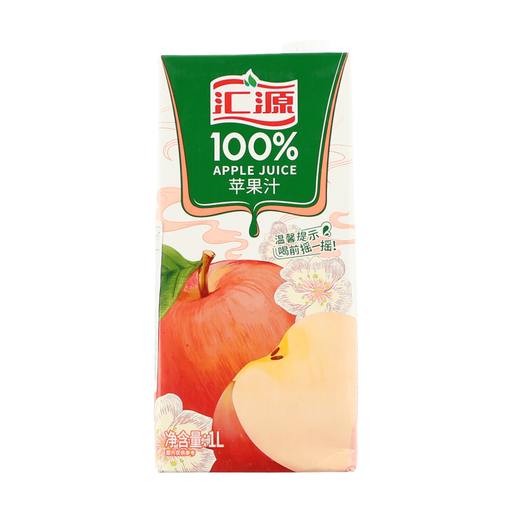 No image available
The 1L bottle lets you pour an intended serving rather than use the whole pack as a portion. Check its ingredients, nutrition panel and storage instructions on the pack; NHS guidance limits juice, vegetable juice and smoothies to a combined 150ml a day.
 No image available
This lightly sparkling 100% apple juice comes in a six-by-250ml format. Each 250ml unit is larger than the NHS combined daily 150ml limit for juice, vegetable juice and smoothies, so consider the amount you intend to drink.
No. The claim does not describe the total amount of naturally occurring sugars. For example, Ocado lists 15g sugars per 150ml for Tropicana pressed apple juice, while Sainsbury’s lists 13g per 150ml for its 100% apple juice. Read the sugars line for the serving you plan to drink.
If you want a small liquid contribution of carbohydrate, compare 100% apple juices by serving: Sainsbury’s lists 14.1g per 150ml and ASDA Groceries lists 17g per 150ml. If you are choosing an apple-flavoured drink without relying on it for carbohydrate, ASDA Groceries lists 1.8g per 150ml carton for its no-added-sugar apple-and-pear juice drink.
Yes. Tesco Groceries and ASDA Groceries list sucralose in their no-added-sugar apple-and-pear juice drinks, and Ocado lists it in M&S apple-and-elderflower high juice. Check the ingredients of the specific drink you are buying.
The NHS advises limiting fruit juice, vegetable juice and smoothies to a combined 150ml a day. Check the size of the serving you intend to pour and account for any other juice or smoothies you drink that day.