A 2-litre bottle can work for shared household use if you measure servings and offer apple juice with a meal, rather than leaving it available for repeated after-school refills. The NHS advises limiting fruit juice and smoothies combined to 150ml a day; smaller packs separate servings, but a 200ml carton or 250ml can is still larger than that amount. Water or milk is an alternative for routine thirst between meals.
Who is this choice for?
Carers planning after-school snacks
If apple juice will accompany a snack, consider whether that snack is a meal and how much juice or smoothie the child has already had that day. The NHS advises having fruit juice with a meal and limiting juice and smoothies combined to 150ml a day.
Families looking for a 2-litre bottle
A large bottle offers several measured servings for shared use. Tesco listed Growers Harvest Pure Apple Juice from concentrate in a 2-litre bottle, but marked it out of stock on 2 October 2026; check the current listing before planning around that format.
Parents who prefer separate packs
Individual packs make the amount in each container visible, but they do not necessarily match a 150ml serving. Ocado listed M&S apple juice in 200ml cartons, so a full carton exceeds the NHS daily fruit-juice limit.
What should you check?
A 2-litre bottle
Consider it: When several people will share measured servings and juice will be served with a meal.
Bear in mind: The bottle holds much more than one daily serving, and the Tesco 2-litre listing was marked out of stock on 2 October 2026.
Smaller bottles or packs
Consider them: When separate containers make it easier to plan who gets a serving.
Bear in mind: A 200ml carton or 250ml can still needs measuring if following the NHS 150ml daily limit.
Water or milk
Consider it: For routine thirst between meals, particularly if the child has already had juice or a smoothie that day.
Bear in mind: This does not provide the apple-juice flavour someone may want with a meal.
| Priority | What to check | Your needs |
|---|
| Portion and timing |
Measure the serving rather than pouring by eye. The NHS advises no more than 150ml of fruit juice and smoothies combined a day, with a meal. |
I want to offer apple juice without an open family bottle becoming an invitation for repeated refills. |
| Juice type |
Read the product description, ingredients and stated juice percentage. UK oral-health guidance counts sugars naturally present in fruit juice and concentrates as free sugars. |
If I pick up an apple-flavoured drink, I want to know whether it is pure juice or a juice drink; ‘no added sugar’ does not answer that question. |
| Comparable labels |
Compare sugar figures per 100ml across products, then check the ingredients and the amount you intend to serve. Use traffic-light information alongside the nutrition panel where it appears. |
I want to compare bottles and smaller packs on the same basis. In the Food Standards Agency and Ipsos Northern Ireland’s 2024 survey of 611 Northern Ireland interviewees, 49% said they actively used traffic-light labelling when shopping for food; that figure is not specific to apple juice. |
| Pack format |
Check the exact volume of each bottle or carton and the current listing before purchase. Follow the pack’s storage instructions after opening. |
A 2-litre bottle may suit shared use, while a smaller pack may make separate servings easier to manage. |
What can go wrong?
-
Letting bottle size dictate serving size
A 2-litre bottle contains about thirteen 150ml servings; it is not a guide to how much one child should drink. The NHS advises limiting fruit juice and smoothies combined to 150ml a day and having them with a meal.
Pour a measured amount, account for any juice or smoothie already served that day, and offer water or milk for ordinary thirst between meals.
-
Reading ‘no added sugar’ as ‘no sugar’
UK oral-health guidance counts sugars naturally present in fruit juice as free sugars. An apple juice drink can also differ from pure apple juice in its ingredients and stated juice percentage.
Check the ingredient list, juice percentage and sugar per 100ml before comparing apple-flavoured products.
-
Assuming the familiar bottle is 2 litres
Tesco’s listed apple-juice formats included 1.75-litre Tesco, 1.5-litre Tropicana and 1.35-litre Copella bottles. Its Growers Harvest 2-litre listing was marked out of stock on 2 October 2026.
Check the exact pack volume and current availability if the 2-litre size matters to your plans.
Which brands and formats are relevant?
Growers Harvest
Tesco listed Growers Harvest Pure Apple Juice from concentrate in a 2-litre bottle.
- This is an exact 2-litre format for a household intending to measure shared servings.
- Tesco marked the listing out of stock on 2 October 2026; check its current status before relying on it.
Tesco
Tesco’s apple-juice listings included a Tesco Apple Juice 1.75-litre bottle.
- The bottle offers a smaller family-size format to consider if an exact 2 litres is not essential.
- A 1.75-litre bottle does not meet an exact 2-litre preference.
Copella
Tesco’s apple-juice listings included Copella Apple Juice in a 1.35-litre bottle.
- This is a smaller shared-bottle option.
- The listed 1.35-litre format is not a 2-litre bottle.
Tropicana
Tesco listed Tropicana Pressed Apple Fruit Juice in a 1.5-litre bottle.
- The listed format can be compared with other shared bottles by volume and label information.
- The 1.5-litre listing does not meet an exact 2-litre preference.
M&S
Ocado listed M&S Apple Juice from concentrate as six 200ml cartons.
- Individual cartons show the amount in each container.
- A full 200ml carton exceeds the NHS 150ml daily fruit-juice limit and is not a 2-litre bottle.
Joybuy options for smaller servings
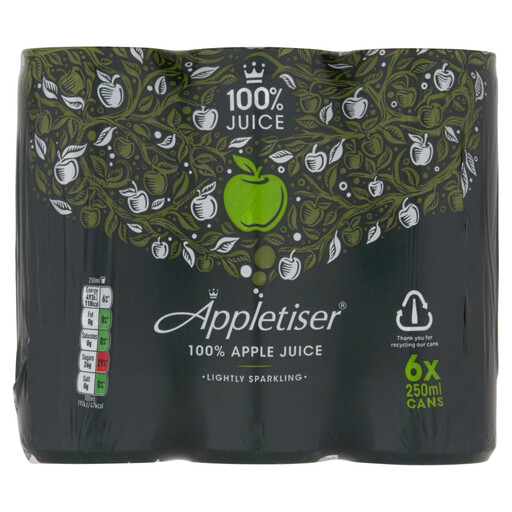
This Joybuy option is a pack of separate apple-juice cans, not a 2-litre bottle. Compare the size of each can with the portion you intend to serve.
 No image available
Appletiser 100% Apple Juice Lightly Sparkling, 6x250ml
Six separate cans offer an alternative to pouring from a family bottle. The pack contains 6 × 250ml of lightly sparkling apple juice, or 1.5 litres in total. Each full can exceeds the NHS 150ml daily limit for fruit juice and smoothies; measure a smaller serving and have it with a meal.
View on Joybuy
Common questions
Can a child sip 100% apple juice throughout the afternoon?
The NHS advises limiting fruit juice and smoothies combined to one small 150ml glass a day and having them with a meal, rather than sipping juice throughout the afternoon. UK oral-health guidance counts sugars naturally present in fruit juice as free sugars.
How many 150ml servings are in a 2-litre bottle?
A 2-litre bottle contains about thirteen 150ml servings. That describes the bottle’s volume, not a suggested daily amount: the NHS advises a maximum of 150ml of fruit juice and smoothies combined per day.
Does ‘no added sugar’ mean an apple drink is pure juice?
No. Check the stated juice percentage and ingredients to distinguish a juice drink from pure apple juice. UK oral-health guidance also counts sugars naturally present in fruit juice and concentrates as free sugars.
Is a smaller carton automatically one suitable serving?
No. Ocado listed M&S apple juice in 200ml cartons, which are larger than the NHS 150ml daily limit for fruit juice and smoothies. Compare pack sizes using the nutrition information per 100ml, then measure the amount you intend to serve with a meal.


