People taking breakfast on the move
Individually sealed cans are easy to take from a breakfast cupboard. Check the storage instructions, can volume and whether you want a still or sparkling drink before choosing a multipack.


Choose a 100% apple juice can multipack if juice content matters most; choose a sparkling apple juice drink if a small pack and a fizzy drink matter more. Cawston Press describes its four 250ml cans as containing 49% pressed apple juice, while retailer Sparklin Limited describes an Appletiser case of 24 250ml cans as 100% apple juice. Whichever format you choose, check the can size: the NHS advises limiting fruit juice and smoothies to a combined 150ml a day.
Individually sealed cans are easy to take from a breakfast cupboard. Check the storage instructions, can volume and whether you want a still or sparkling drink before choosing a multipack.
An apple-labelled can is not necessarily 100% juice. Cawston Press lists 49% pressed apple juice in its Sparkling Cloudy Apple drink; retailer Sparklin Limited describes its Appletiser cans as 100% apple juice. Compare the percentage and ingredients on the pack you intend to buy.
Can size matters when choosing a serving. The NHS advises limiting fruit juice and smoothies to a combined 150ml a day and having them at mealtimes. The 250ml cans discussed here are larger than that guidance serving.
Decide whether you need 100% juice, a small pack of individually sealed drinks or a carton you can portion at home; then compare labels within that format.
Choose when: You want the drink itself to be apple juice and need sealed cans to take out with breakfast.
Bear in mind: Sparklin Limited describes an Appletiser 24-can case, rather than a small four-pack, and each can holds 250ml.
Choose when: A fizzy drink in a small, portable multipack matters more than 100% juice.
Bear in mind: Cawston Press’s four-can Sparkling Cloudy Apple pack contains 49% pressed apple juice and has natural fruit sediment.
Choose when: You can pour a serving at home and do not need each breakfast drink individually sealed.
Bear in mind: Ocado lists a Tropicana 900ml carton as six 150ml servings; once opened, it needs refrigeration and must be used within five days.
| Priority | What to check | Your needs |
|---|---|---|
| Juice content | Read the stated juice percentage and ingredient list. Check whether sparkling water is part of the drink. | If I want 100% apple juice, an apple-flavoured or blended drink will not meet that requirement. |
| Can size | Check the volume of each can, not just the number in the pack. The NHS advises limiting fruit juice and smoothies to a combined 150ml a day; a 250ml can is larger than that amount. | A sealed can suits a rushed morning, but I may want to pour or share it if I am following the NHS serving guidance. |
| Sugars and mealtimes | Compare sugars per 100ml and per can on the nutrition label; “no added sugar” does not mean sugar-free. The NHS advises having juice and smoothies at mealtimes because juicing releases sugars that can affect teeth. | I want to know what the whole can contains and plan to have juice with breakfast rather than sip it repeatedly between meals. |
| Pack and storage | Compare pack count, can volume and unopened storage instructions. For a carton or bottle, check refrigeration and use-within instructions after opening. | A few individually sealed drinks may fit my mornings better than opening one larger container for several days. |
Cawston Press lists 49% pressed apple juice in its Sparkling Cloudy Apple drink, whereas retailer Sparklin Limited describes its Appletiser cans as 100% apple juice.
Read the juice percentage and ingredients before deciding whether the drink type fits your breakfast.
The NHS advises limiting fruit juice and smoothies to a combined 150ml a day, which counts as one 5 A Day portion. Drinking more does not add another portion.
Check the can volume and pour or share a larger can if you want to follow that serving guidance.
Four 250ml cans, a case of 24 cans and a 900ml carton suit different storage and serving routines. A carton is not individually sealed after opening.
Compare the number of drinks you need, the volume per serving and the storage instructions alongside juice content.
The label is where to check the ingredients and storage instructions for the drink you are buying; the best-before date also matters if you plan to keep a multipack in the cupboard.
Check the physical pack for ingredients, allergens, storage instructions and the best-before date, particularly if someone has an allergy or intolerance.
Its Sparkling Cloudy Apple drink provides a small canned multipack rather than 100% apple juice.
A retailer-listed option for shoppers seeking lightly sparkling, 100% apple juice in cans.
A carton alternative if pouring juice at home works better than carrying cans.
A bottled apple-juice alternative when individual cans are not essential.
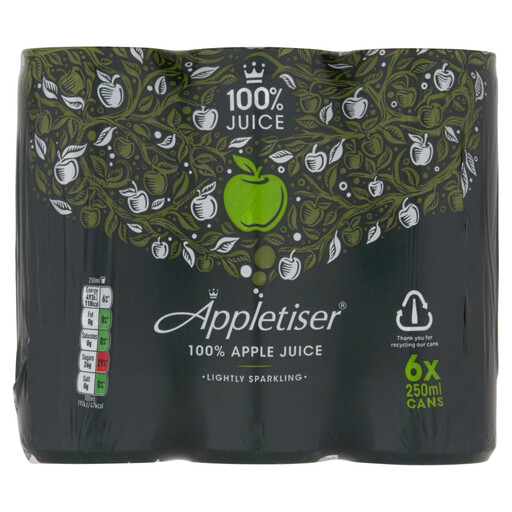
This Appletiser six-pack is an option for taking individually sealed, 100% apple juice cans with breakfast. Its 250ml can size is worth checking against your intended serving.
 No image available
Six individually sealed cans suit a breakfast routine that calls for apple juice to take out. The drink is lightly sparkling and labelled 100% apple juice; each can holds 250ml. The NHS advises limiting fruit juice and smoothies to a combined 150ml a day, so consider how much you intend to pour or drink.
No. The NHS says fruit juice and smoothies count as a maximum of one 5 A Day portion at a combined 150ml a day; drinking a 250ml can does not create another portion.
No. Check the juice percentage and ingredients: Cawston Press lists 49% pressed apple juice and sparkling water in its Sparkling Cloudy Apple drink, while retailer Sparklin Limited describes its Appletiser cans as 100% apple juice.
Follow the instructions on the particular pack. Sainsbury’s listing for Cawston Press Cloudy Apple says it can be stored in a cupboard; check the physical can for its best-before date and storage directions. An opened carton has different requirements: Ocado says its Tropicana apple juice must be refrigerated and used within five days.
Read the ingredients and allergen information on the current physical pack before serving it. GOV.UK says regulated allergens in prepacked food and drink must be clearly labelled in the ingredients list; do not rely on an older online description.