People packing a sealed drink
An individual can avoids pouring juice from a larger bottle before you leave. The canned apple options described by Cawston Press and a UK Appletiser retailer are sparkling, so check that carbonation suits you.


Choose a multipack of cans if packing one sealed drink matters more than having still juice: a UK retailer lists Appletiser as 100% sparkling apple juice in 250ml cans, while Cawston Press describes its sparkling cans as containing 49% pressed apple juice. If you prefer still apple juice, a small carton or bottle is a more relevant format to consider. Check the serving size as well as the ingredients: the NHS advises limiting fruit juice and smoothies to a combined 150ml a day.
The useful distinction is whether you need a can, a particular juice content, or simply an individual drink to pack.
An individual can avoids pouring juice from a larger bottle before you leave. The canned apple options described by Cawston Press and a UK Appletiser retailer are sparkling, so check that carbonation suits you.
A 250ml can is smaller to carry than a 330ml can, but neither size is the NHS's recommended 150ml daily limit for fruit juice and smoothies combined. Compare the volume on the exact pack rather than treating one can as a suggested juice portion.
If still juice matters more than a can, Tropicana describes Orchard Apple as 100% pressed, not-from-concentrate juice. Tesco also lists individual apple-juice cartons and a 300ml Copella bottle; check the container and ingredients of the product you choose.
Settle the drink type and container first, then compare serving volume and the number of drinks you will need.
| Priority | What to check | Your needs |
|---|---|---|
| Container | Confirm that the exact variant is a can and note its volume. If considering still juice instead, Tesco lists 200ml apple-juice cartons and a 300ml Copella bottle. | I want one sealed drink to put in my bag, without carrying an opened large bottle. |
| Juice content | Read the ingredients and juice percentage. Sparklin Limited lists Appletiser cans as 100% apple juice; Cawston Press states that Sparkling Cloudy Apple contains 49% pressed apple juice and sparkling water. | If I specifically want 100% apple juice, an apple-based sparkling drink with a lower juice percentage is a different choice. |
| Serving size and sugars | Compare the volume and sugars per 100ml on the exact pack. Cawston Press states 4.3g sugars per 100ml for Sparkling Cloudy Apple; the NHS advises a combined limit of 150ml a day for fruit juice and smoothies. | A single 250ml or 330ml drink may be more than I intended to have at once; I want to decide on the portion before packing it. |
| Pack quantity | Check both cans per multipack and total cans ordered. Sparklin Limited lists a 24-can Appletiser case, while Cawston Press describes four-can 250ml multipacks and 24- or 48-can 330ml packs. | For occasional gym trips, I would rather check the total quantity and storage space before ordering a case. |
Cawston Press states that Sparkling Cloudy Apple contains 49% pressed apple juice and sparkling water. A UK retailer describes Appletiser cans as 100% apple juice; the two descriptions do not mean the drinks have the same formulation.
Check the ingredients and juice percentage for the exact variant. If you want still juice as well as 100% juice, compare a still product rather than relying on a can's apple flavour description.
The NHS advises limiting fruit juice and smoothies to a combined 150ml a day because they contain free sugars. Both 250ml and 330ml cans are larger than that amount.
Look at the can volume when deciding when and how much to drink; the size of an individual container is not a recommended daily portion.
Case quantities matter if a drink is only going into your bag occasionally. The Appletiser retailer listing is for 24 cans, and Cawston Press describes 24- and 48-can packs for its 330ml option.
Check the total can count, best-before date and storage space before ordering.
A small carton or bottle may suit someone seeking still juice, but it is a different carrying format from a can. Tesco lists apple-juice cartons and Copella bottles.
If the container is essential, confirm its type on the exact listing. If still juice is the priority, compare the available small cartons or individual bottles deliberately.
These product references illustrate different formulations and containers; a brand name alone does not tell you which format a particular listing contains.
A canned sparkling apple-drink option in both 250ml and 330ml sizes.
An option to examine if both a can and a 100% apple-juice claim matter to you.
A still-juice product to consider when juice content takes priority over a can.
A still apple-juice alternative for shoppers considering a bottle.
An own-label carton route if a small still drink matters more than a can.
These options cover an Appletiser sparkling apple-juice multipack and a J2O apple-and-raspberry can multipack. Choose between them by whether you want apple juice or a blended fruit drink, as well as by pack size.
 No image available
Consider this six-pack if you want lightly sparkling apple juice in individual 250ml servings to pack for a gym trip. Confirm the container type on the listing if cans are essential.
Each 250ml serving is larger than the NHS's combined daily 150ml guidance for fruit juice and smoothies.
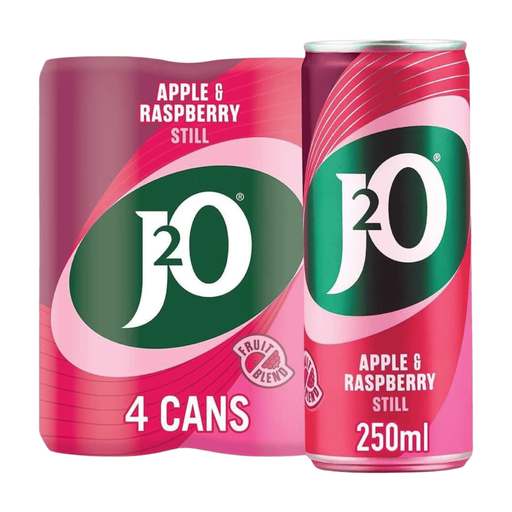 No image available
This four-pack provides individual 250ml cans for packing in a gym bag. It is labelled as an apple-and-raspberry fruit blend, so choose it for that combination rather than as a substitute for 100% apple juice.
Check the exact pack's ingredients and nutrition panel if juice content or sugars per 100ml affect your choice.
No. The NHS advises limiting fruit juice and smoothies to a combined 150ml a day because they contain free sugars. A 250ml or 330ml container is larger than that amount; its pack size should not be taken as a suggested daily juice portion.
If you simply want water to drink during a workout, an apple drink need not replace it. Consider apple juice as a separate drink choice, keeping in mind the NHS's combined 150ml daily guidance for fruit juice and smoothies.
Cawston Press states that Sparkling Cloudy Apple contains 49% pressed apple juice and sparkling water, whereas Tropicana describes its still Orchard Apple as 100% pressed, not-from-concentrate juice. Choose by both formulation and container: the Cawston product is sold in cans, while the cited Tesco Tropicana listing is a bottle.
No. UK government guidance classifies sugars naturally present in fruit juice as free sugars. Check the nutrition panel's sugars per 100ml alongside the volume you intend to drink; do not use 'no added sugar' wording as a substitute for those figures.