Families planning half-term snacks
If fruit juice is part of a snack plan, portion size and timing matter. The NHS advises having fruit juice and smoothies at mealtimes and limiting them to 150ml combined per day.


Choose 100% apple juice if you want a juice made from apples and can serve it in line with NHS advice: no more than 150ml of fruit juice and smoothies combined per day, at mealtimes. If lower labelled sugar is the priority, compare no-added-sugar apple juice drinks instead; the Tesco examples are water-based drinks containing apple juice from concentrate and sweeteners, not 100% juice. In either case, “no added sugar” does not mean sugar-free.
If fruit juice is part of a snack plan, portion size and timing matter. The NHS advises having fruit juice and smoothies at mealtimes and limiting them to 150ml combined per day.
Check whether the bottle contains 100% apple juice or a water-based drink with some apple juice and sweeteners. Both can carry no-added-sugar wording, but they are different products.
Decide whether you want 100% juice or a lower-labelled-sugar juice drink, then compare the ingredient list, sugars and serving size.
| Priority | What to check | Your needs |
|---|---|---|
| Juice or juice drink | Read the ingredients for 100% apple juice versus water, juice from concentrate and sweeteners. Compare sugars per 100ml on the same basis. | I want to know whether I am buying a serving of apple juice or an apple-flavoured juice drink, rather than relying on the front-of-pack claim. |
| Sugar and serving | Check sugars per 100ml and per intended serving. Tropicana UK lists 10g sugars per 100ml for Orchard Apple; Tesco Groceries lists 1.2g per 100ml for its Fruit Splash apple juice drink. The products have different juice contents. | If I choose fruit juice, I need to measure the serving: the NHS advises no more than 150ml of fruit juice and smoothies combined per day, at mealtimes. |
| Pack format | Check bottle volume, the number of bottles and on-pack storage directions. A pack size does not tell you the sugar content of the portion you serve. | For an outing, individual bottles may be convenient; for shared use, I would rather pour the amount I intend to serve than judge it by bottle size. |
Apple juice can contain sugars even when none has been added. Tropicana UK lists 15g sugars per 150ml for Orchard Apple.
Read the nutrition panel as well as the claim, and compare sugars per 100ml before choosing between juice and a juice drink.
Tesco Groceries lists water, sweeteners and 12% apple juice from concentrate in its Fruit Splash drink; its 1L no-added-sugar apple juice drink lists 20% apple juice from concentrate.
Check the ingredient list if the proportion of apple juice matters to you.
The NHS advises having fruit juice and smoothies at mealtimes and limiting them to 150ml combined per day because they contain free sugars.
If serving fruit juice, measure the portion and offer it with a meal rather than repeatedly refilling a bottle between meals.
A range page or filter does not establish the ingredients, sugars or storage directions of an individual bottle.
Check the specific product label before buying, particularly when comparing different pack sizes or juice drinks.
Tropicana UK describes Orchard Apple as 100% pressed apple juice, not from concentrate.
Copella describes Cloudy Apple as pressed apple juice and lists 250ml, 300ml, 900ml and 1.35L bottles.
Tesco Groceries lists no-added-sugar apple juice drinks in 250ml and 1L formats.
The M&S apple-juice range lists several bottle formats, including a 200ml Apple Juice, and has a no-added-sugar filter.
These are individual-bottle packs of apple-and-blackcurrant juice drinks for shoppers considering that option for half-term outings. They are not 100% apple juice or apple-only drinks.
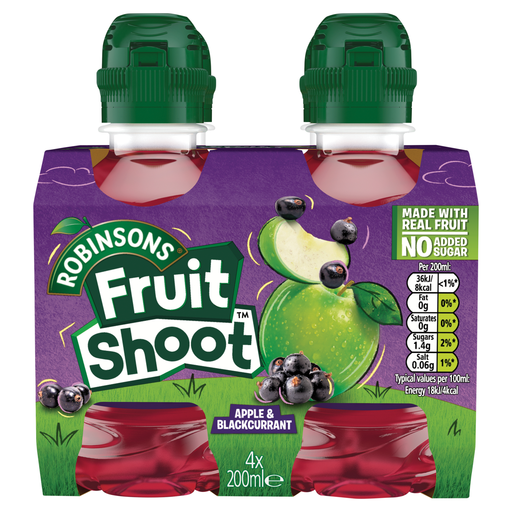 No image available
Four individual bottles offer a pack format for outings. This is an apple-and-blackcurrant drink with sweeteners, not 100% apple juice. The product information warns that the caps pose a choking risk for children under 36 months.
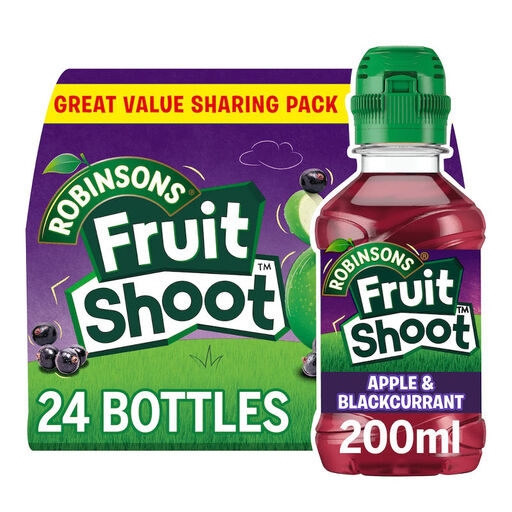 No image available
This larger pack contains individual 200ml bottles. The drink contains apple and blackcurrant and uses sweeteners; it is not 100% apple juice. The product information warns of a cap-related choking risk for children under 36 months.
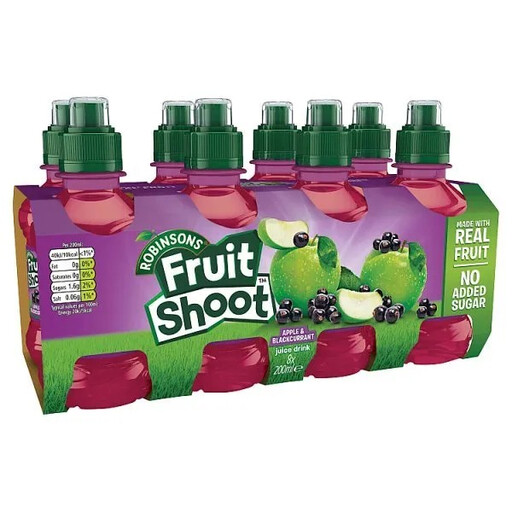 No image available
Eight individual bottles provide another pack size for outings. Despite the no-added-sugar name, this apple-and-blackcurrant drink is not 100% apple juice; check its nutrition panel for sugars. The product information warns of a choking risk from the caps for children under 36 months.
No. A no-added-sugar claim is different from a sugar-free claim. Check sugars per 100ml on the nutrition panel, then read the ingredients to see whether the product is 100% juice or a water-based juice drink.
The NHS advises children and adults to have no more than 150ml of fruit juice and smoothies combined per day, at mealtimes. This advice still matters when fruit juice has no added sugar because juicing releases free sugars.
Choose 100% juice when you specifically want an apple juice serving; choose a juice drink if lower labelled sugar is your priority and its ingredients suit you. For comparison, Tropicana UK and Copella each list 10g sugars per 100ml for their pressed apple juices, while Tesco Groceries lists 1.2g per 100ml for its water-based Fruit Splash apple juice drink.
Check the number and size of bottles, ingredients, sugars per 100ml and intended serving, plus the storage instructions. A larger pack does not change the NHS guidance for fruit juice and smoothies, and an individual bottle may hold more than the amount you intend to serve.