Hosts serving guests of different ages
Separate still apple juice from sparkling apple drinks when planning the drinks table. A can’s apple flavour does not establish how much juice it contains.


Choose cartons for individual servings of still apple juice, or larger bottles if you would rather pour drinks; choose cans when a sparkling option suits your guests. Check the exact label before buying: the selected Appletiser multipack is labelled 100% lightly sparkling apple juice, whereas other canned apple drinks have different ingredients and juice contents. For children, plan servings separately from container size and follow the NHS’s age-specific juice guidance.
The useful starting point is whether guests need still juice, a fizzy drink or a serving poured for them.
Separate still apple juice from sparkling apple drinks when planning the drinks table. A can’s apple flavour does not establish how much juice it contains.
Plan what and how much to serve rather than handing out full cartons or cans by default. The NHS gives different advice for younger children and those aged five and over.
Decide whether sparkling 100% apple juice or an apple-flavoured soft drink meets the brief, then check the formulation and can size on the exact pack.
Choose the serving format first, then compare the ingredients and individual container sizes. A larger bottle also lets you pour servings rather than relying on the pack’s portion size.
Choose when: you want individual servings of non-carbonated apple juice; Ocado lists M&S Apple Juice as six 200ml cartons.
Bear in mind: cartons do not meet a strict cans requirement, and a full 200ml carton is larger than the NHS’s 150ml daily maximum that counts towards 5 A Day for unsweetened 100% juice.
Choose when: guests want individual fizzy drinks and you can select the exact apple-juice or apple-drink formulation you intend to serve.
Bear in mind: carbonation and can size do not establish juice content. Ocado’s Cawston Press Sparkling Apple listing states 49% apple juice, while the selected Appletiser pack is labelled 100% apple juice.
Choose when: you plan to pour still apple juice for guests rather than provide an individual container to each person.
Bear in mind: bottle service needs cups and someone to manage pouring; Tesco Groceries lists larger-format apple juices from Tesco, Copella and Tropicana.
| Priority | What to check | Your needs |
|---|---|---|
| Juice or soft drink | Read the product description, ingredient list and stated juice percentage. Check whether the drink is carbonated. | I want to know whether I am serving apple juice or an apple-flavoured fizzy drink, rather than judging by the word “apple” on the front. |
| Children’s servings | Compare container volume with the serving you intend to pour. The NHS advises diluted juice with meals for young children and, from age five, no more than about 150ml of undiluted juice or smoothie a day, served with a meal. | With young children attending, I would plan their drinks separately instead of treating a 200ml carton or a 250ml or 330ml can as one automatic serving. |
| Pack format | Check the number of containers and volume of each. Ocado lists M&S still apple juice in six 200ml cartons and Cawston Press Sparkling Apple in four 250ml cans. | If guests will help themselves, individual containers matter to me; if drinks will be poured, I can consider larger bottles. |
| Sugar and flavour | Check the ingredient list and nutrition panel as well as “no added sugar” wording. Confirm whether other flavours, such as elderflower, are included. | I may want plain apple flavour or an apple-and-elderflower drink, but I would not read “no added sugar” as “sugar-free”. |
Ocado lists Cawston Press Sparkling Apple with 49% apple juice and M&S Sparkling Apple with 16% apple juice from concentrate and added sugar. Those formulations differ from its M&S still apple juice cartons.
Choose between juice and a sparkling apple drink before comparing multipacks, then read the exact pack’s ingredients and juice percentage.
The researched cans hold 250ml or 330ml. The NHS gives age-specific advice for children’s juice and sets a 150ml daily maximum that counts towards 5 A Day for unsweetened 100% fruit juice.
Plan children’s servings separately. The NHS advises offering diluted juice with meals to young children and gives separate guidance from age five.
Ocado describes M&S Apple & Elderflower with Sparkling Spring Water as having no added sugar, but its listing reports 21.8g of naturally occurring sugars per 330ml can.
Compare the sugars figure per 100ml and per can alongside the ingredient list.
The listed still M&S apple-juice multipack comes in cartons; a fizzy can will change what guests are served, even when its label says apple juice.
If carbonation is not part of the plan, compare still-juice cartons with larger bottles before choosing cans.
A brand name alone does not settle the format or formulation; these examples refer to the specific products and listings named below.
Ocado lists both still M&S apple-juice cartons and several sparkling apple-drink cans.
Ocado lists Sparkling Apple as a four-pack of 250ml cans.
Tesco Groceries lists own-label apple juice in larger bottles and individual 200ml apple-juice cartons.
Tesco Groceries lists Copella Apple Juice in 300ml, 900ml and 1.35L bottles.
Tesco Groceries lists Tropicana Pressed Apple Fruit Juice in a 1.5L bottle.
These multipacks cover two different fizzy choices for a christening: apple juice labelled as 100% and an apple-flavoured soft drink. Check which type you want before choosing by pack size.
 No image available
Consider this multipack when you want individual servings of sparkling apple juice. It is labelled 100% apple juice and lightly sparkling, with six 250ml servings. For children, plan the amount served rather than treating a full can as the default; the NHS gives age-specific advice on juice.
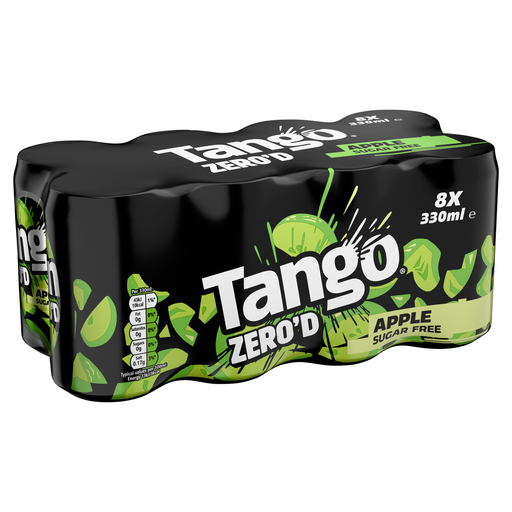 No image available
Consider this eight-can pack when an apple-flavoured fizzy soft drink meets the brief rather than apple juice. Each can is 330ml; check the ingredients and juice percentage if the distinction matters to your guests.
Not necessarily. Ocado lists Cawston Press Sparkling Apple as a carbonated drink containing 49% pressed apple juice, while its M&S Sparkling Apple listing specifies 16% apple juice from concentrate and added sugar. Read the exact product’s description, juice percentage and ingredients; a can can also be labelled 100% sparkling apple juice.
Do not use the container size alone to decide a child’s serving. The NHS advises diluted fruit juice with meals for young children; from age five, it advises no more than one glass of undiluted fruit juice or smoothie, about 150ml a day, served with a meal. Plan separately if the cartons or cans hold 200ml, 250ml or 330ml.
No. Ocado’s M&S apple-and-elderflower sparkling drink listing says “no added sugar” but reports 6.6g sugars per 100ml and 21.8g per 330ml can, described as naturally occurring sugars. Check the nutrition panel as well as the front of the pack.
Check the ingredient and allergen information on the exact pack you will serve, particularly for flavoured apple drinks. Do not assume that two apple-labelled products have the same formulation.