For a typical short 5K in normal weather, choose water as your main drink; sparkling apple juice is an optional drink, not necessary run fuel. If you want the flavour, a measured 150ml serving fits the NHS guidance to limit fruit juice, vegetable juice and smoothies to a combined 150ml a day. Check the pack size: finishing a 250ml can exceeds that amount.
Who might choose it?
Whether sparkling apple juice makes sense around a 5K depends more on the drink you want and the portion you will pour than on treating it as specialist fuel.
Runners doing a short run in normal weather
Water is a straightforward main drink if you do not particularly want juice. The American College of Sports Medicine says most people exercising for less than 60–90 minutes a day in normal weather are unlikely to become dehydrated or depleted of electrolytes; longer or hotter sessions are a different context.
Runners who want a sparkling drink afterwards
If you enjoy apple flavour with a meal, a 150ml juice can makes the portion simpler to judge than a 250ml can. The NHS advises limiting fruit juice, vegetable juice and smoothies to a combined 150ml a day.
People watching their juice portions
Check both the volume and the sugars declared for the amount you plan to drink. The NHS classifies sugars in unsweetened fruit juice as free sugars, so a ‘no added sugar’ label does not remove this consideration.
What should you check?
Start with the conditions of your run, then decide whether you want juice at all. If you do, compare the portion you will drink rather than the pack size alone.
| Priority | What to check | Your needs |
|---|
| Role of the drink |
Consider the run’s duration and weather. For exercise of around an hour, a systematic review published in Applied Physiology, Nutrition, and Metabolism does not establish the type or amount of carbohydrate as the deciding factor in the proposed performance effect. The American College of Sports Medicine distinguishes short sessions in normal weather from more demanding conditions. |
For a typical short 5K, I want a drink, not a product I have to buy as race fuel. I can choose water unless I particularly want juice. |
| Juice portion |
Compare the can or bottle with the amount you will pour. The NHS advises a combined limit of 150ml a day for fruit juice, vegetable juice and smoothies; a full 250ml can is larger than that amount. |
A single 150ml serving is easy for me to measure. If I buy a larger can or bottle, I can pour a smaller amount rather than automatically finishing it. |
| Sugars |
Read the nutrition panel for the actual can or serving, not just a ‘no added sugar’ claim. Tesco Groceries lists 27.5g sugars in a 250ml Simplyfruit sparkling apple juice can; the NHS counts sugars in unsweetened juice as free sugars. |
I want to know how much sugar is in the portion I plan to drink, even if no sugar has been added. |
| Still or sparkling |
Choose the texture you prefer, then apply the same portion check to either type of juice. Tesco Groceries lists 15g sugars per 150ml for both its Copella cloudy and Tropicana pressed still apple juices. |
If I do not want bubbles around my run, still juice is an option, but I would not assume it removes the sugar or portion consideration. |
Common buying mistakes
-
Treating sparkling juice as compulsory 5K fuel
For a typical short session in normal weather, the drink’s carbohydrate content does not by itself make it necessary. The American College of Sports Medicine says most people exercising for less than 60–90 minutes in those conditions are unlikely to deplete electrolytes.
Choose water as your main drink if you simply need a drink; choose juice because you want it, not because its bubbles imply a sports-nutrition role.
-
Assuming one can means one suitable portion
A 250ml can is larger than the NHS combined daily 150ml juice guideline, even though it is packaged as a single can.
Check the stated volume before buying. A 150ml can avoids measuring; with a larger pack, pour the amount you intend to drink.
-
Reading ‘no added sugar’ as ‘little sugar’
According to Tesco Groceries, Simplyfruit’s no-added-sugar sparkling apple juice lists 27.5g sugars per 250ml can. The NHS counts sugars in unsweetened fruit juice as free sugars.
Compare the sugars for your actual portion alongside the ingredient and pack information.
-
Switching to still juice solely to avoid juice sugars
Removing carbonation does not remove the sugars in apple juice. Tesco Groceries lists 15g sugars per 150ml for its Copella cloudy and Tropicana pressed still juices.
Choose still juice if you prefer it without bubbles, while checking its portion and nutrition label in the same way.
Apple juice brand references
These are references to specific listed products, not claims about every drink each brand makes or about what Joybuy stocks.
Appletiser
Tesco Groceries lists a 150ml can of gently sparkling, 100% apple juice from concentrate.
- The 150ml can matches the NHS combined daily juice amount without needing to measure a larger pack.
- Tesco lists 10.5g sugars per 100ml; the NHS counts sugars in unsweetened juice as free sugars.
Simplyfruit
Tesco Groceries lists a 250ml can of sparkling pressed Pink Lady apple juice.
- The listing says no sugar or sweeteners are added.
- The full can contains 27.5g sugars and exceeds the NHS combined daily 150ml juice guideline.
Belvoir Farm
Tesco Groceries describes a sparkling Pink Lady apple juice in a 750ml bottle.
- The bottle allows a measured serving rather than requiring a whole single-serve can.
- Tesco lists 24g sugars per stated 250ml serving; that serving exceeds the NHS combined daily 150ml juice guideline.
Copella
Tesco Groceries lists Copella Cloudy Apple Juice as a still, not-from-concentrate option.
- It offers apple juice without carbonation for someone who prefers a still drink.
- The listed juice contains 15g sugars per 150ml, so portion and sugar checks still matter.
Tropicana
Tesco Groceries lists a still, pressed apple juice that is not from concentrate.
- It provides a non-carbonated apple juice option.
- The listed juice contains 15g sugars per 150ml; choosing still juice does not remove the NHS juice-portion consideration.
Sparkling apple juice on Joybuy
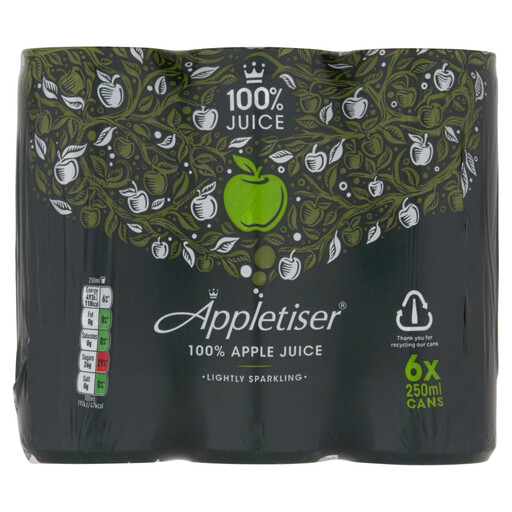
This sparkling apple juice option comes in 250ml cans. It suits someone who wants the flavour around a short run, provided they plan the portion rather than treating a whole can as a 150ml serving.
 No image available
Appletiser 100% Apple Juice Lightly Sparkling 6 × 250ml
A sparkling apple juice option if you want the flavour rather than necessary fuel for a typical short 5K. The pack contains six 250ml cans; each full can exceeds the NHS combined daily 150ml juice guideline, so measure a smaller serving if following that guidance.
View on Joybuy
Questions about juice and a 5K
Do I need sparkling apple juice to fuel a normal 5K?
No: for a typical short 5K in normal weather, treat sparkling apple juice as an optional drink, not necessary fuel. The American College of Sports Medicine says most people exercising for less than 60–90 minutes a day in normal weather are unlikely to become dehydrated or depleted of electrolytes; longer or hotter sessions call for a different assessment.
What serving size fits the UK juice guidance?
A 150ml serving fits the NHS guidance to limit fruit juice, vegetable juice and smoothies to a combined 150ml a day. A 250ml can is larger than that amount, so check the volume if you intend to finish the can.
Does ‘no added sugar’ mean the juice contains little sugar?
No. Tesco Groceries lists 27.5g sugars in a 250ml can of Simplyfruit sparkling Pink Lady apple juice despite its no-added-sugar claim. Check sugars for the portion you will drink; the NHS classifies sugars in unsweetened fruit juice as free sugars.
Does a 150ml serving count towards 5 A Day?
Yes. The NHS says 150ml of fruit juice, vegetable juice or smoothie counts as one portion, but juice and smoothies count only once in a day.


