For routine gym hydration, carry water rather than treating apple juice as an everyday workout drink. If you want a small carbohydrate-containing drink when quick refuelling matters, 100% apple juice is an option, but NHS guidance limits juice and smoothies to a combined 150ml a day and counts juice sugars as free sugars. A no-added-sugar apple-based drink may have less labelled sugar than pure juice, but it is not necessarily sugar-free or made entirely from apples.
Who might carry these drinks
Shoppers comparing sugar on the label
If you want an apple-flavoured drink but not 100% juice, compare sugars and energy on the same serving basis. Tesco lists 3.9g sugars per 150ml for its No Added Sugar Apple & Pear Juice Drink, compared with 15g per 150ml on the Tropicana Orchard Apple and Copella Cloudy Apple product information.
Exercisers considering quick refuelling
The British Dietetic Association advises starting to refuel with carbohydrate-rich food and fluids when quick recovery is needed after exercise. A small serving of apple juice can contribute carbohydrate, but the Tropicana and Copella products each list only 0.3g protein per 150ml, so juice alone is not a complete snack.
Everyday gym users choosing a drink
For a routine workout, water avoids making juice the default hydration drink. If you also pack juice, the NHS advises limiting fruit juice, vegetable juice and smoothies to a combined 150ml a day; their released sugars can damage teeth.
What to check before choosing
Decide whether the drink is for routine hydration, a small carbohydrate-containing serving or apple flavour with different labelled sugars. Then compare the portion you would actually drink.
| Priority |
What to check |
Your needs |
| Routine hydration |
Consider water when you do not specifically need a juice serving or quick carbohydrate refuelling. Check whether the drink is juice, a juice drink or an apple-flavoured soft drink. |
For an ordinary gym visit, I mainly want something to drink, rather than juice as my whole snack. |
| Sugars and ingredients |
Compare sugars per 150ml and read the ingredients. Tesco lists 3.9g sugars for its No Added Sugar Apple & Pear Juice Drink; Tropicana and Copella each list 15g for their apple juices. Tesco’s drink contains apple and pear juice from concentrate, water and sucralose. |
I want to know whether “no added sugar” means less total sugar, and whether I am choosing diluted juice with a sweetener instead of 100% apple juice. |
| Carbohydrate use |
Check carbohydrate per serving and what else you will eat. Tropicana lists 17g and Copella 16g per 150ml; each lists 0.3g protein. The British Dietetic Association’s advice to begin refuelling promptly applies when quick recovery after exercise is needed. |
When sessions are demanding or close together, I may want a convenient carbohydrate source, but I would not rely on juice as the entire snack. |
| Portion and packing |
Compare bottle or can size with the NHS combined daily limit of 150ml for juice and smoothies. Check the exact pack’s storage instructions before carrying it and after opening. |
A bottle may be easy to pack, but I want to decide how much juice to pour or drink rather than assume the whole container is one 150ml portion. |
Common gym-bag mix-ups
-
Assuming “no added sugar” means zero sugar
Tesco lists 3.9g sugars per 150ml for its No Added Sugar Apple & Pear Juice Drink, while Growers Harvest lists 6.9g for its No Added Sugar Apple Juice Drink. Both product listings include sucralose.
Read the sugars figure for the portion you plan to drink, alongside the juice percentage and sweeteners in the ingredients.
-
Counting a whole bottle as a small juice portion
Copella lists a 300ml bottle, which holds two 150ml portions. The NHS advises limiting fruit juice, vegetable juice and smoothies to a combined 150ml a day.
Check the container size and plan a measured serving if you choose juice; carry water separately for routine hydration.
-
Using juice as the entire post-workout snack
Apple juice can contribute carbohydrate, but Tropicana and Copella each list only 0.3g protein per 150ml. The British Dietetic Association discusses prompt carbohydrate refuelling when quick recovery is required, not as a reason to replace meals with juice.
If quick refuelling matters after a demanding session, consider what food or meal will accompany the drink.
Brand and product-line references
These product examples show why “apple drink” does not describe a single set of ingredients or nutrition values.
Tropicana
Tropicana describes Orchard Apple On the Go as 100% pressed apple juice, not from concentrate.
- Its product information lists 17g carbohydrate and 15g sugars per 150ml.
- It is not a zero-sugar drink; the listed protein is 0.3g per 150ml.
Copella
Copella Cloudy Apple is a pressed apple juice listed in several bottle sizes, including 250ml and 300ml.
- Copella lists 16g carbohydrate per 150ml.
- It also lists 15g sugars per 150ml; a 300ml bottle is larger than the NHS combined daily 150ml juice and smoothie limit.
Tesco
Tesco No Added Sugar Apple & Pear Juice Drink is a diluted, sweetened alternative to 100% apple juice.
- Tesco lists 3.9g sugars and 18kcal per 150ml for this drink.
- Its ingredients include water, 20% apple juice from concentrate, 5% pear juice from concentrate and sucralose.
M&S
M&S describes its Apple Juice as cloudy juice in a 200ml format.
- The 200ml size makes the container’s volume clear when planning what to pack.
- Check the pack’s sugars and storage instructions before comparing it with another drink or carrying it opened.
Joybuy drinks for the gym bag
These options cover a 100% apple-juice can, a no-added-sugar apple-and-blackcurrant drink and a sugar-free apple-flavoured drink. Choose by the type of drink you want; the three are not interchangeable.
 No image available
Appletiser 100% Apple Juice Lightly Sparkling, 6 × 250ml
A lightly sparkling apple-juice option if you want juice rather than an apple-flavoured soft drink.
The pack contains six 250ml cans. One can is larger than the NHS combined daily 150ml limit for juice and smoothies, so plan the portion you intend to drink.
View on Joybuy
 No image available
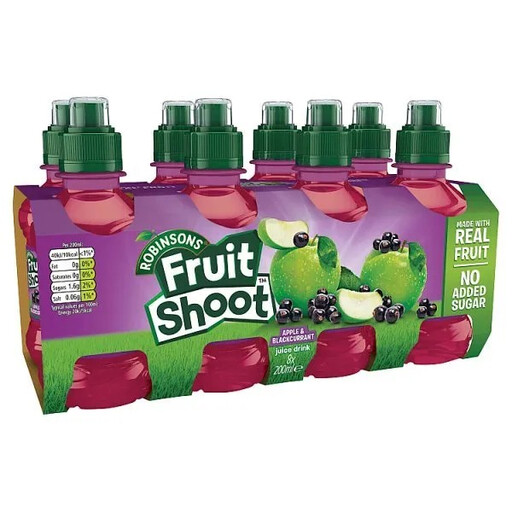
Fruit Shoot Black & Apple No Added Sugar, 8 × 200ml
An apple-and-blackcurrant option if you want a no-added-sugar drink rather than pure apple juice.
The pack contains eight 200ml bottles. Check the sugars figure and ingredients on the pack: “no added sugar” does not, by itself, mean sugar-free.
View on Joybuy
 No image available
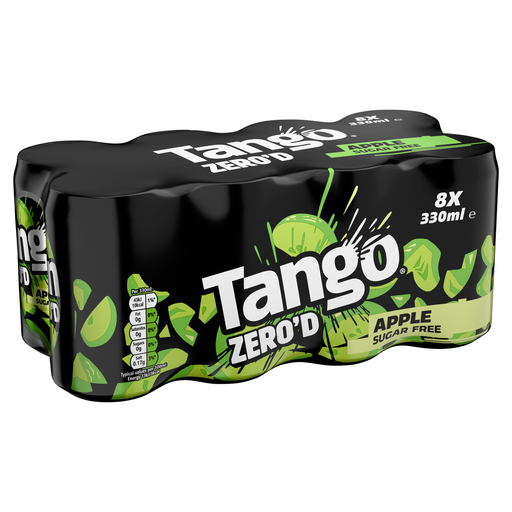
Tango Sugar Free Apple, 8 × 330ml
An apple-flavoured option if the Sugar Free variant appeals more than an apple-juice serving.
The pack contains eight 330ml cans. Check the ingredients if the proportion of apple juice matters to your choice; do not treat the variant name as meaning 100% apple juice.
View on Joybuy
Questions about apple drinks and workouts
Does “no added sugar” mean an apple drink is sugar-free?
No. Tesco lists 3.9g sugars per 150ml for its No Added Sugar Apple & Pear Juice Drink, and Growers Harvest lists 6.9g for its No Added Sugar Apple Juice Drink. Check total sugars, juice content and sweeteners on the product you choose.
How much apple juice fits NHS guidance?
The NHS advises limiting fruit juice, vegetable juice and smoothies to a combined 150ml a day; that amount counts as one portion of your five a day. Check the bottle or can size, since a portable container may hold more than 150ml.
Can apple juice be my post-workout snack on its own?
Juice can contribute carbohydrate when quick refuelling is needed, but it is not a complete snack on its own. The British Dietetic Association advises carbohydrate-rich food and fluids when quick recovery is required; Tropicana and Copella each list only 0.3g protein per 150ml of their apple juices.
What should I check before packing an apple drink?
Check the exact pack’s storage instructions, including what to do after opening. Also compare its container size with the portion you plan to drink: a 250ml or 300ml container holds more than the NHS combined daily 150ml juice and smoothie limit.


